Key takeaways
- A complete layer feed with about 16 percent protein and 3 to 4 percent calcium covers nearly everything a laying hen needs.
- Switch from grower to layer feed around 20 weeks of age or when the first egg appears - whichever comes first.
- Pellets, crumble, and mash deliver the same nutrition; the difference is waste, ease of eating, and your hens' preference.
- Offer oyster shell free-choice on the side and keep treats under 10 percent of the diet to avoid diluting the feed.
Quick answer: The best feed for laying hens is a complete commercial layer feed with about 16 percent protein and 3 to 4 percent calcium, fed from roughly 20 weeks of age. Form (pellet, crumble, or mash) and organic vs conventional are preference choices - they carry the same core nutrition. Add oyster shell free-choice and keep treats under 10 percent.
I grew up scooping feed on my family's organic farm, and four generations in, I can tell you the feed aisle is more confusing now than it has ever been. Pellets, crumble, organic, non-GMO, 16 percent, 18 percent, soldier-fly protein - it is a lot. The good news is that the actual nutrition your hens need is simple and well settled, and once you know the numbers, every bag becomes easy to compare.
This is my honest, keeper-to-keeper comparison: what to look for on the tag, how the feed types stack up, where organic is worth it, and exactly where supplements do and do not belong. I am not a veterinarian, so I will flag the moments that call for one.
What makes a feed the "best" for laying hens?
The best layer feed is a complete feed built to be your hens' only food source, hitting roughly 16 percent protein and 3 to 4 percent calcium, with balanced vitamins and minerals already in it. "Complete" is the word that matters most - it means you do not have to mix or balance anything yourself.
Cooperative Extension guidance is consistent here. Layer feeds should carry at least 14 percent protein, with 16 percent being the common, dependable target, and calcium in roughly the 3 to 4 percent range to build strong shells. Because hens do not absorb calcium perfectly, University of Florida extension notes a hen's diet often has to furnish more than 4 grams of calcium a day, and most of that comes straight from a good layer ration.
If you are still deciding what to put in front of your whole flock, my broader guide to what to feed backyard chickens at every life stage walks through starter and grower feed too, so the layer-feed decision fits into the bigger picture.
How much protein and calcium should layer feed have?
Aim for about 16 percent protein and 3 to 4 percent calcium for laying hens, never less than 14 percent protein. Those two numbers are printed on the guaranteed-analysis panel of every bag, and they are the fastest way to compare feeds.
Reading the tag in ten seconds
- Crude protein: 16 percent is the sweet spot. 17 to 18 percent can help during heavy lay or molt.
- Calcium: 3 to 4 percent for layers. Anything labeled "starter" or "grower" will be far lower (around 1 percent) and is wrong for laying hens.
- The words "complete layer feed": if it says complete, the vitamins, phosphorus, and trace minerals are already balanced for you.
One firm rule: do not feed high-calcium layer feed to pullets that are not laying yet. Extension guidance warns that high-calcium diets fed to growing chickens can cause kidney damage, and the same concern applies to non-laying birds. That is a big part of why the switch is timed to point-of-lay rather than a fixed early date.
Which feed type is best - pellets, crumble, or mash?
Pellets, crumble, and mash deliver the same nutrition - the real differences are waste, ease of eating, and what your hens prefer. There is no "healthiest" form; there is only the one that fits your birds and your patience with spilled feed.
| Feed form | What it is | Best for | Waste / mess | Trade-off |
|---|---|---|---|---|
| Pellets | Mash pressed into firm tubes | Mature, full-size layers | Lowest waste | Some small or older hens find them large |
| Crumble | Pellets broken into small bits | Smaller, older, or mixed flocks | Moderate waste | Cleaner than mash, messier than pellets |
| Mash | Fine, least-processed ground feed | Picky eaters; can be wet-fed | Highest waste if dry | Birds can sort out the bits they like |
Honestly, keepers care more about pellet vs crumble than the chickens do. Mash lets hens pick through and pull out the powdery vitamin-mineral fraction, which can quietly unbalance their diet, so if you feed mash, consider serving it slightly dampened. For most backyard flocks, pellets are the easy, low-waste default.
Is organic or non-GMO layer feed worth the extra cost?
A good conventional feed and a good organic feed can both raise healthy hens and produce strong eggs - organic and non-GMO are values-and-budget choices, not nutrition upgrades. The protein and calcium numbers are what move egg quality, not the certification.
Coming from an organic farm, I have a soft spot for organic feed, and I do use it. But I will not pretend it makes hens lay better than a fresh, complete conventional ration. Where organic genuinely matters is if you sell eggs as organic, or if avoiding GMO and synthetic inputs is important to you. Just know it usually costs noticeably more.
| Feed option | Typical cost | Egg-quality difference | Best fit |
|---|---|---|---|
| Conventional complete layer | $ | Excellent when fresh and complete | Most backyard keepers |
| Non-GMO layer | $$ | Same nutrition; avoids GMO grains | Keepers wanting non-GMO inputs |
| Certified organic layer | $$$ | Same nutrition; organic inputs | Selling organic eggs; values-driven |
Whatever tier you pick, freshness beats branding. Buy what your flock will finish within about a month, store it cool, dry, and sealed against moisture and rodents, and toss any feed that smells musty or stale.
Do I still need oyster shell and grit with complete feed?
Most hens on complete layer feed do not strictly need extra oyster shell, but offering it free-choice is cheap insurance - and birds on pasture also need grit. The key is to keep calcium separate, not mixed into the feed.
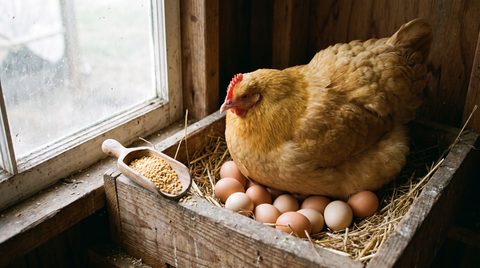
High-producing hens sometimes need more calcium than the bag alone provides. The tell is in the shells: thin, gritty, sandpapery, or easily cracked shells mean it is time to add oyster shell. Put crushed oyster shell in its own small dish and let each hen self-regulate - she will take what she needs and ignore the rest. If your hens are already laying soft shells, my guide to why chickens lay soft-shell eggs covers the other common causes too.
Grit is different from calcium. It is small insoluble stone that helps hens grind food in the gizzard. Hens eating only complete feed indoors usually do not need it, but birds that forage, eat scratch, or get scraps should have grit available.
Where do treats and supplements fit in a layer diet?
Treats and supplements are the last 10 percent of the diet - never the foundation. Keep scratch, scraps, and snacks to about what hens finish in 15 to 20 minutes a day. Past that, you dilute the balanced feed and egg quality slips.
Extension guidance is clear that small-flock keepers feeding a complete diet usually do not need extra nutrients, and that overconsuming protein and minerals can lead to urinary system problems, while extra energy just packs on fat. So the order of operations is always: complete feed first, free-choice calcium second, everything else a distant third.
Some keepers do add a daily herbal lay support on top of solid feed and good daylight. If you go that route, treat it as an add-on, not a rescue - our Golden Yolk daily egg booster is a herbal supplement meant to sit alongside a complete layer ration, not replace it. No supplement can out-work a thin feed, dark winter days, or a sick bird. For the bigger picture on what actually moves egg numbers, see my honest take on the best supplement to make chickens lay more eggs and on rounding out overall flock health supplements.
Before you reach for any extra, know your baseline: how productive should a healthy hen even be? My breakdown of how many eggs chickens lay per day, week, and year helps you tell a feed problem from a normal seasonal dip. And if you free-range, double-check the snack list against my safe and toxic foods for chickens guide before tossing anything new in the run.
How do I actually choose a layer feed? (checklist)
Pick the feed that hits the right numbers, matches your birds' stage, and that you can keep fresh - then add calcium on the side. Run any bag through this before it goes in the cart.
- Label says "complete" layer feed for laying hens.
- Crude protein is at least 14 percent, ideally around 16 percent.
- Calcium is in the 3 to 4 percent range.
- Your hens are at point-of-lay (about 20 weeks) or already laying.
- Feed form (pellet, crumble, mash) suits your flock's size and age.
- You can use the bag within roughly a month and store it dry and sealed.
- A separate free-choice dish of oyster shell is available.
- Treats and scratch stay under 10 percent of the daily diet.
When should I call a vet about feed or eggs?
Call a vet when feeding and calcium are right but a hen still lays persistently soft, shell-less, or misshapen eggs, or shows signs of illness. Feed fixes a lot, but not everything, and laying problems can signal disease.
Reach out to a poultry-savvy veterinarian if you see:
- Repeated soft-shell or shell-less eggs in a hen already on layer feed plus free-choice oyster shell.
- A hen straining, walking penguin-style, or with a swollen abdomen - possible egg binding, which is an emergency.
- Sudden flock-wide drop in laying alongside lethargy, droopy combs, or abnormal droppings.
- Weight loss despite normal eating, or a bird who stops eating entirely.
Those signs point past diet into health territory, where a professional should weigh in rather than another bag of feed.
Frequently asked questions
What is the best feed for laying hens?
A complete commercial layer feed labeled for laying hens, with around 16 percent protein and 3 to 4 percent calcium. It is formulated to be the sole nutrition source, so you do not have to balance vitamins and minerals yourself. Brand matters less than choosing a fresh, complete layer ration and storing it well.
How much protein should layer feed have?
Layer feeds should contain at least 14 percent protein, but 16 percent is the most common and reliable target for steady laying. Some keepers use 17 to 18 percent during heavy lay or molt. Going below 14 percent can reduce egg output.
How much calcium do laying hens need?
University extension guidance notes a laying hen's diet often has to furnish more than 4 grams of calcium per day to build strong shells, because hens do not absorb it perfectly. Complete layer feeds carry about 3 to 4 percent calcium, and many hens top up the rest from a free-choice dish of oyster shell.
When should I switch chickens to layer feed?
Switch from grower feed to layer feed at about 20 weeks of age, or when you find the first egg - whichever comes first. Feeding high-calcium layer feed to birds that are not laying yet can stress their kidneys.
Are pellets or crumble better for laying hens?
Both contain the same nutrition. Pellets waste less and suit mature hens; crumble is easier for smaller or older birds to eat. The choice is mostly about waste and your flock's preference, not about quality.
Is organic or non-GMO layer feed worth it?
Nutritionally, a good conventional layer feed and a good organic layer feed can both produce healthy hens and strong eggs. Organic and non-GMO feeds cost more and matter most if you sell eggs as organic or simply prefer those inputs. Freshness and a complete formula matter more than the label.
Do I still need oyster shell if I feed complete layer feed?
Often not, but it never hurts. If shells are thin, gritty, or crack easily, offer crushed oyster shell free-choice in a separate dish so each hen takes what she needs. Do not mix it into the feed.
Can I feed laying hens kitchen scraps and scratch grains?
In small amounts, yes. Keep all treats, scratch, and scraps under about 10 percent of the daily diet - roughly what they clean up in 15 to 20 minutes. More than that dilutes the balanced feed and can lower egg quality.
Will a supplement make my hens lay more eggs?
No supplement replaces a complete feed, daylight, and good health. Some herbal lay supports may help hens that are already on solid nutrition, but they are an add-on, not a fix for poor feed or short winter days. Address feed first.
Why are my hens laying soft or thin-shelled eggs even on layer feed?
Usually it is a calcium gap, hot weather, age, or a brief stress. Add free-choice oyster shell, check that the feed is fresh and truly a layer formula, and rule out illness. Persistent soft shells in a young or sick-acting hen are worth a vet check.
Products mentioned in this guide

Sources & further reading
- Feeding Chickens for Egg Production in Small and Backyard Flocks - Poultry Extension
- Backyard & Small Poultry Flock Management Series: Feeding the Laying Hen - Alabama Cooperative Extension
- How to Feed Your Laying Hens (PNW 477) - Oregon State University Extension
- Concepts of Eggshell Quality (VM013) - University of Florida IFAS Extension
A note from Sarah: I'm a lifelong keeper, not a veterinarian. This guide shares what's worked for my own flock and is meant for general education - if a bird is seriously ill or injured, please call your vet. These statements have not been evaluated by the FDA.