Key takeaways
- Chickens handle cold far better than heat and can start struggling once it climbs past about 75°F.
- Early heat-stress signs are open-mouth panting, wings held away from the body, and a pale comb and wattles — pale, limp, or unconscious means emergency.
- Shade, ventilation, and constant cool water are the three things that matter most; misters, frozen bottles, and frozen treats add extra relief.
- Heat suppresses laying and thins eggshells, so cool water plus electrolytes and steady nutrition help hens hold their condition through a hot spell.
Quick answer: Keep chickens cool in summer with three essentials — deep shade, good airflow, and constant cool water — then add electrolytes, misters, frozen bottles, and frozen treats on hot days. Watch for panting, wings held away from the body, and a pale comb. A pale, limp, or collapsed bird is a heat-stroke emergency: cool her gradually and call a vet.
I grew up on my family's organic farm, and the lesson that stuck hardest wasn't about winter — it was about summer. Chickens are walking down coats. They can't sweat, they don't pant the way a dog does very efficiently, and a heavy hen on a 95-degree afternoon can go from fluffed and happy to flat on the ground faster than most folks expect. Cold, our birds mostly shrug off. Heat is the season I actually lose sleep over.
The good news is that heat stress is one of the most preventable problems in the backyard, and it's almost always readable on the bird before it turns dangerous. Below is exactly how I keep my flock cool through a Texas-grade summer, the warning signs I never ignore, and what to do in the moment a hen crosses from "hot" to "in trouble."
How do I know if my chickens are too hot?
The clearest signs of an overheated chicken are open-mouth panting, wings held out away from the body, a pale or floppy comb and wattles, standing apart from the flock, eating less, and drinking far more than usual. Chickens cool themselves mostly by panting (evaporating moisture through the respiratory tract) and by dumping heat from the bare skin under their wings, on their combs, and through their feet — which is why a hot bird lifts her wings and may press her feet into cool ground.
A little light panting on a warm day is normal. What I'm watching for is the bird who's panting hard and constantly, holding her wings out like little awnings, and going quiet and still. Chickens run a high natural body temperature — around 105–109°F — and they start to feel the strain once the air climbs past about 75°F. By the 90s, especially with humidity, every bird in the run is working to stay cool.
The progression I look for
- Hot but fine: light panting, otherwise acting normal, still foraging.
- Mild–moderate stress: heavier panting, wings held away from the body, crouching, drinking a lot, eating less.
- Danger: heavy open-mouth panting, pale comb and wattles, lethargy, standing alone, eyes closing.
- Emergency: limp, unsteady, lying down and not getting up, or unconscious. This is heat stroke — act immediately (see below).
What does each heat-stress sign mean — and what should I do?
Use the signs as a ladder: the more of them you see, and the more severe, the faster you move from "add comfort" to "emergency cooling." This triage table is the one I keep in my head every time I walk the run on a hot afternoon.
| What you see | Likely stage | What to do right now |
|---|---|---|
| Light panting, normal behavior, still foraging | Hot but coping | Make sure shade and cool water are available; keep watching |
| Heavy panting, wings held away from body, crouching | Mild–moderate heat stress | Move to shade, refresh cool water, add electrolytes, run a fan or misters |
| Drinking constantly, eating very little, standing apart | Moderate stress | Offer cool water and hydrating treats; reduce activity; cool the coop |
| Pale or floppy comb and wattles, lethargic, eyes closing | Severe — danger zone | Move to a cool spot, cool the feet and legs in cool water, electrolytes, monitor closely |
| Limp, unsteady, lying down and unresponsive, or unconscious | Heat stroke — emergency | Begin gradual emergency cooling immediately (below) and call a vet |
Signs of heat stroke — act now
If a chicken is limp, can't stand, is unresponsive, or has collapsed, treat it as heat stroke and start cooling her gradually right away — do not plunge her into ice water, which can cause shock. Heat stroke can kill a bird in minutes, so speed and a steady hand both matter.
Here's the order I work in:
- Move her out of the heat — into deep shade, a cool garage, or an air-conditioned room.
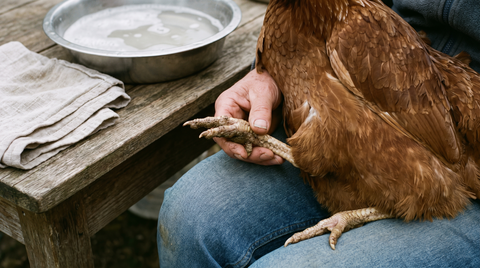
- Cool from the feet up. Stand or dip her legs and feet in cool (not icy) water. The feet and bare leg skin shed heat fast. You can also dampen the bare skin under her wings and her comb.
- Offer cool water with electrolytes. If she can drink, let her. Don't force water into the beak of a barely conscious bird — you can cause her to aspirate.
- Add airflow. A fan moving air over her damp skin speeds evaporative cooling.
- Cool gradually and watch. The goal is steady cooling over several minutes, not a cold shock. As she perks up, keep her quiet, shaded, and hydrated.
- Call a vet. A bird that has had heat stroke can crash again or develop complications; get professional advice as soon as you can.
I keep a small "hot-day kit" by the back door from June on: a clean tub, a jug of electrolyte mix, and a couple of frozen water bottles. When a bird is down, you don't want to be hunting for supplies.
How do I set up shade, ventilation, and water for summer?
Shade, airflow, and constant cool water are the three things that prevent most heat trouble before it starts. Get these right and you'll rarely have an emergency.
Shade
Every part of the run a bird uses should have shade by midday. Trees and shrubs are ideal because they cool the air, not just block the sun. Where I don't have trees, I rig shade cloth or a tarp on the sunny side, and I make sure the coop itself isn't a heat trap — a dark, closed-up coop can be hotter inside than the yard.
Ventilation
Open every vent and window you safely can and add a fan to move stale, hot air out of the coop. Cross-breeze matters more than fancy equipment. A simple box fan aimed to pull air through the coop makes a real difference on a still, muggy night when birds can't shed the day's heat.
Cool water, everywhere
Heat-stressed birds drink far more than usual, so I put out extra waterers, keep them in the shade, and refresh them often so they don't go warm and slimy. Dropping a frozen bottle into each waterer keeps the temperature down for hours. Cool water encourages drinking — and steady drinking is the single best thing a chicken can do for herself in the heat.
- Shade over every area the flock uses by midday
- Coop vents and windows open; a fan moving air through
- Multiple waterers in the shade, refreshed often
- Frozen bottles in waterers to keep water cool
- Electrolytes ready to add on hot days
- A shallow pan of cool water for birds to stand in
- A misting line or sprinkler on the run's edge for extreme heat
- A hot-day emergency kit by the door
Should I give electrolytes and frozen treats?
Yes — electrolytes in the drinking water help replace what hard panting burns through, and frozen treats add hydration and a welcome distraction on the worst days. Heavy panting throws off a bird's fluid and electrolyte balance, so on hot days a poultry electrolyte mix in the water (used as directed) can genuinely help her cope.
For treats, I freeze watermelon, berries, peas, cucumber, or leafy greens in water and set them out in the morning. The birds peck at the ice all day, getting both moisture and entertainment. Keep treats to roughly 10% of the diet so they still eat their balanced feed — calories and protein matter for keeping condition through a hot stretch.
One thing I avoid: scratch grains and heavy treats in the heat of the day. Digesting feed produces body heat, so I feed the bulk of the ration in the cool early morning and evening and keep midday light.
Which chickens are most at risk in the heat?
Heavy, fluffy, and dark-feathered breeds, large dual-purpose hens, chicks, elderly birds, overweight hens, and any molting or unwell bird are the most vulnerable to heat. If your flock is mixed, these are the birds to check first when the temperature spikes.
- Big, heavy breeds (Orpingtons, Brahmas, Cochins, Jersey Giants) carry more insulation and struggle most.
- Dark feathering absorbs more sun than light feathering.
- Chicks and elderly hens regulate temperature poorly.
- Overweight or already-sick birds have less reserve to cope.
- Molting hens are stressed and out of sorts already.
Birds with large single combs actually shed heat a bit better than tight-combed breeds, but no chicken is heat-proof. Lighter Mediterranean breeds like Leghorns handle heat relatively well — but they still need the same shade and water as everyone else.
Why did my hens stop laying in the heat — and can I help?
Heat stress reliably lowers egg production and can thin eggshells, because hot hens eat less and pour energy into cooling instead of laying. Research on laying hens consistently shows lighter eggs and weaker shells during heat waves, and heat lowers the vitamins and minerals circulating in a bird's blood right when she needs them. That same panting-driven drop in available calcium is a common reason summer hens start laying soft-shell eggs.
You usually can't make a hen lay through the worst of a heat wave, and that's normal — production typically rebounds once the heat breaks. What you can do is protect her condition so she bounces back well: keep her cool and drinking, feed in the cool hours, and support her nutrition. Because hot weather suppresses appetite and depletes the nutrients that go into a good egg, this is exactly where steady daily support helps. Our Golden Yolk egg booster is a daily herbal lay-and-yolk supplement designed to back up that nutrition through stressful stretches — I lean on it in summer not to force eggs, but to help my girls hold condition so laying picks back up cleanly when temperatures drop. (Heat is only one reason hens slow down; see why chickens stop laying eggs for the full picture.)
What should I feed chickens in hot weather?
Feed the balanced layer ration in the cool of morning and evening, keep cool water in front of them all day, and use hydrating treats in moderation — and skip anything that adds digestive heat at midday. Hot birds eat less, so the feed they do take needs to count.
Cool, hydrating extras like watermelon, cucumber, and leafy greens are great. Go easy on scratch and corn during peak heat, since digesting them warms the bird. And while you're rethinking the menu, summer is a good time to double-check that hot-weather treats are actually safe — our safe and toxic foods list covers what belongs in the run and what to keep out. The flip side of all this seasonal care is winter; if you want the cold-weather mirror of this guide, see how to keep chickens healthy in winter.
When should I call a vet?
Call a vet right away for any bird that is limp, unable to stand, unresponsive, having a seizure, or that doesn't recover within a short time of cooling — and don't wait if you're unsure. I'm a lifelong keeper, not a veterinarian, and heat stroke is a true emergency where professional help matters.
Get a vet involved when:
- A bird has collapsed, is unconscious, or is having seizures.
- A bird stays weak, pale, or off her feet after you've cooled her.
- You lose more than one bird suddenly to the heat — there may be a coop or husbandry issue to fix fast.
- A heat-stressed bird also has labored breathing, discharge, or other illness signs that aren't just heat.
When in doubt, cool the bird gently and pick up the phone. It's always better to ask early than to wait.
Frequently asked questions
At what temperature do chickens get heat stressed?
Chickens are most comfortable between about 65–75°F and can begin feeling heat stress once it climbs past roughly 75°F, with real risk on days in the 90s and above — especially when it's humid and overnight temperatures stay high so birds never get to cool down.
How do I cool down a chicken fast?
Move her into deep shade or a cool indoor space, offer cool (not ice-cold) water, and gently mist or dunk her legs and feet — chickens shed a lot of heat through their feet and combs. Add electrolytes to the water. If she's pale, limp, or unconscious, cool her gradually and get a vet on the phone.
Can I give chickens ice water?
Cool water is better than ice-cold. Very cold water can be a shock and birds may drink less of it. Keep several waterers in the shade, refresh them often so they don't get warm, and drop a frozen bottle in to keep the temperature down rather than serving water that's painfully cold.
Do chickens stop laying in hot weather?
Often, yes. Heat stress lowers egg production and can thin eggshells because hens eat less and divert energy to cooling themselves. Steady cool water, shade, and good nutrition help them hold condition; laying usually rebounds once the heat breaks.
Which chickens are most at risk in the heat?
Heavy, fluffy, and dark-feathered breeds, large dual-purpose hens, very young chicks, elderly birds, overweight hens, and any bird that's molting or already unwell. Birds with large combs handle heat a little better, but every flock needs shade and water.
Are frozen treats safe for chickens?
Yes, in moderation. Frozen watermelon, berries, peas, or cucumber make great hot-day treats and add hydration. Keep treats to about 10% of the diet so birds still eat their balanced feed, and always offer them alongside plenty of cool water.
Do chickens like water, and can I let them paddle to cool off?
Most chickens don't naturally swim or bathe, but many will happily stand in a shallow pan of cool water on a hot day to shed heat through their feet and legs. Offer a low pan they can step in and out of freely — never force a bird into water. Keep it shallow and shaded, and change it when it gets warm or dirty.
Is panting always a sign of trouble?
No — light, occasional panting on a warm day is a normal way chickens shed heat, much like a dog. The concern is heavy, constant open-mouth panting paired with wings held away from the body, a pale comb, lethargy, or standing apart from the flock. Read panting alongside those other signs rather than on its own.
Do I need a fan or mister, or are shade and water enough?
For most flocks, deep shade and constant cool water are the foundation and often enough on typical hot days. Fans and misters are valuable extras for heat waves, humid nights, or birds that can't shed heat, since moving air and evaporation speed cooling. Keep any electrical gear safely away from water and bedding.
Why does heat make eggshells thinner?
When hens pant to cool down, it shifts their blood chemistry and lowers the amount of usable calcium available for building shells, so summer often brings thinner, weaker, or soft shells even on a good diet. Cooling the birds and keeping calcium and water available helps more than extra feed alone during a heat wave.
Products mentioned in this guide

Sources & further reading
A note from Sarah: I'm a lifelong keeper, not a veterinarian. This guide shares what's worked for my own flock and is meant for general education - if a bird is seriously ill or injured, please call your vet. These statements have not been evaluated by the FDA.