Key takeaways
- Cold itself rarely harms a healthy, fully-feathered hen - dampness, drafts, and frozen water are the real winter dangers, so keep the coop dry and draft-free while still ventilating moist air out up high.
- Frostbite on combs, wattles, and toes is driven by moisture combined with cold far more than cold alone, so controlling humidity through ventilation and manure management is the top prevention step.
- Provide constant unfrozen water with a heated base or twice-daily swaps - birds need more water in cold weather to stay warm and keep eating, and a hen that cannot drink stops eating.
- Skip heat lamps, which are the leading cause of coop fires; cold-hardy adult hens do fine without supplemental heat, and a thermostatic radiant panel is the safer choice if heat is truly needed.
Quick answer: Keep chickens healthy in winter by keeping the coop dry and draft-free but well-ventilated, providing unfrozen water at all times, feeding a complete ration with extra evening scratch, using deep, dry litter for insulation, and protecting combs and feet from frostbite. Most cold-hardy adult hens do not need a heat lamp—and skipping it greatly reduces fire risk.
Hi, I'm Sarah Bellweather. I grew up on my family's organic farm and I've kept backyard chickens my whole life—so I've watched a lot of flocks come through a lot of hard winters. The thing I most want new keepers to understand is this: cold, by itself, is rarely what makes a healthy hen sick. A fully-feathered, cold-hardy bird is wearing one of the best down coats in nature. What actually causes trouble is dampness, drafts, frozen water, and panic-bought heat lamps. Get those right, and your flock will sail through winter clucking happily.
I'm a lifelong keeper, not a veterinarian, so I'll flag throughout where a situation calls for professional help. Below is the complete checklist I actually use, built around the same principles you'll find in university extension guidance.
How cold is too cold, and what's the difference between ventilation and a draft?
Healthy adult hens of cold-hardy breeds handle freezing temperatures far better than most beginners expect—your winter job isn't to make the coop warm, it's to keep it dry and still while still letting stale, moist air escape. The key distinction: ventilation (controlled air exchange up high) is good, while drafts (cold air blowing across the birds at roost level) are bad.
Healthy adult hens of cold-hardy breeds handle freezing temperatures far better than most beginners expect. Their bodies run hot and their down traps a layer of warm air against the skin. So your winter job isn't to make the coop warm—it's to keep it dry and still, while still letting stale, moist air escape.
That sounds like a contradiction, but it's the single most important idea in winter chicken care: ventilation is good, drafts are bad.
- Ventilation is controlled air exchange up high—usually near the roofline, above the birds' heads—that lets warm, moisture-laden, ammonia-rich air rise and leave. Without it, humidity builds, condensation forms, and you get the exact damp-cold conditions that cause frostbite and respiratory problems.
- Drafts are cold air blowing directly across the birds at roost level, through gaps, cracks, and poorly placed openings. Drafts strip away the warm air their feathers are working to hold.
So in fall I seal cracks and gaps at and below roost height (this also keeps rodents out), while keeping or adding vents up high. Extension sources suggest options like roof vents, a partially opened south-facing window, or burlap over an opening to encourage gentle airflow without a direct blast. A simple test: if you smell ammonia or see condensation or frost on the inside surfaces in the morning, you need more ventilation, not less.
How do I prevent frostbite on combs, wattles, and feet?
Control moisture first—frostbite is driven far more by damp air combined with cold than by cold alone, so a dry coop at a hard freeze is much safer than a damp coop at a milder temperature. Add good dry roosts and, optionally, a thin layer of petroleum jelly before an extreme cold snap.
Frostbite usually shows up on the most exposed, least-feathered parts: combs, wattles, and toes. Here's the key insight—frostbite is driven far more by moisture combined with cold than by cold alone. A dry coop at a hard freeze is much safer than a damp coop at a milder temperature.
What I do to prevent it:
- Control humidity through ventilation and manure management—this is prevention step number one.
- Provide good roosts off the cold floor. Wide wooden roosts (a 2x4 with the flat side up works well) let hens settle down and cover their feet with their breast feathers. Avoid metal or plastic roosts that hold the cold.
- Consider a thin layer of petroleum jelly on large combs and wattles before an extreme cold snap. Think of it as added insulation, not a cure—and it's optional.
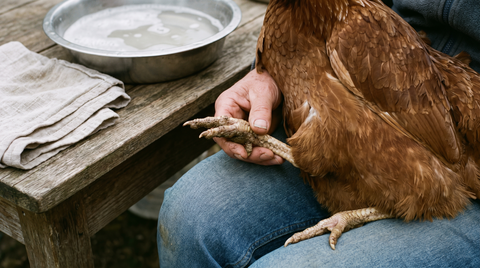
If a bird does get frostbite, the tissue may look pale, then darken. Don't rub it, and don't rapidly heat it. Keep the bird dry and out of the wind, and watch for swelling, infection, or pain—those are signs to call a vet (more on that below).
How do I keep my chickens' water from freezing?
Use a heated waterer or heated base on a non-flammable surface if you have power, or swap in fresh unfrozen water at least twice a day if you don't. Chickens need constant access to clean water in winter—and they actually need more, not less, to stay warm and keep laying.
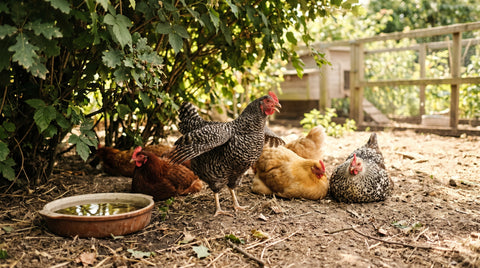
If I could get every winter keeper to do just one thing perfectly, it would be water. Chickens need constant access to clean, unfrozen water—and in cold weather they actually need it more, because hydration supports body-temperature regulation, digestion, and egg production. A hen that can't drink will stop eating, and a hen that stops eating can't keep herself warm.
Your options, roughly in order of convenience:
- Heated waterer or heated base on a stable, non-flammable surface—the most reliable approach if you have power to the coop.
- An outdoor-rated birdbath de-icer dropped into a metal or hard-plastic bucket.
- No power? Manual swaps. Bring out fresh, unfrozen water at least twice a day—more on the coldest days. Rubber bowls are handy because you can flex out the ice.
Whatever you use, place it away from bedding to limit dampness, and keep a backup fount on hand. Check water at least twice daily once temperatures sit below freezing.
How should I prep the coop, and what is the deep litter method?
A little autumn preparation prevents most winter headaches, and the deep litter method is my favorite low-tech approach: let dry bedding build up in layers over the season so the slow composting underneath generates a little gentle warmth and helps keep things dry. It only works if the litter stays dry, so pair it with good ventilation.
A little autumn preparation prevents most winter headaches. The deep litter method is my favorite low-tech approach: instead of stripping the coop bare each week, you let dry bedding (pine shavings or straw) build up in layers over the season. As the top soils, you stir it and add a fresh layer on top. The slow composting underneath generates a little gentle warmth and helps keep things dry—without any fire risk—then gets a full clean-out in spring.
The catch: deep litter only works if it stays dry. Wet litter creates ammonia and humidity, which is the opposite of what you want. So pair it with good ventilation and keep spills and leaks under control.
| Winter task | Why it matters | How often |
|---|---|---|
| Check & refresh water | Frozen water stops drinking, eating, and laying | At least 2x daily below freezing |
| Stir litter, add dry bedding | Keeps coop dry; deep litter adds gentle warmth | Weekly (or when top layer soils) |
| Check ventilation / look for condensation | Excess moisture drives frostbite & respiratory issues | Daily glance; adjust as needed |
| Seal drafts at roost level | Drafts strip away birds' trapped body heat | Once in fall; re-check after storms |
| Inspect combs, wattles, feet | Early frostbite signs are easy to miss | Weekly hands-on check |
| Offer evening scratch | Digesting grain generates overnight body heat | Daily, a small handful per few birds |
What should I feed chickens in winter, and will they keep laying?
Keep a complete layer ration available free-choice—cold birds burn more calories—and add a small handful of scratch grains in the late afternoon, since digesting it overnight produces a little internal heat. Laying naturally slows as daylight drops below roughly 14 hours; you can either let hens rest or add gradual early-morning light.
Cold birds burn more calories to stay warm—feed intake can climb noticeably in winter—so keep a complete layer ration available free-choice and don't let the feeder run low. A small handful of scratch grains in the late afternoon is a lovely tradition: the work of digesting it overnight produces a bit of internal heat, like a bedtime snack. Keep scratch as a treat, not the main meal, and offer grit since winter foraging is limited.
On laying: as daylight drops below roughly 14 hours, most hens slow down or stop. This is completely natural, and it's often compounded by molt—when hens regrow feathers, protein goes to plumage instead of eggs. If your birds are dropping feathers as the days shorten, my guide to molting and feather regrowth explains how to support them through it. You have an honest choice here:
- Let them rest. Many keepers (myself included, some years) give hens a natural winter break, which many believe supports long-term health and longevity.
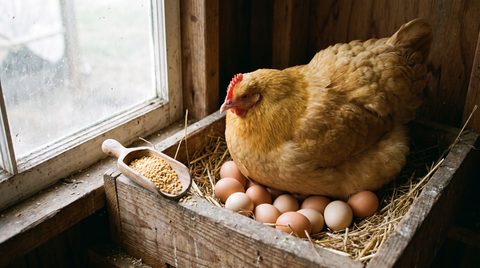
- Add light. If you want eggs through winter, add a low-intensity light on a timer in the early morning—never abruptly at night, or birds get caught off the roost in sudden darkness. Build up gradually toward 14–16 hours of total day length.
Either way, nutrition does the heavy lifting. To support hens through molt and the demands of cold-weather laying, I like to give my flock a little extra nutritional backup. Our chicken egg booster supplement is one gentle way to round out their winter ration with the vitamins and minerals that support healthy feathering and steady lay—use it as a complement to a complete feed, not a replacement for it.
Do chickens need a heat lamp in winter, and is it safe?
Usually no—for healthy, cold-hardy adult hens I recommend skipping supplemental heat entirely, because heat lamps are the leading cause of chicken coop fires. If heat is truly necessary for chicks, ailing birds, or non-cold-hardy breeds, choose a thermostatically controlled radiant panel heater rather than a heat-lamp bulb.
I'll be blunt because lives and homes are at stake: heat lamps are the leading cause of chicken coop fires. They run extremely hot, the heat can't be regulated, and a single failure—a loosened clamp, a frayed cord, a startled hen knocking it loose—can drop that bulb into dry bedding and start a blaze in seconds. Every winter, families lose coops, flocks, and sometimes barns and homes this way.
My honest recommendation: for healthy, cold-hardy adult hens, skip supplemental heat entirely. A dry, draft-free, well-fed flock with unfrozen water is genuinely fine through hard cold. If you believe heat is truly necessary—for chicks, ailing birds, or non-cold-hardy breeds in extreme conditions—choose a thermostatically controlled radiant panel heater designed for coops rather than a heat-lamp bulb.
If you absolutely must use a heat lamp despite the risks, extension guidance is unambiguous: never hang it by the cord, secure it multiple independent ways, keep it well away from all bedding and combustibles, and use a fixture with a protective cage. Personally, I'd still rather not.
What's on a complete winter readiness checklist?
Run through this once in late fall, then keep the daily items going all season—the essentials are sealing drafts, wide dry roosts, an unfrozen-water plan, deep dry bedding, extra feed, a lighting decision, and a weekly hands-on health check.
- Seal drafts and gaps at and below roost level; keep ventilation up high.
- Confirm roosts are wide, wooden, and at least a foot off the floor.
- Set up a heated waterer or a reliable twice-daily water-swap routine.
- Lay down deep, dry bedding (4–6 inches) and plan to top it up weekly.
- Stock extra complete feed; add grit and a small evening scratch ritual.
- Decide your lighting plan—natural rest, or gradual early-morning light.
- Keep petroleum jelly on hand for combs/wattles before extreme cold.
- Do a weekly hands-on health check: combs, wattles, feet, weight, behavior.
- Skip the heat lamp; if heating is essential, use a radiant panel instead.
- Have a vet contact and a sick-bird isolation space ready before you need them.
When should I call a vet in winter?
Reach out to an avian or livestock vet if you see worsening frostbite, respiratory signs like open-mouth breathing or discharge, or sudden listlessness and a hen that won't leave the roost. When in doubt, isolate the bird somewhere warmer and dry, keep it hydrated, and get professional advice.
I'm a keeper, not a veterinarian, and winter is exactly when problems sneak up. Reach out to an avian or livestock vet if you see:
- Frostbite that's worsening—blackened, swelling, oozing, or clearly painful tissue, or a bird that's lethargic and not eating.
- Respiratory signs—open-mouth breathing, gurgling or rattling, nasal or eye discharge, swelling around the face, or sneezing that spreads through the flock. Cold, damp coops can drive respiratory illness, and it can move fast.
- Sudden listlessness, fluffed-up isolation, or a hen that won't leave the roost—classic "something's wrong" signals in a cold-stressed bird.
When in doubt, isolate the bird somewhere warmer and dry, keep it hydrated, and get professional advice. For more on overlapping winter issues, see my guides on why chickens stop laying eggs and chicken respiratory illness symptoms. And if you're brand new to all this, start with the backyard chickens beginner's guide.
Frequently asked questions
At what temperature do chickens get too cold?
Healthy, fully-feathered adult hens of cold-hardy breeds tolerate freezing and even sub-zero temperatures remarkably well, because their down traps body heat. The bigger risks are dampness, drafts, and wind chill rather than the thermometer reading alone. Many keepers don't add heat at all; some extension guidance suggests considering supplemental heat only if coop temperatures fall well below freezing—and even then, a safe radiant panel is preferable to a heat lamp.
Do chickens need a heat lamp in winter?
Usually no. Most cold-hardy adult flocks stay healthy without supplemental heat as long as they're dry, draft-free, well-fed, and have unfrozen water. Heat lamps are the leading cause of coop fires, so I avoid them. If you feel heat is truly necessary—say, for very young, sick, or non-cold-hardy birds—use a thermostatically controlled radiant panel heater instead.
How do I keep my chickens' water from freezing?
Use a heated waterer base, a heated poultry fount, or a birdbath/de-icer rated for outdoor use, all on a stable, non-flammable surface. If you have no power, swap in fresh unfrozen water two or more times a day. Chickens need constant access to clean water in winter—they actually need more, not less, to stay warm and keep laying.
Should I add light to keep my hens laying in winter?
It's optional and personal. Hens slow or stop laying as daylight drops below roughly 14 hours. You can add a low-intensity light in the early morning (never abruptly at night) to extend day length toward 14–16 hours. Some keepers prefer to let hens rest naturally through winter, which many believe supports long-term health. Either choice is valid.
Why are my chickens losing feathers or laying less in winter?
Shorter days naturally reduce laying, and many hens molt in fall and early winter—regrowing feathers diverts protein away from egg production, so a pause is normal. Support them with a complete, slightly higher-protein ration. If feather loss looks patchy with raw or damaged skin, or birds seem ill rather than molting, investigate parasites or illness.
How do I prevent frostbite on combs and wattles?
Control moisture first—frostbite is driven by damp air plus cold far more than cold alone. Keep the coop ventilated but draft-free, manage manure so it doesn't add humidity, and give birds dry roosts off the floor so they can cover their feet. Some keepers apply a thin layer of petroleum jelly to combs and wattles as added insulation in extreme cold.
Can chickens go outside in the snow and cold?
Yes—most cold-hardy hens will happily venture out in cold and even light snow, and fresh air and activity are good for them. Some dislike walking on snow, so a path of straw or a cleared, wind-sheltered spot encourages them out. Always give them the choice to come back into a dry, draft-free coop, and watch for birds that stay puffed up and reluctant to move.
Should I insulate my chicken coop for winter?
You can, but never at the expense of ventilation. A well-built, draft-free coop with deep dry litter is often enough for cold-hardy birds. If you add insulation, cover it so hens can't peck it, and keep upper vents open so moist air still escapes—a sealed, insulated coop that traps humidity causes more frostbite, not less.
What's the best bedding for a winter coop?
Dry pine shavings or straw both work well, and many keepers build them up using the deep litter method for a little gentle composting warmth. The single most important quality is that the bedding stays dry—damp bedding drives up humidity and ammonia, which leads to frostbite and respiratory trouble. Stir it regularly and top up with fresh, dry material.
Do baby chicks need special care in winter?
Yes. Unlike feathered adults, chicks can't regulate their body temperature and do need a controlled heat source until fully feathered—a thermostatically controlled brooder plate is far safer than a heat lamp. Keep them indoors or in a protected space, draft-free and dry, and only move them out once they're fully feathered and the weather allows a gradual transition.
Products mentioned in this guide

Sources & further reading
A note from Sarah: I'm a lifelong keeper, not a veterinarian. This guide shares what's worked for my own flock and is meant for general education - if a bird is seriously ill or injured, please call your vet. These statements have not been evaluated by the FDA.