Key takeaways
- Molting is the annual, daylight-triggered loss and regrowth of feathers, usually starting in late summer to fall and lasting about 4 to 12 weeks.
- Hens almost always stop or slow laying during a molt because feathers are roughly 85 percent protein and the body redirects nutrients to regrowth.
- Raising dietary protein to about 18 to 20 percent, with good methionine and cystine, supports faster, healthier feather regrowth.
- Reduce stress and don't over-handle birds during a molt; pin feathers are blood-filled and tender, and barbering or parasites can mimic a molt.
Quick answer: Molting is the normal, once-a-year process where chickens drop old feathers and grow new ones, usually starting in late summer or fall and lasting about 4 to 12 weeks. Hens almost always stop laying during a molt because feathers are roughly 85 percent protein. You can help feathers regrow faster by raising dietary protein to about 18 to 20 percent, keeping stress low, and not over-handling tender new pin feathers.
The first time I watched a hen go through a hard molt, I genuinely thought something was wrong with her. She looked half-plucked overnight, feathers everywhere, standing there looking miserable. My grandmother just laughed and told me to feed her better and leave her be — that's what four generations of our family did on the farm, and the hen feathered right back out. Molting looks alarming, but it's one of the most natural things a chicken does.
I'm Sarah, and I've kept backyard flocks my whole life. In this guide I'll walk you through what a normal molt actually looks like, why your egg basket goes empty, and the handful of things that genuinely speed up regrowth — plus how to tell a healthy molt apart from a real problem you shouldn't ignore.
What is molting and when do chickens molt?
Molting is the annual shedding and regrowth of feathers, triggered mainly by shorter daylight in late summer and fall. A chicken's first real molt usually happens around 16 to 18 months of age, then repeats roughly once a year.
Feathers wear out over a year of weather, dust baths, and daily life, so chickens replace them on a schedule tied to the seasons. As daylight shortens after the summer solstice, hormones shift, old feathers loosen and drop, and new feathers push them out. Most flocks molt sometime between late August and October, though birds raised under artificial light or hatched off-season can run their own timeline.
Feathers generally drop in a predictable order — head and neck first, then down the back, across the breast and wings, and finally the tail. A bird working through her molt in that sequence is doing exactly what she's supposed to.
What does a normal molt look like — hard molt vs soft molt?
A normal molt comes in two flavors: a hard molt, where a hen drops feathers fast and can look nearly plucked, and a soft molt, where loss is gradual and barely noticeable but stretches out longer. Both are healthy.
How dramatic your bird looks depends a lot on her breed and her individual nature. Neither type is better or worse — they just feel different to watch.
- Hard molt: Fast and dramatic. A hen can lose big sections of feathers in days and look genuinely ragged or naked in patches. It's startling, but it's usually over more quickly. Production breeds and hybrids tend toward hard molts.
- Soft molt: Slow and subtle. Feathers drop a few at a time, so you might only notice extra feathers in the coop and a slightly scruffy look. The trade-off is that it can drag on for longer.
Pin feathers: the tender new growth
As old feathers fall, new ones emerge as pin feathers — short, waxy quills that look a bit like porcupine spines poking through the skin. Each pin is wrapped around a blood-filled shaft while it grows, which is exactly why molting birds are touchy and don't want to be picked up. As the feather matures, that shaft dries and the bird preens away the waxy sheath to release the full feather. Seeing fresh pin feathers come in is one of the clearest signs your bird is in a true, healthy molt.
Why do chickens stop laying eggs when they molt?
Hens stop or slow laying during a molt because feathers are about 85 percent protein, and the body prioritizes rebuilding feathers over making eggs. It's a normal trade-off, not a problem.
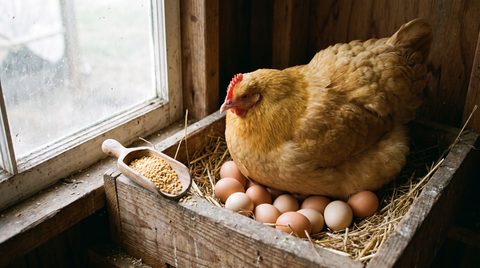
Growing a whole new coat of feathers is metabolically expensive. A hen only has so much protein, energy, and amino acids to work with, and during a molt her body sensibly spends them on the feathers that keep her warm and protected rather than on eggs. Shorter daylight nudges laying down at the same time of year, so the two effects stack.
This is temporary. Once feathers have grown back in and daylight starts to lengthen, most hens return to lay. Older hens often take a little longer to start back up than pullets, and that's normal too. If you want to understand the broader picture of why production drops off, I dig into it in my guide on why chickens stop laying eggs.
Is it a molt or a problem? How to tell the difference
A true molt is gradual, seasonal, leaves whole dropped feathers, and shows fresh pin feathers coming in. Sudden bald spots, chewed or broken feathers, raw skin, scabs, or feather loss in spring and summer usually mean pecking, parasites, or illness instead.
This is the distinction that matters most, because the fixes are completely different. Molted feathers come out whole and intact; feathers that are pecked or barbered by other birds look chewed, shredded, or snapped off at the skin. Use the table below as a quick triage.
| What you see | Likely a normal molt | Likely a problem to investigate |
|---|---|---|
| Timing | Late summer to fall, shorter days | Spring or summer, or year-round |
| Dropped feathers | Whole and intact | Chewed, shredded, or broken at the skin |
| New growth | Pin feathers coming in evenly | Bare skin staying bare, no regrowth |
| Location of loss | Head/neck first, then body in sequence | Back, vent, or spots a bird can't reach herself |
| Skin condition | Healthy, clean skin under pins | Red, raw, scabbed, or bleeding skin |
| Flock pattern | One or several birds, no aggression | One bird targeted, or live mites/lice visible |
If the picture leans toward the right-hand column, your bird probably isn't molting. Bare patches a hen can't reach herself, raw skin, or feathers vanishing in spring point to feather pecking, external parasites like mites and lice, or skin disease. I cover the full investigation in my companion article on why your chicken is losing feathers — start there if anything here looks off. If you do spot crawling bugs or nits near the vent, my guide on how to get rid of chicken mites and lice walks through treating the bird and the coop.
What should I feed chickens to help feathers regrow faster?
Raise dietary protein to roughly 18 to 20 percent during a molt, with good sulfur-containing amino acids — methionine and cystine — which feather keratin depends on. Keep fresh water and grit available, and go easy on low-protein scratch and corn.
Feathers are built almost entirely from keratin, a protein especially rich in the sulfur amino acids methionine and cystine. That's why a standard 16 percent layer ration, which is built for egg production rather than feather building, often isn't quite enough to fuel a fast molt. You have a few easy ways to bump protein up.
Simple ways to raise protein during a molt
- Switch to a higher-protein feed (a 20 percent grower/starter or a purpose-made "feather fixer" type ration) for the duration of the molt.
- Top-dress your normal layer feed with targeted high-protein extras instead of corn and scratch.
- Offer scrambled or hard-cooked eggs — close to a perfect amino-acid match for feathers.
- Add mealworms or black soldier fly larvae as a treat (a little goes a long way).
- Use sunflower seeds, cooked peas, lentils, or small amounts of cooked meat scraps.
- Keep treats to roughly 10 percent of total intake so you don't dilute the balanced feed.
- Always provide grit for digestion and clean, fresh water — feathers won't grow on a dehydrated bird.
A high-protein molt-support food list
| Food | Why it helps during a molt |
|---|---|
| Scrambled or cooked eggs | Highly digestible, near-ideal amino acid profile for feathers |
| Mealworms / black soldier fly larvae | Very high protein; rich in the amino acids keratin needs |
| Sunflower seeds (and a little flax) | Protein plus healthy fats for energy and feather sheen |
| Cooked peas, lentils, soybeans | Plant protein to round out the diet |
| 20% grower or game-bird feed | An easy way to lift base protein without guesswork |
| Cooked meat / fish scraps (plain) | Concentrated protein and methionine; feed in moderation |
Once feathers are back in and you want your hens easing back into a steady lay, balanced daily nutrition matters more than any one treat. A warm-season favorite in our flock is a daily herbal lay support — our Golden Yolk egg booster is built to support nutrition as hens transition out of a molt and back to laying. It's a supplement to a solid diet, not a substitute for the protein their feathers need. For the bigger picture on what's safe to add to the bowl, see my list of what chickens can and can't safely eat.
How can I reduce stress and help my flock through a molt?
Keep the flock calm and routine steady: minimize handling, avoid introducing new birds, prevent crowding and boredom, and give them quiet, draft-free shelter. Molting is hard on a bird's body, and stress only slows regrowth.
Beyond food, the kindest thing you can do is reduce demands on a molting bird. Their tender pin feathers and lower reserves make this a poor time for any upheaval.
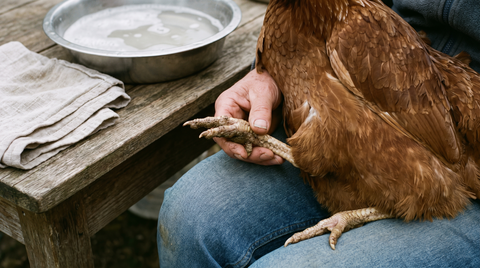
- Handle birds as little as possible — pin feathers are blood-filled and genuinely painful when squeezed.
- Hold off on baths, showing, transport, or anything that means catching and gripping them.
- Don't add new flock members mid-molt; reshuffling the pecking order is stressful and invites pecking.
- Keep the coop from getting crowded, and watch for boredom that can lead to feather pecking.
- Make sure shelter is dry and draft-free — a half-feathered bird chills more easily in cold or wet.
- Keep feed, water, and routine consistent so the flock stays settled.
Give them protein, peace, and patience, and most birds re-feather beautifully on their own. If a late molt runs into cold weather, my guide on how to keep chickens healthy in winter covers keeping a half-feathered flock warm and dry.
When should I call a vet about feather loss?
Call a vet if feather loss is happening outside molt season, if the skin is red, raw, scabbed, or bleeding, if a bird stays bald with no regrowth, if you see live mites or lice, or if the bird is also lethargic, thin, or off her food.
A normal molt should never make a bird truly sick — molting hens stay bright, active, and eating, just scruffy. Signs that point beyond a molt and toward a problem worth a professional look include:
- Bald patches in places the bird can't reach herself, like the top of the head or the back near the tail.
- Skin that's inflamed, raw, scabbed, or bleeding under the missing feathers.
- Visible parasites, crusty legs, or constant scratching and restlessness.
- Feather loss in spring or summer, or feathers that never grow back after months.
- A bird that is also lethargic, losing weight, pale in the comb, or eating poorly.
I'm a lifelong keeper, not a veterinarian, so when something crosses from "messy but normal" into any of those red flags, get a poultry-savvy vet involved. Persistent or abnormal feather problems can signal parasites, infection, or disease that need real diagnosis and treatment.
Frequently asked questions
How long does a chicken molt last?
Most molts run about 7 to 8 weeks, but anywhere from 4 to 12 weeks is normal. Older hens and hard molters can take longer. If your hen is still patchy and bare after 3 to 4 months, look past the molt for parasites, pecking, or illness.
Why did my hens stop laying when they started molting?
Feathers are roughly 85 percent protein, so a molting hen redirects protein and energy from making eggs to growing feathers. Laying almost always slows or stops during a molt and usually returns once feathers have finished coming in and days lengthen again.
What should I feed chickens during a molt?
Shift to about 18 to 20 percent protein with good sulfur amino acids (methionine and cystine). You can switch to a higher-protein feed or feather-fixer feed, or top-dress layer feed with limited high-protein treats. Keep grit and fresh water available.
Should I give my molting hens extra treats and scratch?
Go easy on scratch and corn — they're low in protein and dilute the diet right when birds need more. Better molt snacks are scrambled or cooked eggs, mealworms, sunflower seeds, peas, and cooked meat scraps, kept to about 10 percent of total intake.
Is it bad to handle chickens while they're molting?
Yes, handle them as little as possible. New pin feathers are wrapped in a blood-filled shaft and are genuinely tender; rough handling hurts and can cause bleeding. Skip baths, holding, and showing until the new feathers have opened up.
How do I know if it's a molt or a problem?
A molt is gradual, seasonal, leaves whole dropped feathers, and shows fresh pin feathers coming in. Sudden bald patches a bird can't reach, chewed or shredded feathers, scabs, red raw skin, or feather loss in spring and summer point to pecking, parasites, or illness — and may need a vet.
Do roosters molt too?
Yes. Roosters molt on the same seasonal schedule as hens, dropping and regrowing feathers in late summer or fall. A molting rooster can look especially ragged because his long tail and saddle feathers are so visible. He benefits from the same higher-protein diet and gentle handling as the hens.
Do all chickens in a flock molt at the same time?
Not always. Birds of similar age often molt around the same window, but individuals vary by a few weeks, and younger pullets may skip their first fall molt entirely. It's common to have one hen looking ragged while her flockmates still look sleek, and that's perfectly normal.
Can I do anything to make my chickens molt faster?
Not really — molting runs on its own hormonal and seasonal clock, and there's no safe way to rush it. What you can do is support it: feed 18 to 20 percent protein, keep stress and handling low, and provide dry, draft-free shelter. Good support helps feathers come in strong, even if it doesn't shorten the calendar much.
Why is my chicken molting in winter instead of fall?
Most molts finish before deep cold, but a late, off-season, or stress-triggered molt can spill into winter. A bird re-feathering in the cold needs extra protein and a dry, draft-free coop so she doesn't chill. If the timing seems truly odd or she also acts unwell, rule out parasites or illness rather than assuming it's just a late molt.
Products mentioned in this guide

Sources & further reading
A note from Sarah: I'm a lifelong keeper, not a veterinarian. This guide shares what's worked for my own flock and is meant for general education - if a bird is seriously ill or injured, please call your vet. These statements have not been evaluated by the FDA.