Key takeaways
- Shortening fall and winter days are the number one reason hens stop laying - most need roughly 14 to 16 hours of light, and production naturally drops below that until days lengthen again.
- The annual molt redirects a hen's energy into regrowing feathers (about 85 percent protein) and commonly pauses laying for 4 to 8 weeks, with older hens taking longer.
- Other common causes are age (hens lay best in their first two years), stress, broodiness, a protein or calcium gap, illness or parasites, and a hidden nest you have not found.
- Feed a complete layer ration (about 16 to 18 percent protein) with free-choice oyster shell, keep treats under about 10 percent of the diet, and call a vet if a laying drop comes with lethargy, pale comb, or weight loss.
Quick answer: Most hens stop laying for an everyday reason: shorter fall and winter days, the annual molt, age, stress, broodiness, a gap in protein or calcium, illness or parasites, or a hidden nest you haven't found. Many of these are seasonal and normal. Rule out daylight and molt first, then check nutrition, stress, and health.
If you walked out to a quiet nesting box this morning and thought, "Where are all my eggs?", take a breath. I've kept backyard hens my whole life, and I promise this is one of the most common worries a keeper has. An empty box rarely means something is wrong. More often, your girls are simply responding to the season, their own bodies, or a small change in their world.
I'm not a veterinarian, so I'll keep the health talk honest and cautious, and I'll tell you plainly when it's time to phone a professional. But after decades on our family's organic farm, I can walk you through the eight usual suspects and how to sort out which one you're dealing with.
Do shorter days stop chickens from laying?
Yes — shorter days are the number one reason hens stop laying. Laying is triggered by light entering the hen's eye, and most hens need roughly 14 to 16 hours of daylight to lay at their peak, so production naturally drops in fall and winter.
This catches new keepers off guard every autumn. A hen's laying is triggered by light entering her eye and stimulating her reproductive system. As the days shorten in fall and winter, egg numbers naturally drop, and some hens stop entirely until the days lengthen again.
This is healthy, seasonal behavior. Some keepers add a little supplemental light to nudge winter laying along; if you do, most extension sources suggest capping total light at around 14 hours and adding it in the early morning rather than late at night, so birds aren't caught off the roost when it goes dark. Plenty of us simply let our hens rest through winter. For more on cold-weather care, see how to keep chickens healthy in winter.
Does molting stop egg laying?
Yes. During the annual molt a hen pours her energy into regrowing feathers, which are roughly 85% protein, so laying commonly pauses for about 4 to 8 weeks, and older hens often take longer than younger ones.
Once a hen reaches about 18 months, she'll usually go through her first big molt, then molt again each fall as the days cool. During a molt she drops old feathers and grows fresh ones, and because feathers are roughly 85% protein, her body pours its energy into feather-making rather than eggs.
A molting hen can look rough, even patchy or pin-feathered. This is normal. The kindest thing you can do is raise her protein a little during the molt and keep her stress low while she rebuilds her coat.
At what age do hens slow down laying?
Hens lay most heavily in their first two years, then production gradually tapers each year after, with longer natural pauses and slower restarts. An older hen laying a few eggs a week is perfectly normal.
An older hen who lays a few eggs a week is still a wonderful member of the flock. If your once-prolific girls are now three or four years old, age alone may explain the slowdown.
Can stress make chickens stop laying?
Yes — a stressed hen often stops laying within a day or two. Common stressors include a predator scare, extreme heat or cold, moving coops, adding new birds, overcrowding, or running short on feeder and waterer space.
Hens are sensitive. Even a heat wave can shut down the nesting box. The fix is usually to find the stressor and calm the environment: secure the run, give birds space, provide shade and fresh water in heat, and let a new pecking order settle. Laying typically resumes once your hens feel safe again.
Why has my broody hen stopped laying?
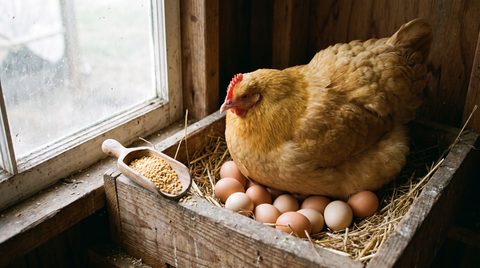
A broody hen has decided she wants to hatch chicks, so she stops laying, sits tight in the nest, and fluffs up and grumbles when you reach under her. If you don't want chicks, gently and repeatedly removing her from the nest usually breaks the spell over several days.
While she's broody, she may try to gather everyone else's eggs too. If you don't have a rooster or simply don't want chicks, repeatedly lifting her off the box over several days usually does the trick.
What should I feed chickens to help them lay again?
Offer a complete layer ration of around 16 to 18% protein plus free-choice oyster shell for calcium, and keep treats under about 10% of the daily diet. Good nutrition supports laying, but no feed forces a healthy hen to lay out of season.
Laying is hard work, and it shows up first in the feed bowl. Too many scratch grains, kitchen scraps, or treats can dilute that balance and quietly stall production. A good rule on our farm: treats stay under about 10% of the daily diet.
Calcium deserves special mention. Hens draw heavily on it to form shells, so I always offer crushed oyster shell free-choice in a separate dish. Its larger particle size releases calcium slowly, which helps overnight when the shell is actually being formed. For a deeper look at what belongs in the feeder, read what to feed backyard chickens, and if you want richer yolks once they're laying again, see how to get darker egg yolks naturally.
When I want a little extra everyday support for a well-fed flock, I reach for our Golden Yolk Daily Egg Booster, an egg-safe herbal supplement for lay and yolk support. I want to be clear and honest here: a supplement like this is nutritional support layered on top of a complete diet, not a cure and not a way to force a healthy hen to lay out of season. No product overrides daylight, molt, or age.
Can illness or parasites stop egg production?
Yes — internal and external parasites like the northern fowl mite drain a hen and lower production, and diseases can hit egg numbers fast. Watch for warning signs alongside the laying drop, such as lethargy, a pale comb, weight loss, diarrhea, or visible mites.
Sometimes a drop in eggs is your flock's way of telling you something's off. The northern fowl mite tends to worsen in cool weather. Watch for warning signs alongside the laying drop: lethargy, a pale or shrunken comb, weight loss, ruffled feathers, diarrhea, labored breathing, or visible mites and lice around the vent.
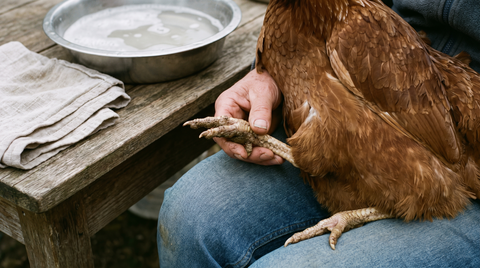
I'm not a vet, so I won't guess at diagnoses. But part fluffy feathers and check the skin near the vent and under the wings for crawling parasites, keep the coop clean and dry, and isolate any bird that seems genuinely unwell. If you see those warning signs, don't wait it out — it can help to cross-check against a sick chicken symptoms checklist before deciding whether to call for help.
Could my hens be laying in a hidden nest?
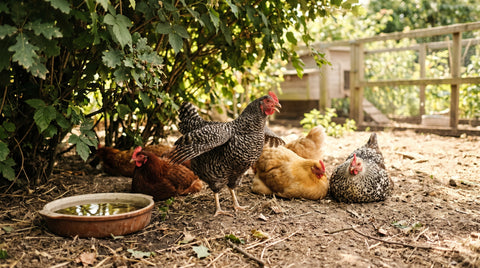
Absolutely — this is one of the most overlooked reasons. Free-ranging hens love to start a secret nest under a shrub, in tall grass, or in a quiet barn corner. If your birds look healthy but the box is empty, they may be laying somewhere you haven't found.
If your birds look healthy and act normal but the box is empty, keep them penned until mid-morning for a few days so they lay where you can find the eggs, then go hunting.
Quick comparison: reason, clue, and fix
| Likely reason | Clue to look for | What to do |
|---|---|---|
| Shorter days | Slowdown starts in fall/winter | Let them rest, or add light up to ~14 hours total |
| Molt | Dropped feathers, patchy or pin-feathered look | Raise protein, reduce stress, wait 4 to 8 weeks |
| Age | Hens are 3+ years old | Adjust expectations; keep them comfortable |
| Stress | Recent scare, move, heat, or new birds | Remove the stressor; secure run; provide space and water |
| Broodiness | Hen sits tight, fluffs and grumbles in the box | Repeatedly remove her from the nest to break it |
| Nutrition gap | Lots of treats or scratch; thin shells | Complete layer feed (~16 to 18% protein) plus oyster shell |
| Illness/parasites | Pale comb, lethargy, weight loss, visible mites | Inspect, keep coop clean; call a vet if unwell |
| Hidden nest | Hens look healthy and normal, box is empty | Confine until mid-morning; search the yard |
Your lay-troubleshooting checklist
Work down this list in order. Most empty nesting boxes get solved in the first few steps.
- How many hours of daylight are your hens getting? Below ~14 hours, expect a seasonal slowdown.
- Are you seeing dropped feathers? A molt can pause laying for 4 to 8 weeks.
- How old are your hens? Production naturally tapers after the first two years.
- Has anything changed recently: a predator, a move, new birds, a heat wave?
- Is any hen sitting tight in the box, fluffed and grumpy? She may be broody.
- Are they on a complete layer feed with free-choice oyster shell, and are treats under ~10% of the diet?
- Is fresh, clean water always available? Even a short shortage can stall laying.
- Have you checked skin near the vent and under the wings for mites or lice?
- Have you searched the yard for a hidden nest before assuming they've stopped?
When should I call a vet about a hen that isn't laying?
A seasonal or molt-related pause doesn't need a vet, but reach out to a poultry-savvy veterinarian if a hen shows lethargy, a pale or bluish comb, weight loss, a swollen abdomen, persistent diarrhea, labored breathing, or signs of being egg-bound alongside not laying.
Because I'm a keeper and not a veterinarian, I lean toward caution whenever a bird seems unwell. The signs worth a call include lethargy or hiding from the flock, a pale or bluish comb, noticeable weight loss, a swollen or firm abdomen, persistent diarrhea, labored or open-mouth breathing, signs of being egg-bound (straining, distress, no egg passed), or a heavy parasite load you can't get on top of. A sudden flock-wide crash in production with sick-looking birds also deserves professional eyes promptly. When in doubt, it's always worth the call.
Frequently asked questions
Is it normal for chickens to stop laying in winter?
Yes. As daylight drops below roughly 14 hours, most hens slow or pause laying. This is a natural, healthy response to the season, and production usually picks back up as the days lengthen in late winter and spring.
At what age do hens stop laying eggs?
Hens lay best in their first two years, then production gradually tapers each year after. Many backyard hens keep laying a few eggs a week for years, just less often and with occasional pauses for molt and winter.
How long does a molt stop egg laying?
A full molt commonly pauses laying for about 4 to 8 weeks while your hen regrows feathers, which are roughly 85% protein. Older hens often take longer than younger birds. Laying typically resumes once the new feathers are mostly in.
What can I feed chickens to help them lay again?
Offer a complete layer feed (about 16 to 18% protein) with free-choice oyster shell for calcium, plenty of fresh water, and limited treats. Good nutrition supports a hen's natural ability to lay, but no feed forces a healthy hen to lay out of season.
Could my hens be laying eggs somewhere I can't find them?
Absolutely, and it is one of the most common culprits. Free-ranging hens often start a hidden nest under a bush, in tall grass, or in a quiet corner of the barn. Keep birds penned until mid-morning for a few days to find the stash.
When should I worry that my chickens aren't laying?
A seasonal or molt-related pause is normal. Worry if a drop comes with other signs, such as lethargy, pale combs, weight loss, diarrhea, labored breathing, or visible parasites. Those warrant a call to a poultry-savvy veterinarian.
How long can a hen go without laying before it's a concern?
If the cause is seasonal daylight, a molt, broodiness, or age, a hen can normally go weeks or even a couple of months without laying and be perfectly healthy. What matters is whether she's otherwise bright, eating, and active. A long pause paired with lethargy, weight loss, or other warning signs is the part worth investigating, not the empty box alone.
Do hens stop laying all at once or gradually?
It depends on the cause. A stressor, a fright, or sudden illness can shut laying down within a day or two, while shorter days, molt, and age tend to taper production gradually. Noticing whether the drop was abrupt or slow is a useful clue: abrupt often points to stress or health, gradual usually points to season or age.
Will adding light force my hens to lay through winter?
Supplemental light can keep some hens laying through the dark months, but it doesn't force a molting, broody, or genuinely worn-out hen to produce. If you choose to add light, most extension sources suggest capping total daylight around 14 hours and adding it in the early morning. Many keepers simply let their hens rest, which is also perfectly healthy.
Can a change in feed or running out of water stop laying?
Yes. An abrupt switch in feed, a diet too heavy in treats or scratch, or even a short stretch without clean water can stall laying quickly. Keep a complete layer ration and fresh water available at all times, and make any feed changes gradually so you don't accidentally trigger a pause.
Products mentioned in this guide

Sources & further reading
A note from Sarah: I'm a lifelong keeper, not a veterinarian. This guide shares what's worked for my own flock and is meant for general education - if a bird is seriously ill or injured, please call your vet. These statements have not been evaluated by the FDA.