Key takeaways
- Yolk color comes almost entirely from carotenoid pigments (xanthophylls like lutein and zeaxanthin) in the hen's diet - hens cannot make these pigments themselves and deposit whatever they eat into the yolk.
- Lutein-rich greens (kale, spinach, alfalfa, clover) deepen yellow tones, while zeaxanthin sources (yellow corn, marigold petals) push yolks toward deep orange.
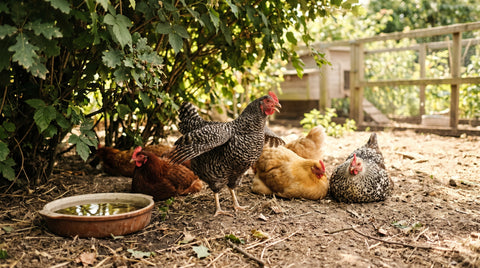
- Free-range and pasture access naturally darkens yolks because foraged clover, grass, weeds, and insects are loaded with carotenoids.
- A darker yolk signals a varied carotenoid-rich diet but is not dramatically more nutritious - protein, fat, and most vitamins are similar between pale and deep yolks, and color takes one to two weeks to change.
Quick answer: Yolk color comes almost entirely from carotenoid pigments, especially xanthophylls like lutein and zeaxanthin, in your hens' diet. Hens can't make these pigments themselves, so they deposit whatever they eat into the yolk. Feed more carotenoid-rich greens, corn, marigold, and forage, and you'll naturally get deeper, richer golden yolks within a week or two.
If you've ever cracked open a backyard egg next to a store-bought one and noticed your yolk glowing a deep gold while the other looked pale and flat, you already know there's something special going on. I grew up on my family's organic farm watching this firsthand, and I'll be honest with you the way I'd tell a neighbor over the fence: that color isn't magic, and it isn't luck. It comes down to what your hens eat, day after day.
I'm Sarah, a lifelong backyard keeper, not a vet, and I've spent years paying attention to what actually moves the needle on yolk color. The good news is that getting darker, richer yolks is genuinely simple once you understand the science. Let's walk through what works, what's a myth, and how to build it into your flock's routine the natural way.
What actually makes a yolk orange?
Yolk color is almost entirely the result of carotenoid pigments your hen eats, and within that family the xanthophylls lutein and zeaxanthin do most of the work. These are the yellow, orange, and red plant pigments you also find in carrots, corn, leafy greens, and marigold petals.
Here's the key fact: hens can't manufacture these pigments on their own. They have to eat them. When a hen consumes carotenoid-rich food, those pigments pass into her bloodstream and get deposited into the yolk as it forms over roughly a week. So the richer and more varied the pigment in her diet, the deeper the yolk. Lutein, found in greens like spinach, kale, and alfalfa, tends to push toward rich yellow. Zeaxanthin, abundant in corn and marigold, leans more toward deep orange. Combine them and you get that gorgeous golden tone backyard keepers are after.
What are the best foods for richer yolks?
The most direct lever is feeding more carotenoid-rich foods, like marigold petals, leafy greens, yellow corn, and alfalfa, alongside a complete layer feed. Think of these as natural color boosters layered on top of balanced nutrition, never as a replacement for it. Here are the workhorses I come back to again and again.
| Food | Main carotenoid / pigment | Why it helps |
|---|---|---|
| Marigold petals | Zeaxanthin (and lutein) | The most widely used natural pigment source; pushes yolks toward deep orange. |
| Leafy greens (kale, spinach, chard) | Lutein | Rich, reliable source of pigment that deepens yellow tones. |
| Yellow corn / maize | Zeaxanthin | A classic xanthophyll source; contributes warm golden-orange color. |
| Alfalfa / clover | Lutein | Forage staple loaded with pigment; great for pastured birds. |
| Pumpkin, squash, sweet potato | Beta-carotene | Seasonal favorites that add warm color and variety. |
| Herbs (parsley, basil, dandelion greens) | Mixed carotenoids | Easy garden additions that round out a pigment-rich diet. |
You don't need all of these at once. Even a daily handful of greens or a scatter of marigold petals, fed consistently, will show up in the yolk within a week or two. Consistency matters far more than any single "superfood."
Why do free-range hens lay darker yolks?
Free-range and pastured hens lay deeper-colored yolks because the clover, grass, weeds, herbs, and insects they forage all day are naturally packed with carotenoids. This is where backyard and pastured birds really pull ahead of caged ones. It's no coincidence that free-range eggs so often have the deepest, most beautiful yolks.
If you can give your flock safe access to a grassy run or rotate them across fresh patches of yard, you're handing them the richest natural pigment source there is, for free. Bugs and grubs add protein and variety too. When pasture is thin in winter or your run is bare, that's exactly when supplementing with greens, corn, and marigold matters most, because the natural buffet has gone quiet.
What doesn't work for darker yolks?
Egg shell color, extra protein alone, and food dyes won't reliably darken yolks, and no food will change tomorrow's egg overnight. Let me save you some wasted effort. A few things that don't reliably darken yolks:
- Egg shell color. Brown, white, blue, or speckled shells have nothing to do with yolk color. That's genetics, not diet.
- "More protein" alone. Boosting protein doesn't add pigment. It's carotenoids specifically that color the yolk.
- Food dye or coloring. Please don't. Some large commercial operations use synthetic pigment additives, but for a backyard flock the natural foods above are safer and work just as well. Stick to ingredients you know are egg-safe.
- Overnight results. Because a yolk takes about a week to form, no food will change tomorrow's egg. Give any diet change one to two weeks before you judge it.
Does a darker yolk mean a more nutritious egg?
Not really, a deep orange yolk signals a varied, carotenoid-rich diet, but protein, fat, and most major vitamins are very similar between pale and richly colored yolks. I want to be straight with you here, because there's a lot of hype around this.
The real difference is in those carotenoid pigments themselves. Lutein and zeaxanthin act as antioxidants and are associated with eye health, so a deeply pigmented yolk does give you a little more of them. But the amounts are modest. You'd get far more lutein from a serving of spinach than from an extra-orange yolk. So enjoy the color for what it is, a lovely sign of a happy, well-fed flock, without over-promising on the nutrition. If you ever have specific health or dietary questions about eggs, that's a conversation for your doctor or a qualified vet for your birds, not a blog.
Can a supplement make rich yolks easier?
Yes, a purpose-made herbal supplement can keep color consistent through winter or sparse-forage stretches, as a convenience layer on top of good food, not a substitute for it. If you want a simple, repeatable way to support rich color, this is where it helps. Our herbal chicken egg booster, a marigold-forward blend formulated to support rich golden yolks and made to be egg-safe, is designed to fold right into your existing feed routine so you're not constantly chopping greens or sourcing petals yourself. It's a convenience layer on top of good food, not a substitute for a balanced layer feed and fresh forage.
Whatever route you choose, the principle is the same: keep carotenoids flowing consistently, keep the core diet balanced, and let time do the rest.
Your richer-yolk checklist
- Feed a complete layer feed as the foundation, always.
- Add a daily handful of carotenoid-rich greens (kale, spinach, alfalfa, clover).
- Include a natural pigment source like marigold petals or yellow corn.
- Maximize safe free-range or pasture time for natural foraging.
- Offer seasonal extras like pumpkin, squash, and herbs for variety.
- Supplement with an egg-safe herbal blend when forage is sparse.
- Keep treats and extras to a sensible share of total intake.
- Be patient, give any change one to two weeks to show in the yolk.
One last thing worth remembering: yolk color is a reflection of your hens' whole life, their diet, their forage, and their conditions. Healthy, well-fed, low-stress hens lay the best eggs, color and all. If your birds suddenly slow down or stop laying, that's a separate issue worth troubleshooting; I walk through it in why chickens stop laying eggs. And if you want to build the strong, varied diet that underpins everything we covered here, start with what to feed backyard chickens.
Frequently asked questions
What actually makes an egg yolk darker?
Yolk color comes from carotenoid pigments, especially xanthophylls like lutein and zeaxanthin, in your hen's diet. Hens can't make these pigments themselves, so they deposit whatever they eat into the yolk. More carotenoid-rich foods generally mean a deeper golden-orange yolk.
How long does it take to see darker yolks after changing the diet?
Pigment changes are gradual. Because a yolk takes roughly a week to fully form before it's laid, you'll usually start noticing a richer color within one to two weeks of consistently feeding more carotenoid-rich foods or improving forage access.
Does a darker yolk mean the egg is more nutritious?
Not necessarily. A deeper color reflects more carotenoid pigments, which are beneficial antioxidants, but the protein, fat, and most vitamins are very similar between pale and dark yolks. Color is a sign of diet, not a guarantee of overall nutrition.
Can I just add food coloring or synthetic dye to feed?
You shouldn't. Some commercial operations use synthetic pigment additives, but for a backyard flock the natural route is safer and just as effective. Stick to real foods like greens, corn, and marigold rather than dyes you can't verify as egg-safe.
Why are my free-range hens' yolks darker than my neighbor's?
Free-range and pasture access usually means more clover, grass, weeds, herbs, and insects, all of which carry carotenoids. Hens with rich, varied forage typically lay deeper-colored yolks than hens kept only on plain commercial layer feed.
Will too much corn or marigold harm my hens?
In sensible amounts, no. Treat carotenoid-rich foods as part of a balanced diet, not a replacement for complete layer feed. Keep treats and supplements to a reasonable share of total intake so your hens still get their core protein, calcium, and nutrients.
Why are my yolks suddenly paler in winter?
It's almost always forage, not a health problem. In winter the grass, clover, weeds, and bugs that supply most of a hen's carotenoids disappear, so yolks drift paler even on the same layer feed. Adding greens, yellow corn, marigold, or an egg-safe herbal blend through the lean months keeps color steady until pasture returns.
Do different breeds lay darker yolks?
Diet drives yolk color far more than breed does. Any healthy hen with the same carotenoid-rich forage and feed will lay a similarly deep yolk, regardless of breed or shell color. If one bird's yolks look paler, look at what she's actually eating rather than blaming her genetics.
Can a hen's age or laying stage affect yolk color?
Diet is still the main driver, but a hen laying heavily can sometimes show slightly paler yolks because the available pigment is being spread across more eggs. The fix is the same: keep carotenoids flowing with consistent greens, corn, or marigold. A sudden, dramatic change in color or laying is worth a closer look for an underlying issue.
Are dark-yolk eggs safe to eat for everyone?
Yes, the deeper color simply reflects more plant pigment in the hen's diet and doesn't change how safe the egg is to eat. Cook and handle them as you would any egg. If you have specific dietary or allergy questions, that's one for your doctor rather than a chicken-keeping blog.
Products mentioned in this guide

Sources & further reading
A note from Sarah: I'm a lifelong keeper, not a veterinarian. This guide shares what's worked for my own flock and is meant for general education - if a bird is seriously ill or injured, please call your vet. These statements have not been evaluated by the FDA.