Key takeaways
- A complete feed covers about 90% of what chickens need - supplements fill specific gaps, they do not replace good feed.
- Free-choice calcium (oyster shell) is the one supplement nearly every laying flock genuinely benefits from.
- Probiotics, vitamins and electrolytes earn their place during stress, illness, molt and extreme weather.
- Most flashy 'cure-all' supplements are optional - spend on feed and calcium first, treat the rest as targeted support.
Quick answer: The best supplements for chickens are the few that fill real gaps: free-choice calcium (oyster shell) for layers, plus probiotics, vitamins and electrolytes used during stress, molt, illness or extreme weather. A complete feed covers roughly 90% of a hen's needs, so most birds need targeted support, not a cabinet full of cure-alls.
I grew up on my family's organic farm, and if there is one thing four generations of keeping chickens taught us, it is that you cannot buy your way to a healthy flock. Good feed, clean water, space and care do the heavy lifting. Supplements are the fine-tuning - genuinely useful in the right spot, and a waste of money in the wrong one.
So in this guide I want to be honest with you about what actually works, what is optional, and what is mostly clever marketing. I will tell you where I do spend, where I do not, and when a problem belongs to a vet instead of a feed scoop.
Do chickens on complete feed actually need supplements?
For the most part, no - a quality complete feed is formulated to provide all the protein, energy, vitamins and minerals a hen needs, and supplements only fill specific gaps on top of it. Poultry feeds are called "complete" because they are designed to contain everything proper growth, egg production and health require.
The catch is the 90/10 rule. A common feed-maker guideline is that treats and extras should stay at 10% or less of the daily diet, with complete feed making up the other 90%. Extension nutritionists make the same point a different way: grains and scraps are high in energy but low in protein, minerals and vitamins, so piling on extras can actually unbalance a diet that was complete to begin with. That is the irony of over-supplementing: you can feed your way into a deficiency.
If you are still sorting out the basics, start with my guide on what to feed backyard chickens before you spend a cent on extras. Get the foundation right and most "problems" supplements promise to solve never appear.
What is the single most important supplement for laying hens?
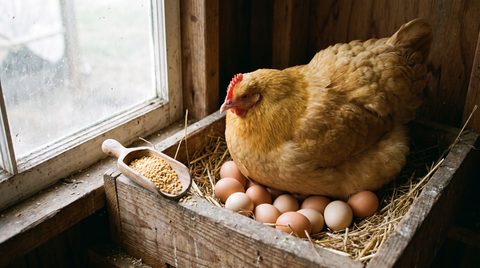
Free-choice calcium - almost always crushed oyster shell - is the one supplement nearly every laying flock genuinely benefits from. A laying hen pours an enormous amount of calcium into her shells, and layer feed alone is not always enough for the hardest workers.
Layer mashes typically run about 2.5% to 3.5% calcium, while growing chickens need only around 1.2%. High-producing hens may need extra, which is why extension nutritionists recommend offering ground oyster shell free choice in a separate dish so each bird takes what she needs. Oyster shell's real advantage is timing: it releases slowly, which suits the roughly 20-hour process of building a shell overnight.
Oyster shell versus grit - they are not the same
This trips up a lot of new keepers. Oyster shell is a soft, soluble calcium source. Grit is hard, insoluble stone that sits in the gizzard and grinds food for any bird eating something other than fine complete feed. Oyster shell is too soft to work as grit, and grit provides no calcium. Many flocks do best with both, offered in separate dishes.
| Supplement | What it does | Who needs it | How to offer |
|---|---|---|---|
| Oyster shell (calcium) | Slow-release calcium for strong eggshells | Laying hens only | Free choice, separate dish |
| Grit | Grinds food in the gizzard | Birds eating treats, greens or whole grains | Free choice, separate dish |
| Probiotics | Gut and immune support | After stress, illness or antibiotics | Feed or water, short course |
| Vitamins + electrolytes | Recovery and hydration support | Heat, cold, transport, illness, molt | Water, 24-48 hours as needed |
One firm caution: never give oyster shell to chicks or non-laying birds. Too much calcium can damage the kidneys of growing chickens. Calcium is a layer supplement, full stop.
Do probiotics really work for chickens?
Yes, there is real research behind them - probiotics can improve gut health, nutrient retention and modest aspects of egg and shell quality - but they are most worthwhile around stress, not as an everyday must-have.
Probiotics are live beneficial microbes that crowd out pathogens in the gut, support the gut barrier and help the immune system. Studies in laying hens have linked them to better gut structure, improved calcium retention, and modest gains in eggshell strength and thickness. That is a meaningful list, though the effects tend to be supportive rather than dramatic.
Where I reach for probiotics is after a course of antibiotics, after illness, or during a stressful stretch like a heat wave or a move - times when the gut flora takes a hit. For a healthy flock already eating well, they are a reasonable insurance policy, not a miracle. If your hens have simply slowed down, it is worth ruling out the common, fixable causes first in my piece on why chickens stop laying eggs before assuming a supplement is the answer.
When should I give vitamins and electrolytes?
Save vitamin and electrolyte supplements for stress events - heat, cold, illness, transport, vaccination or a hard molt - rather than dosing the water year-round.
Under stress, a bird's vitamin reserves deplete quickly because every event draws down the stores that fuel immune response and recovery. A water-soluble blend of vitamins A, D3, E and K plus electrolytes such as sodium, calcium and magnesium can help birds rehydrate and bounce back. In hot weather, many keepers start the supplement about 24 hours before a forecast heat spike.
True vitamin deficiencies do happen, and the Merck Veterinary Manual documents real consequences - poor growth, nerve problems, weak shells - from shortfalls of vitamins A, D and the B group. But on a complete feed those are rare. If you see signs that point to deficiency, that is a vet conversation, not a guessing game with the supplement aisle.
- Heat wave or cold snap on the way
- Birds recovering from illness or a parasite treatment
- After transport, rehoming or vaccination
- During a heavy molt, when birds are rebuilding feathers and reserves
- When a hen seems run-down but has no clear emergency symptoms
Are apple cider vinegar and herbal supplements worth it?
Some have genuine support and some are mostly tradition - judge each by its ingredients and evidence, not by the word "natural" on the label.
Apple cider vinegar is the classic example. Rigorous studies are scarce and the results that do exist are mixed, so I would not bank on it for egg numbers. It may support gut conditions and keeps plastic waterers cleaner, but it can make dietary calcium harder to absorb and it corrodes metal, so use it sparingly, never in a metal waterer, and not alongside heavy calcium needs. I cover the real pros and cons in my honest look at apple cider vinegar for chickens.
Herbs are a mixed bag too. In our family we have leaned on oregano, garlic and chili for generations, and some of those - oregano and garlic especially - now have supporting research as gut and immune helpers. Marigold and leafy greens are the real engine behind darker, richer egg yolks, because yolk color comes from carotenoid pigments (xanthophylls) in the diet rather than any vitamin pill, since hens cannot make those pigments themselves. The honest rule: an herb is worth using when there is evidence behind the specific ingredient, not because it sounds wholesome.
Which supplements help with egg laying and shell quality?
For laying and shell strength, calcium comes first, then a balanced lay-support routine - protein, the right vitamins and trace minerals, and pigments for yolk color all play a part.
If your hens are laying well on a complete layer feed with oyster shell on the side, you may not need anything more. But during peak lay, molt recovery or the slower light of late autumn, a daily lay-and-yolk support supplement can be a tidy way to deliver the herbs, vitamins and pigments that back up good feed. Our Golden Yolk daily egg-and-yolk support is built for exactly that - a herbal top-up for laying health and deeper yolk color, meant to sit alongside a complete feed rather than replace it.
I want to be clear and fair here: no supplement makes a hen lay if the real issue is age, daylight, molt or stress. This guide is the wide-angle view of supplements across the whole flock and every life stage. If your one question is purely about raising egg numbers, that is a narrower job, so head to my dedicated breakdown of the best supplement to make chickens lay more eggs instead, where I weigh calcium versus protein versus herbal blends for output specifically. And if you are choosing feeds, my comparison of the best feeds for laying hens will save you money before you start buying.
When should supplements stop and a vet step in?
Supplements support a basically healthy bird - they are never a treatment for disease, and reaching for them instead of help can cost you the flock. I am a lifelong keeper, not a veterinarian, and there are lines I do not cross.
Call a vet, do not just "add a supplement," when you see any of these:
- A bird that is lethargic, fluffed up, off feed or losing weight for more than a day
- Bloody droppings, persistent diarrhea or sudden changes you cannot explain
- Labored breathing, gasping, swollen eyes or face, or nasal discharge
- Repeated soft-shelled or shell-less eggs despite calcium on offer
- Suspected poisoning, a deep wound, or any bird going downhill fast
- Signs that point to a real deficiency or disease rather than a tune-up need
Use cautious judgment. Supplements may help, they may support, but they do not cure. When in doubt, get a professional eye on the bird.
Frequently asked questions
Do chickens on complete feed actually need supplements?
Mostly no. A quality complete feed covers about 90% of a hen's needs. The main genuine add-on is free-choice calcium (oyster shell) for layers. Probiotics, vitamins and electrolytes are useful during stress, illness, molt or extreme weather rather than every day.
What is the single most important supplement for laying hens?
Free-choice calcium, usually crushed oyster shell, offered in a separate dish. Laying mash runs about 2.5-3.5% calcium, and hard-working hens often need more to build strong shells. Offering it on the side lets each bird take what she needs.
Should I give oyster shell or grit?
They do different jobs. Oyster shell is a slow-release calcium source for layers. Grit is insoluble stone that helps the gizzard grind food and is needed by birds eating anything other than complete pelleted feed. Many flocks benefit from both, in separate dishes.
Do probiotics really work for chickens?
Research in laying hens links probiotics to better gut health, improved nutrient retention and modest gains in egg and shell quality. They are most worthwhile after antibiotics, illness or stress. For a healthy flock on good feed, they are helpful but not essential.
Is apple cider vinegar a good supplement?
Evidence is thin. Rigorous studies are scarce and mixed, so do not count on it for egg numbers. It may support gut conditions and keep plastic waterers cleaner, but it can reduce calcium absorption and corrodes metal waterers, so use it sparingly and never in metal.
When should I use vitamins and electrolytes?
During heat waves, cold snaps, illness, transport, vaccination or a hard molt. Stress drains a bird's vitamin reserves fast, so a short course of vitamin and electrolyte water can help recovery. Daily year-round use is unnecessary for birds on complete feed.
Can supplements hurt my chickens?
Yes, if overdone. Too much calcium damages the kidneys of chicks and non-laying birds, so never feed oyster shell to growing chicks. Mixing extras into complete feed unbalances it. Fat-soluble vitamins can build up to toxic levels if heavily over-supplemented.
Will supplements give me darker, richer egg yolks?
Yolk color comes from pigments called xanthophylls in the diet, not from a vitamin pill. Marigold, leafy greens, alfalfa and certain herbal blends deepen yolk color. A daily lay-and-yolk support supplement can help, but pasture and greens do most of the work.
Are 'natural' or herbal supplements better than synthetic ones?
Not automatically. Natural does not mean proven or safe in every dose. Some herbs (oregano, garlic, marigold) have real supporting research; others are marketing. Judge any supplement by its ingredients, evidence and how it fits a flock already on good feed.
How do I choose a supplement that is worth the money?
Match it to your flock's life stage, read the active ingredients and dosages, confirm how it is given (feed or water), and buy from a reputable maker with clear storage and use instructions. Fix feed and calcium first, then add targeted support only where you see a real need.
Products mentioned in this guide

Sources & further reading
- Feeding Chickens for Egg Production in Small and Backyard Flocks - eXtension Poultry
- Nutrition for Backyard Chicken Flocks - Alabama Cooperative Extension System
- Vitamin Deficiencies in Poultry - Merck Veterinary Manual
- Chicken Treats: Are They Good For My Laying Hens? (90/10 rule) - Purina Animal Nutrition
- Enhancing egg production and quality by probiotic supplementation in laying hens - Poultry Science (PMC)
- Biofortified orange corn increases xanthophyll density and yolk pigmentation in egg yolks from laying hens - Poultry Science (PMC)
A note from Sarah: I'm a lifelong keeper, not a veterinarian. This guide shares what's worked for my own flock and is meant for general education - if a bird is seriously ill or injured, please call your vet. These statements have not been evaluated by the FDA.