Key takeaways
- Give each standard hen 3-4 sq ft inside the coop if she has run access, or 8-10 sq ft if she's confined indoors most of the day.
- Plan at least 10 sq ft of outdoor run per bird, and more is always better for behavior and health.
- Provide 8-10 inches of roost bar per bird and one nest box for every 4-5 hens.
- Cross-ventilation high above the roost is non-negotiable; ammonia and damp cause more illness than cold does.
Quick answer: Give each standard hen 3-4 square feet of indoor coop space when she also has a run (8-10 sq ft if confined indoors), at least 10 square feet of outdoor run, 8-10 inches of roost bar, and one nest box per 4-5 hens. Ventilate high above the roost. When in doubt, build bigger.
I get more questions about coop size than almost anything else, and I understand why. A coop is the one decision that's hard to undo. Get the space right and most of the headaches people blame on "difficult" chickens, the pecking, the smell, the constant illness, simply never show up.
I grew up on my family's organic farm, and the old hen house there was nothing fancy. But it had three things every good coop has: room to move, dry air, and a high place to perch. Below I'll give you the real per-bird numbers, straight from university extension guidance, plus the honest trade-offs I've learned keeping flocks myself. This is a foundational guide, so I'll link out to the deeper articles as we go.
How much coop space does each chicken need?
Plan 3-4 square feet of indoor coop floor per standard hen if she has daily access to a run, and 8-10 square feet per bird if she's confined inside most of the day. Those figures come straight from extension poultry guidance, and they're the single most important numbers in this whole article.
The reason for the range is access. A coop is for sleeping, laying, and shelter; the run is where chickens actually live out their day. When birds spend daylight hours outside, the coop floor can be smaller. When weather or predators keep them shut in, that same floor has to hold them comfortably for hours, so it needs to be much larger.
Adjust for breed size
- Bantams (small breeds): can go a touch below the standard, around 2 sq ft each with run access.
- Standard breeds (most layers): 3-4 sq ft each with run access.
- Large/heavy breeds (Orpingtons, Brahmas, Jersey Giants): lean toward the top of the range or beyond, 4+ sq ft.
My honest advice after years of this: build for one or two more birds than you plan to keep. "Chicken math" is real, and an extra few square feet now is far cheaper than rebuilding later. If you're brand new, my backyard chickens beginner's guide walks through how many birds make sense for a first flock.
How much outdoor run space do chickens need?
Provide at least 10 square feet of outdoor run per bird, and treat that as a floor, not a goal. Extension sources consistently recommend 10 sq ft per hen for the run, and every experienced keeper I know wishes they'd built theirs bigger.
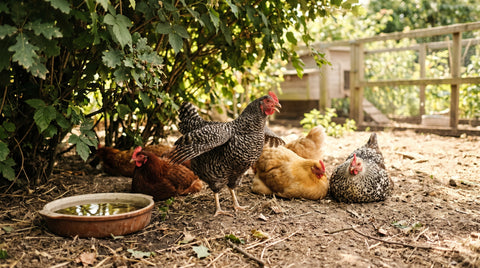
Run space matters even more than coop space for behavior. A cramped run turns to bare, muddy, manure-packed dirt within weeks, which is exactly the condition that breeds parasites and disease. A roomy run stays greener, lets birds forage and dust-bathe, and gives lower-ranking hens somewhere to escape, which cuts down on the bullying I cover in predator-proofing your coop and elsewhere.
If you free-range during the day, you can get away with a smaller attached run, but you still need that secure run for days you can't supervise. Predators don't take days off, so the run is your safety net.
What's the space-per-bird breakdown by flock size?
Use the table below as your build checklist: multiply the per-bird minimums by your flock size for coop, run, roost, and nest boxes. These are minimums for standard-size birds with run access. Round up, never down.
| Flock size | Coop floor (3-4 sq ft/bird) | Run (10 sq ft/bird) | Roost bar (8-10 in/bird) | Nest boxes (1 per 4-5) |
|---|---|---|---|---|
| 3 hens | 9-12 sq ft | 30 sq ft | ~2 ft | 1 |
| 4 hens | 12-16 sq ft | 40 sq ft | ~3 ft | 1 |
| 6 hens | 18-24 sq ft | 60 sq ft | ~4-5 ft | 2 |
| 8 hens | 24-32 sq ft | 80 sq ft | ~6-7 ft | 2 |
| 10 hens | 30-40 sq ft | 100 sq ft | ~7-9 ft | 2-3 |
| 12 hens | 36-48 sq ft | 120 sq ft | ~8-10 ft | 3 |
For confined birds with no run, double the coop figure (use 8-10 sq ft per bird). Bantams can shade these numbers down; large breeds should shade them up.
How much roost space and what height do hens need?
Allow 8-10 inches of roost bar per standard bird, set 18-24 inches off the floor and always higher than the nest boxes. Chickens instinctively roost at the highest point they can reach to sleep, so the roost has to win that contest against the nests.
Getting the roost right
- Width: Use a flat 2-by-4 with the wide (4-inch) face up, not a round dowel. Hens sleep flat-footed and pull their feathers down over their toes, which prevents frostbite in winter.
- Length: Add up 8-10 inches per bird so the whole flock can perch at once; they like to huddle, but they need room to all fit.
- Height: 18-24 inches suits most breeds. Heavy breeds and older hens do better with lower perches or a small ramp to avoid hard landings.
- Spacing: If you run parallel bars, keep them about 12 inches apart so back-row birds don't soil the ones below.
Position roosts where you can slide a droppings board underneath. Chickens produce most of their manure overnight, and catching it there keeps the rest of the coop far cleaner, which matters a lot in summer heat when smell and flies spike.
How many nest boxes and what size?
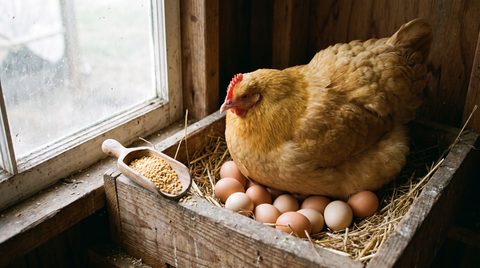
Provide one nest box for every 4-5 hens, sized about 12 by 12 by 12 inches for standard breeds. Hens take turns and often crowd into a single favorite box no matter how many you build, so you don't need one per bird.
A few things I've learned the hard way:
- Keep nest boxes lower than the roost so hens don't sleep (and poop) in them.
- Tucked into a dim, quiet corner, hens prefer to lay where they feel hidden.
- Line them with clean, soft bedding and refresh it, dirty nests lead to dirty and cracked eggs.
- If hens won't use a box, it's usually too bright, too high, or too few. Add boxes or move them before assuming the hen is the problem.
If you're raising chicks toward point-of-lay, you don't need nest boxes occupied until they're nearly grown; my brooder guide for raising baby chicks covers the timeline from chick to first egg.
Why is ventilation so important in a coop?
Ventilation is the most underrated part of a coop: chickens give off a surprising amount of moisture and ammonia overnight, and trapped damp air causes more respiratory illness and frostbite than cold ever does. A coop that smells sharp when you open it in the morning is under-ventilated, full stop.
The goal is steady air exchange placed high, near the roofline or in the soffits, above the level of perched birds. That lets warm, moist, ammonia-laden air rise and escape while your hens stay out of any direct draft on the roost. Penn State guidance flags keeping ammonia below roughly 25 ppm; a simple smell test works for backyard flocks, if it stings your nose, your birds are breathing it all night.
The winter mistake
New keepers seal coops up tight against the cold and accidentally trap humidity, which is exactly what causes frostbitten combs. The fix is counterintuitive: in winter you ventilate high (to release moisture) while blocking low drafts (to keep wind off the birds). Good airflow is the backbone of keeping chickens healthy in winter. If you're seeing sneezing or rattly breathing despite good airflow, read up on chicken respiratory symptoms and watch them closely.
What does a complete coop setup include?
Beyond raw square footage, a healthy coop needs predator security, dryness, easy cleaning access, and the right fixtures. Here's the essentials checklist I'd hand a first-time builder.
- Coop floor sized at 3-4 sq ft per bird (8-10 if confined), run at 10+ sq ft per bird.
- Roost bars: flat 2-by-4s, 8-10 inches per bird, set above the nest boxes.
- Nest boxes: one per 4-5 hens, ~12x12x12 in, in a dim low corner.
- High ventilation above the roost; no direct drafts at perch level.
- Hardware-cloth (not chicken wire) on all openings, with a buried or skirted apron against diggers.
- Secure, predator-proof latches, raccoons open simple hooks.
- A dry, raised floor with absorbent bedding and a droppings board under the roost.
- Shade and airflow for summer; dryness and draft-blocking for winter.
- A clean waterer and feeder, positioned to stay dry and unsoiled.
- A dust-bathing area (dry dirt) in the run, it's how chickens fend off mites and lice naturally.
- Easy human access: a door or roof you can reach through to clean every corner.
Build it so cleaning is easy and you'll actually do it. A coop you can't reach into is a coop that gets neglected.
When should I call a vet?
Housing problems usually show up as flock-wide symptoms, so if you've fixed the space and ventilation and birds are still sick, it's time to get professional help. Space and air quality are prevention, not treatment.
Contact an avian or livestock veterinarian if you see:
- Persistent coughing, sneezing, rattly breathing, or discharge from eyes or nostrils across multiple birds, which can signal a contagious respiratory disease.
- Frostbitten combs or wattles in winter despite your best efforts, a sign ventilation or moisture still needs work.
- Open wounds from crowding or bullying that look infected or won't heal.
- Sudden deaths, or several birds going downhill at once.
I keep chickens, I'm not a vet, and there's no shame in calling one. For sorting out what's an emergency versus what can wait, my sick chicken symptoms checklist is a good first stop.
Frequently asked questions
How much coop space does each chicken need?
Plan 3-4 square feet of indoor coop floor per standard hen if she also has access to a run, and 8-10 square feet per bird if she's kept inside most of the day. Bantams need a bit less; large or heavy breeds need a bit more.
How big should the run be per chicken?
Aim for at least 10 square feet of outdoor run per bird, per extension guidance. More is genuinely better. Bigger runs stay cleaner, grow more forage, and dramatically reduce pecking and boredom problems.
How much roost space does each hen need?
Provide about 8-10 inches of roost bar per standard bird so the whole flock can perch at once. Use a flat 2-by-4 with the wide side up so hens can cover their toes with their feathers on cold nights.
How many nest boxes do I need?
One nest box for every 4-5 hens is the standard recommendation. Hens share and take turns, so you rarely need one per bird. A roughly 12 by 12 by 12 inch box suits most standard breeds.
Can a coop have too much ventilation?
In most climates the bigger risk is too little. You want steady airflow high above the roost to carry off moisture and ammonia, without a draft blowing directly on perched birds. In winter, ventilate up high and block drafts down low.
Do chickens need a heated coop in winter?
Usually no. Healthy, fully feathered standard breeds tolerate cold well in a dry, draft-free, well-ventilated coop. Heat lamps are a serious fire risk. Focus on dryness and ventilation instead of added heat.
How high should roosts be off the ground?
Roughly 18-24 inches works for most breeds, and always higher than the nest boxes so hens choose the roost to sleep instead of soiling the nests. Heavy breeds do better with lower, easy-to-reach perches.
What happens if my coop is overcrowded?
Crowding drives feather picking, bullying, dirty bedding, ammonia buildup, and faster spread of mites and disease. If you see pecking or constant mess, the most common fix is simply more space per bird, not more management.
Can I keep just two or three chickens?
Yes, but never keep a single chicken, they're flock animals and a lone bird suffers. Three is a comfortable minimum. Even a tiny flock still needs the full per-bird space, roost length, ventilation, and at least one nest box.
Sources & further reading
A note from Sarah: I'm a lifelong keeper, not a veterinarian. This guide shares what's worked for my own flock and is meant for general education - if a bird is seriously ill or injured, please call your vet. These statements have not been evaluated by the FDA.