Key takeaways
- An egg bound hen has a fully formed egg stuck in her oviduct and is straining without laying - it is a true emergency that can turn fatal quickly if she does not pass the egg.
- First-line home treatment is a 15-20 minute warm Epsom-salt soak, gentle belly massage, vent lubrication, calcium, and rest in a warm, dim, quiet space.
- Calcium deficiency is the most common underlying cause, so free-choice oyster shell and vitamin D matter for both treatment and prevention.
- If she hasn't passed the egg in 24 hours, is gasping, paralyzed, or you suspect a broken egg inside, treat it as a vet emergency.
Quick answer: An egg bound hen has a fully formed egg stuck in her oviduct and is straining without laying. Move her somewhere warm and quiet, give a 15-20 minute warm Epsom-salt soak (about 100-102 F), gently massage her belly, lubricate the vent, and offer calcium. Most mild cases pass within a few hours - if not resolved in 24 hours, it is a vet emergency.
There are few things that make my stomach drop faster than walking into the coop and finding a hen hunched in the corner, tail down, pumping her vent and going nowhere. I grew up on my family's organic farm, and egg binding is one of the first true emergencies my mother taught me to recognize - because the difference between a hen who recovers and one who doesn't often comes down to how quickly you act.
The good news is that many egg bound hens can be helped at home with a warm soak, calcium, and a calm pair of hands. The hard truth is that some can't, and knowing the line between the two is the whole game. Let me walk you through exactly what I do, in order, and when to stop and call a vet.
What does it mean when a hen is egg bound?
Egg binding means a fully formed egg has lodged in the hen's oviduct (usually the shell gland or vagina) and she cannot pass it on her own. According to the Merck Veterinary Manual, an egg can get stuck because it is oversized (like a double-yolker), because of low blood calcium, or because of previous injury to the vent or vagina.
It is a genuine emergency. A retained egg can press on nearby organs and tissue, which is often why a bound hen also stops passing droppings and grows weak and distressed. Left unresolved, egg binding can become fatal quickly, so this is not a wait-and-see situation.
How do I know if my chicken is egg bound?
The classic signs are repeated straining at the vent with no egg, a wide-legged "penguin" stance, a firm swelling low in the abdomen, and a hen who is suddenly lethargic and off her food. The Merck manual specifically notes that affected hens "assume a penguin-like posture" - standing upright with legs spread to take pressure off the abdomen.
Watch for several of these together:
- Straining, pumping, or repeatedly squatting as if to lay, but producing nothing
- An upright, waddling, penguin-like walk with legs spread wide
- A hard, swollen lower belly you can sometimes feel an egg in
- Tail held down, drooping wings, fluffed feathers
- Pale comb and wattles
- Little or no interest in food and water; not pooping or only small droppings
- Sitting on the ground, reluctant to stand or move
If your hen seems unwell but you are not sure these signs fit, it is worth running through a broader sick chicken symptoms checklist to rule other things in or out before you start treating for egg binding specifically.
Egg bound vs. broody vs. prolapse - a quick triage
It is easy to mistake egg binding for other things. This table is how I sort it out at a glance.
| Sign | Egg bound | Broody hen | Vent prolapse |
|---|---|---|---|
| Straining at vent | Yes, repeatedly, no egg | No | Sometimes (often after straining) |
| Posture | Upright, penguin-like, legs wide | Flat and fluffed on the nest | Hunched, tail down |
| Visible at the vent | Nothing protruding | Nothing | Pink/red tissue bulging out |
| Appetite | Off food, lethargic | Eats in short bursts, alert | Often off food |
| Belly | Firm, swollen, egg may be felt | Normal | Usually normal |
| Urgency | Emergency (hours) | Not urgent | Emergency |
If you see pink or red tissue bulging from the vent, you are likely dealing with a prolapse rather than (or alongside) binding - read how to treat vent prolapse in chickens, because the handling is different and gentleness matters even more.
What causes a hen to become egg bound?
The single most common underlying cause is calcium deficiency, because a hen needs calcium for the strong muscle contractions that push an egg out. The Merck manual lists hypocalcemia and calcium tetany among the main reasons an egg lodges, alongside oversized eggs and prior vent injury.
Other contributors I see in backyard flocks:
- Low calcium or vitamin D - the muscles simply can't squeeze hard enough. Vitamin D is required to absorb and use calcium.
- Oversized or double-yolk eggs - common in heavy production breeds and young layers.
- Pullets laying too early - bodies brought into production before they are physically ready (more on timing in when chickens start laying eggs).
- Obesity - excess internal fat crowds the reproductive tract.
- Dehydration, stress, cold, and reproductive infection - all can interfere with normal laying.
Calcium problems also show up as weak shells. If your flock has been producing thin or rubbery eggs, that is a warning sign worth chasing down - see why chickens lay soft-shell eggs for the underlying nutrition picture.
How do I treat an egg bound hen at home?
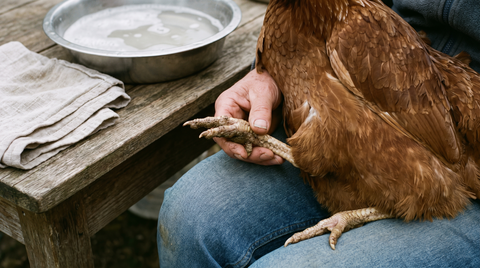
Bring her indoors to a warm, dim, quiet space, give a 15-20 minute warm Epsom-salt soak, gently massage her abdomen, lubricate the vent, offer calcium, and let her rest in a humid, warm spot. This relaxes the muscles around the egg and is exactly the supportive care a vet would start with - warmth, fluids, calcium, and lubrication.
Here is my step-by-step, in order:
- Separate and warm her. Move her to a quiet crate or box indoors, dim and warm (around 85-90 F if you can manage it). Stress and cold both work against you.
- Give calcium right away. A fast-absorbing form - calcium citrate, liquid calcium, or a crushed human calcium tablet - helps the muscles contract. This is one of the most important steps.
- Warm Epsom-salt soak. Fill a basin with warm water (about 100-102 F) deep enough to cover her lower belly and vent, with a tablespoon or so of Epsom salt. Hold her gently and let her soak 15-20 minutes. The warmth relaxes muscles; the Epsom salt is soothing.
- Gentle belly massage. While she soaks or right after, massage her abdomen toward the vent with light, downward strokes. Never squeeze or push hard - a cracked egg inside her is dangerous.
- Dry her thoroughly. Towel and (on low, careful) blow-dry so she does not chill. A wet, cold hen is a setback.
- Lubricate the vent. Apply a water-based lubricant around and just inside the vent to ease passage.
- Rest in a warm, humid, dim spot. Return her to the warm crate. Steam or a humidifier nearby can help. Keep water and a little calcium-rich food within reach.
- Repeat once if needed. You can give a second soak a few hours later. If she still hasn't laid within about 24 hours, stop home treatment and call a vet.
Many hens will pass the egg within a few hours of the first soak and a calcium boost. When she does, let her recover quietly for a day with easy access to water, calcium, and food.
How do I prevent egg binding from happening again?
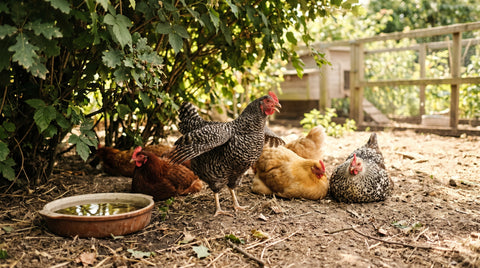
The best prevention is steady calcium and vitamin D, free-choice oyster shell, fresh water, a healthy weight, and not pushing pullets to lay too early. Because calcium deficiency is the leading driver, nutrition is where most prevention lives.
What I keep in front of my flock:
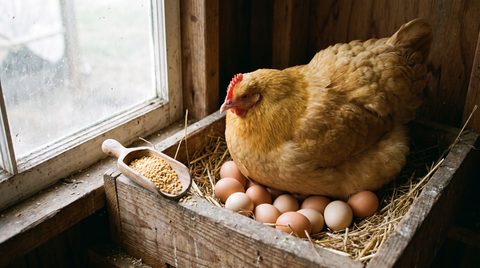
- Free-choice crushed oyster shell in a separate dish at all times - hens self-regulate, and the larger particles release calcium slowly overnight when shells are forming. The Merck manual notes oyster shell and added vitamin D3 as part of managing calcium problems in hens.
- A complete layer ration as the base diet, with treats kept under about 10 percent so you don't dilute the calcium.
- Vitamin D from sunlight or feed, so the calcium they eat actually gets absorbed.
- Constant fresh water and protection from extreme heat and cold.
- A healthy weight - lean, active hens have fewer reproductive problems.
If you want a deeper dive into nutrition that supports strong shells and consistent laying, our guides on the best supplements to help chickens lay more eggs and how to fix soft-shell eggs fast both come back to the same calcium-and-vitamin-D foundation. As part of a balanced layer diet, a daily herbal lay support like our Golden Yolk egg booster can help round out steady, healthy laying - it is a supplement to good nutrition and oyster shell, not a replacement for them, and not a treatment for a hen who is already bound.
When should I call a vet for an egg bound hen?
Call a vet if she hasn't passed the egg within about 24 hours of home care, if she is gasping or collapsed, if you suspect a broken egg inside her, or if you see prolapsed tissue. Egg binding can kill quickly, so a hen who is declining despite soaks needs professional help, not another bath.
Get veterinary care promptly if you notice any of these:
- No egg passed within 24 hours of warm soaks and calcium
- Open-mouth breathing, gasping, or obvious respiratory distress
- Weakness, paralysis, or inability to stand (possible severe hypocalcemia)
- You feel or see a cracked or broken egg, or bloody discharge
- Pink or red tissue bulging from the vent (prolapse)
- She is rapidly getting weaker, cold, or unresponsive
A vet can give injectable calcium and fluids, provide pain relief and oxygen, lubricate and manually assist passage, or in severe cases remove the egg surgically - options you cannot safely replicate at home. There is no shame in going to the vet; an avian or poultry-savvy vet is genuinely the difference-maker in the hard cases.
A note of honesty: I am a fourth-generation chicken keeper, not a veterinarian. The home steps here are widely recommended supportive care, but every hen is different. When in doubt, get a professional involved early rather than late.
Frequently asked questions
How long can a hen be egg bound before she dies?
There is no exact clock, but egg binding is a true emergency and a stuck egg can turn fatal quickly. Many keepers and vets use a simple rule: if a warm soak and calcium haven't worked within about 24 hours of home care, stop and call a vet rather than waiting longer.
What is the fastest way to treat an egg bound hen at home?
Bring her indoors to a warm, dim, quiet space and give her a 15-20 minute warm Epsom-salt soak (about 100-102 F), then a gentle belly massage and a dab of water-based lubricant around the vent. Offer calcium and let her rest. Many hens pass the egg within a few hours.
How do I know if my chicken is egg bound or just broody or constipated?
An egg bound hen strains and pumps her vent, stands wide-legged in a penguin posture, and often has a firm swelling low in her abdomen. A broody hen is alert, fluffs up, and protests when moved but eats and poops normally. Constipation usually lacks the firm abdominal egg and visible straining at the vent.
Can I feel the egg if my hen is egg bound?
Often yes. With clean, lubricated hands you can gently feel low on her abdomen, just inside and above the vent, for a hard, egg-shaped lump. Be very gentle - never squeeze or try to force it, because a cracked egg inside the hen is dangerous.
What kind of calcium should I give an egg bound hen?
A fast-absorbing form like calcium citrate or a crushed human calcium tablet, or liquid calcium, works quickest in an emergency. Calcium helps the muscles contract to push the egg out. Oyster shell free-choice is better for long-term prevention than for an acute episode.
Should I use olive oil or Vaseline to lubricate the vent?
A water-based personal lubricant is the safest choice for around and just inside the vent. Olive oil or a thin smear of petroleum jelly on the outside of the vent is acceptable if that's all you have. Avoid pushing oil deep inside, and never use anything irritating.
Will a warm bath always fix an egg bound hen?
No. A warm soak relaxes the muscles and helps many mild cases, but it does not work every time. If the egg is oversized, broken, or lodged high, or if she is severely hypocalcemic, she needs a vet. Don't keep repeating soaks for days while she declines.
What causes a hen to become egg bound in the first place?
The most common cause is calcium deficiency, which weakens the muscle contractions needed to lay. Other causes include oversized or double-yolk eggs, very young pullets laying too early, obesity, dehydration, stress, and reproductive injury or infection.
Can an egg bound hen still poop?
She may pass small amounts, but the stuck egg can press on her colon and block droppings, which is part of why the condition turns serious quickly. A hen who is straining, not pooping, and not laying needs prompt attention.
How can I prevent egg binding from happening again?
Keep crushed oyster shell available free-choice, feed a complete layer ration, ensure vitamin D (sunlight or feed), provide constant fresh water, avoid obesity, and don't push pullets into early laying with extra light. Daily herbal lay support can help round out steady, healthy laying.
Products mentioned in this guide

Sources & further reading
A note from Sarah: I'm a lifelong keeper, not a veterinarian. This guide shares what's worked for my own flock and is meant for general education - if a bird is seriously ill or injured, please call your vet. These statements have not been evaluated by the FDA.