Key takeaways
- Vent prolapse - when part of the oviduct or cloaca turns inside out through the vent - is an emergency because flockmates will peck it, causing fatal injury.
- First move: isolate her alone in a quiet, dim space so no other bird can peck the exposed tissue.
- Treat by cleaning the tissue, shrinking swelling with plain sugar, then gently pushing it back in with a lubricated finger.
- Slow her laying by limiting light to under 12 hours a day, and call a vet if tissue is torn, blackened, or keeps prolapsing.
Quick answer: Vent prolapse is an emergency - part of the hen's oviduct or cloaca has turned inside out through the vent, and flockmates will peck it. Act fast: isolate her alone, clean the tissue, coat it in plain sugar to shrink swelling, gently push it back in with a lubricated finger, then keep her in dim light to pause laying while she heals.
If you have just lifted a hen and found a wet, red mass bulging from her back end, take a breath - I know exactly how alarming it looks the first time. I have been keeping backyard chickens since I was a girl on my family's organic farm, and a prolapsed vent is one of the few things that genuinely makes my stomach drop, because it can go bad so quickly. The good news: caught early, before the flock gets to her, many hens make a full recovery with calm, careful home care.
This guide walks you through exactly what to do, in order, using methods backed by poultry extension specialists and the Merck Veterinary Manual. I am a lifelong keeper, not a vet, so where this crosses into something only a professional should handle, I will tell you plainly.
What is vent prolapse in a chicken?
Vent prolapse - also called a blowout, pickout, or cloacal prolapse - is when the lower part of the hen's oviduct or cloaca turns inside out and protrudes through the vent instead of retracting after she lays. You will see moist, pink-to-red tissue pushing out, sometimes as small as a marble, sometimes a swollen mass the size of a golf ball or bigger.
A little eversion is actually normal for a split second as an egg passes. The problem is when that tissue does not pull back in. Per the Merck Veterinary Manual, if the hen is overweight or the tissue is injured, the vagina can fail to retract and stay out - and once flockmates start pecking the exposed tissue, the entire oviduct and even parts of the intestine can be pulled out, which is often fatal.
That pecking risk is why this is a time-sensitive emergency and not a wait-and-see situation.
How do I know if my chicken has a prolapse?
You will see red or pink moist tissue bulging from the vent that does not go back in on its own. Often you will also notice she is hunched, straining, sitting apart from the flock, or has dried egg material, blood, or pecking wounds around her rear.
Use this quick triage table to figure out how serious it is and how fast you need to move.
| What you see | What it likely means | Your move |
|---|---|---|
| Small pink ring, clean, no blood | Early, mild prolapse caught in time | Isolate and treat at home now - best odds |
| Swollen red mass, no pecking yet | Moderate prolapse, swelling needs reducing | Isolate, shrink swelling, push back in |
| Bleeding, peck marks, bruising | Flock has started pecking - urgent | Isolate instantly, clean, treat, watch for infection |
| Blackened, torn, or dangling intestine | Severe, tissue dying or gut involved | Call a vet - euthanasia may be kindest |
If your hen is showing several vague signs of being unwell and you are not certain what you are looking at, my sick chicken symptoms checklist can help you tell a prolapse apart from other problems.
What is the first thing to do for a prolapsed vent?
Isolate her immediately, away from every other bird, in a quiet, dim space. This is the most important step, and it comes before any treatment. Chickens are wired to peck anything red, moist, and moving, and a few pecks at exposed tissue can kill her.
A dog crate, a large box, or a separate pen in a calm room or shed works well. Keeping her dim does double duty: it stops pecking and it discourages laying, which gives the vent a chance to rest. University of Minnesota Extension notes that a prolapse can become permanent if other hens peck at it, so do not skip this step even for a quick treatment.
- Move her to a solo crate or pen, fully separated from the flock
- Keep the space quiet and dimly lit (aim for under 12 hours of light)
- Offer fresh water with poultry vitamins and electrolytes to ease stress
- Gather your supplies before you handle her: warm water, clean cloth, plain sugar or honey, water-based lubricant, gloves
- Wash your hands and keep nails short and clean to avoid introducing infection
How do you push a prolapsed vent back in?
Clean the tissue, shrink the swelling with plain sugar, lubricate it, then use a gloved fingertip to gently and steadily ease it back inside the vent. Work slowly and calmly - rushing or forcing tears the tissue.
Here is the step-by-step I follow. These hands-on steps are common backyard-keeper practice (the extension and veterinary sources I lean on focus on prognosis and prevention rather than home reinsertion), so go gently and loop in a vet if anything looks beyond home care:
Step 1 - Clean it gently
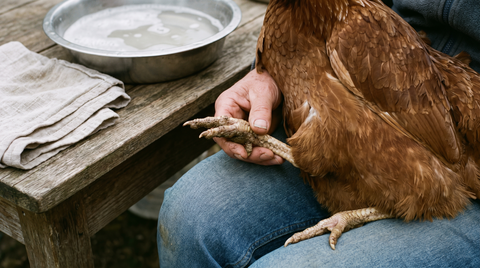
Hold her snugly, wrapped in a towel if she struggles. Rinse the prolapsed tissue with warm water (or a dilute saline) and dab away any dirt, droppings, or dried egg with a soft, clean cloth. Be gentle - the tissue is delicate.
Step 2 - Reduce the swelling
Coat the prolapse generously with plain granulated sugar or honey and let it sit for several minutes. The sugar draws fluid out of the swollen tissue so it shrinks, which is what makes it possible to put back. A cool (not freezing) compress can help too. You can also dab on a small amount of plain hemorrhoid cream like Preparation H to calm irritation.
Step 3 - Lubricate and ease it back
Apply a water-based lubricant. With a clean, gloved fingertip, apply slow, steady, gentle pressure to guide the tissue back through the vent and as far inside as it will comfortably go. Hold for a moment so it stays.
Step 4 - Protect the area
Keep the vent area clean while it heals. If there are any peck wounds or raw spots around the vent, a poultry-safe topical can help keep them clean and protected - I reach for a gentle poultry wound and skin spray for the surrounding skin (not inside the vent itself). For more on dressing pecking injuries, see my guide to chicken first aid for wounds, pecking, and bumblefoot.
Repeat this clean-shrink-reinsert routine daily until the prolapse stays in and the area looks settled. Mild cases may hold after a treatment or two; stubborn ones can take one to two weeks of daily care.
How do I stop my hen laying so the vent can heal?
Cut her daylight to under 12 hours and slightly reduce rich feed and treats so her body pauses egg production. A vent that keeps having to stretch around new eggs cannot heal, so resting her ovaries is half the battle.
Keeping her in that dim isolation space naturally limits light. Avoid extra-rich layer treats and scratch for now, and feed a plain, balanced ration. Once she is fully healed and back with the flock, return her to normal light and feed gradually.
If laying problems are a recurring theme in your flock, it is worth understanding the bigger picture - my articles on why chickens lay soft-shell eggs and how to treat an egg-bound hen cover related reproductive strain that can lead straight to a prolapse.
How do I prevent vent prolapse from happening again?
The big levers are healthy body weight, not pushing pullets into lay too early, controlled lighting, and giving hens proper nest boxes. Most prolapses trace back to one of these.
The Merck Veterinary Manual lists obesity, early laying in undersized hens, oversized or double-yolk eggs, and excessive or premature light as the main risk factors. Extension specialists add overcrowding and cannibalism to the list. Tackle those and you sharply lower the odds of a repeat.
- Keep hens at a healthy weight - avoid overfeeding treats and high-energy scratch
- Do not use artificial light to force young pullets to lay before they are mature
- Provide enough clean, private nest boxes (about one per 4-5 hens)
- Avoid overcrowding, which drives stress and pecking
- Feed a complete layer ration so she has the calcium and nutrition to pass eggs smoothly
- Keep the flock healthy and parasite-free so no bird is run down or straining
A well-fed, well-managed flock simply has fewer emergencies. Solid everyday care - good feed, the right space, and routine health checks - is the best prolapse prevention there is.
When should I call a vet about a prolapse?
Call a vet when the tissue will not stay in despite treatment, when it is torn, blackened, or rotting, when the intestine has been pulled out, or when your hen is weak, cold, and in shock. These are beyond what home care can fix.
I am honest with new keepers about this: poultry extension specialists state plainly that it is unlikely a bird with an established prolapse will recover and that it should be euthanized, so in severe cases euthanasia is the kindest choice. That is hard to hear, but letting a hen suffer with dying tissue or a pulled-out intestine is not kindness. A vet can confirm the situation, treat infection, or help you end her suffering humanely.
Reasons to get professional help quickly:
- The prolapse keeps coming back out after repeated reinsertion
- Tissue is dark, dry, foul-smelling, or clearly dying
- You see intestine or large amounts of tissue, not just the vent ring
- Heavy bleeding from flock pecking
- She is lethargic, not eating, cold, or showing signs of shock
- You suspect an egg is also stuck (egg bound) and cannot resolve it
Frequently asked questions
Can a chicken recover from vent prolapse?
Yes, many hens recover fully if you catch it early, before the tissue is badly pecked or damaged. The sooner you isolate her and push the prolapse back in, the better her odds. Once the tissue is torn, blackened, or repeatedly prolapses despite treatment, the outlook is poor and a vet should weigh in.
What does a prolapsed vent look like in a chicken?
You will see moist, pink to red tissue bulging out of the vent, sometimes the size of a golf ball or larger. It may be a smooth ring or a swollen, glistening mass. If flockmates have pecked it, you may also see blood, bruising, or dark, dying tissue.
How do you reduce the swelling of a prolapsed vent?
Coat the prolapsed tissue in plain granulated sugar (or honey) and leave it on for several minutes. The sugar draws fluid out of the swollen tissue so it shrinks, which makes it far easier to ease the prolapse back inside. Cold compresses can help too.
Why do other chickens peck at a prolapse?
Chickens are drawn to the color red and to anything moist and moving. The exposed tissue is an irresistible target, and a few pecks can quickly turn a treatable prolapse into a fatal injury. This is why immediate isolation is the single most important step.
How do I stop my hen from laying so the prolapse can heal?
Reduce her daylight to under 12 hours by keeping her in a dim, quiet space, and slightly cut back on rich feed and treats. Laying hens need light to ovulate, so limiting light tells her body to pause egg production and gives the vent time to rest and retract.
What causes vent prolapse in chickens?
The main risk factors are hens that start laying too young or are overweight, laying very large or double-yolk eggs, and too much light too early. All of these strain the vent so the tissue does not retract properly after an egg passes.
Can I put Preparation H or honey on a chicken prolapse?
Yes. A small amount of plain hemorrhoid cream (Preparation H) reduces swelling and irritation, and honey both shrinks the tissue and offers mild antibacterial benefit. Use plain, non-medicated versions and a water-based lubricant when you push the tissue back in.
How long does it take a prolapsed vent to heal?
A mild, early prolapse may stay in after one or two treatments and settle within a few days to a week. Stubborn cases need daily care - clean, treat, and re-insert - for one to two weeks, with her kept isolated and in low light the whole time.
When should I cull or euthanize a hen with vent prolapse?
Consider euthanasia, ideally guided by a vet, when the prolapse will not stay in despite repeated treatment, when the tissue is torn, blackened, or rotting, when the intestine has been pulled out, or when she is in shock and clearly suffering.
Is a prolapsed vent the same as being egg bound?
No, but they are related. An egg-bound hen has an egg stuck inside that she cannot pass, while a prolapse is tissue that has turned inside out and protruded. Straining to pass a stuck egg can cause a prolapse, so the two sometimes happen together.
Products mentioned in this guide

Sources & further reading
A note from Sarah: I'm a lifelong keeper, not a veterinarian. This guide shares what's worked for my own flock and is meant for general education - if a bird is seriously ill or injured, please call your vet. These statements have not been evaluated by the FDA.