Key takeaways
- Natural remedies like herbs, garlic and apple cider vinegar are best as supportive care and prevention - not cures for serious disease.
- The single most powerful 'remedy' is supportive care: warmth, quiet isolation, and getting the bird to eat and drink.
- Electrolytes in water for 1-3 days help a stressed or dehydrated bird far more than any single herb.
- If a bird stops eating and drinking, gasps, has bloody droppings, or does not improve in 48 hours, stop home-treating and call a vet.
Quick answer: Natural remedies for sick chickens work best as supportive care and prevention - not as cures. Herbs, garlic and apple cider vinegar can steady the gut, tempt a poorly bird to eat, and back up its immune system. But the real lifesaver is warmth, quiet isolation, and getting the bird eating and drinking. If a chicken stops doing both, gasps for air, or fails to improve in 48 hours, call a vet.
I grew up on my family's organic farm, where the first response to a droopy hen was never a trip to the pharmacy - it was the kitchen. Four generations of my family have leaned on chili, oregano and garlic to keep a flock thriving, and I still believe in that herbal toolkit. But I'll be honest with you in a way some natural-living blogs won't: a jar of vinegar is not going to fix a serious illness, and pretending otherwise can cost a bird its life. I am a lifelong keeper, not a veterinarian, so treat everything here as experience and supportive care, not a substitute for a real diagnosis.
So this is the grounded version. Below I'll walk through the natural remedies that genuinely help, how to give the kind of supportive care that does the heavy lifting, what to skip, and - most importantly - the exact moment to stop home-treating and pick up the phone. Think of natural care as your first-aid kit and your everyday prevention, with a vet as your backup for anything beyond a minor wobble.
Do natural remedies actually work for sick chickens?
Yes - but mostly as supportive care and prevention, not as cures. Herbs and tonics can improve gut health, encourage appetite, and give the immune system a hand, which all help a bird fight off minor problems. They do not reliably treat bacterial, viral, or heavy parasitic disease.
There is real science behind some of the favourites. Reviews of herbal use in poultry note that plants like garlic, oregano and thyme carry antimicrobial and antioxidant compounds, and studies of feed additives such as garlic and apple cider vinegar show modest benefits to gut environment and immune response. The key word is modest. These are supports, not silver bullets.
Where natural care earns its keep is everyday: a healthy gut, fewer minor sniffles, a flock that bounces back faster from stress. When you are choosing daily extras, my guide to the best supplements for chicken health goes deeper on what is worth adding to feed and water.
What is the single most important thing to do for a sick chicken?
Supportive care - warmth, quiet, and keeping the bird eating and drinking - matters more than any herb you can name. Chickens hide illness until they are quite unwell, so by the time you notice, basic life support is the priority.
The Merck Veterinary Manual describes these same supportive measures in its guidance on infectious bronchitis: in cold weather, raising the ambient temperature can decrease mortality, and for some strains, adding electrolytes to the drinking water and easing off heavy protein help birds through an outbreak. The principle generalises well to a poorly hen: warmth, fluids, and gentle food. None of that is exotic.
Set up a recovery pen
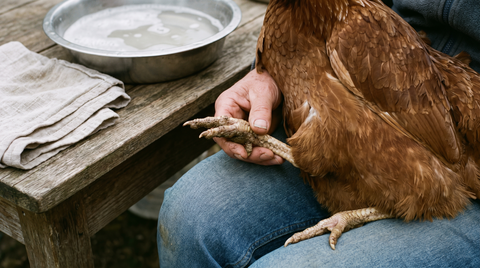
Separate the sick bird into a clean, dry, warm space - a dog crate in a quiet room or a sectioned-off corner of the garage works. Isolation does two things: it reduces stress and bullying, and it stops a possible contagious illness spreading. A poorly hen at the bottom of the pecking order gets pecked harder, so this step alone can turn things around.
Get fluids in first
Dehydration kills faster than hunger. Offer an electrolyte solution for 1-3 days; commercial poultry electrolytes mixed per the label are easiest. If the bird won't drink, dip its beak gently and let it swallow, repeating every hour. Once it is drinking and brighter, switch back to plain fresh water.
Tempt the appetite
A bird that eats is a bird that fights. Offer high-value soft foods: scrambled or mashed egg, warm wet mash, plain unsweetened yogurt, chopped greens. Sprinkle a little chopped garlic or oregano on top if it helps coax a bite.
- Move the bird to a warm, dry, quiet pen on its own
- Offer electrolyte water for 1-3 days, then plain water
- Help it drink by dipping the beak hourly if needed
- Tempt with egg, wet mash, yogurt, or greens
- Keep it calm and out of bright light and noise
- Watch droppings, breathing and energy at least twice a day
- Wash your hands and change clothing after handling
Which natural remedies are worth using - and how?
The most useful natural remedies are ones that support the gut and immune system: apple cider vinegar, garlic, oregano, and a handful of culinary herbs. Use them as gentle extras layered on top of good supportive care, not as the whole plan.
Here is how I actually use the staples, with honest expectations for each.
| Remedy | What it may help with | How to use it | Honest limits |
|---|---|---|---|
| Raw apple cider vinegar (with mother) | Gut health, mild wellness tonic | About 1 tablespoon per gallon of water, a few days at a time | Not a disease treatment; never in metal waterers; skip for tiny chicks |
| Garlic (fresh, crushed) | Immune support, mild antimicrobial appeal | 1-2 crushed cloves per several birds, in feed or water | Supportive only; will not clear a real infection |
| Oregano (fresh or dried) | Antimicrobial and antioxidant support | Sprinkle in feed or steep in water for a sick bird | Evidence is for feed additives, not curing illness |
| Electrolytes | Dehydration, heat and illness stress | Per label in water for 1-3 days | Stop after a few days; not for daily long-term use |
| Probiotics / plain yogurt | Gut balance after stress or scours | Small spoonful or commercial poultry probiotic | Helps recovery, does not treat the cause |
Apple cider vinegar is the remedy I get asked about most. It is a fine everyday tonic for gut health when used sensibly, and I dig into the details and cautions in my piece on the real benefits of apple cider vinegar for chickens. Just remember it is a wellness aid, not a medicine.
How do I match a natural remedy to the symptom?
Start by identifying the symptom, then layer the right support - but treat any remedy as a complement to proper diagnosis. Many problems look alike on the surface, so guessing wrong wastes precious time.
If you are not sure what you are looking at, run through my sick chicken symptoms checklist first - knowing what you are dealing with changes everything about how you respond.
| Symptom | Reasonable natural support | When it needs a vet, not home care |
|---|---|---|
| Mild lethargy after stress or heat | Electrolytes, shade, rest, tempting food | No improvement in 48 hours, or it stops eating |
| Loose droppings (mild) | Probiotics, plain water, gentle diet | Bloody, foamy, or persistent diarrhoea |
| Minor sniffle or watery eye | Warmth, oregano, isolation, clean air | Gasping, swollen face, rattling, several birds affected |
| Small scrape or peck wound | Clean the wound, keep it dry, isolate | Deep, infected, or non-healing wounds |
| Off-colour but eating | Supportive care, observe closely | Stops eating, can't stand, or rapid decline |
Respiratory signs deserve special caution. A faint sneeze in one bird may settle with rest, but true poultry respiratory disease spreads fast and some forms are serious or even reportable. If you hear rattling, see gasping, or notice swelling, read up on chicken respiratory illness symptoms and isolate the bird straight away rather than reaching for herbs alone.
For wounds, the most important natural step is keeping things clean and dry while the skin heals; if you want help choosing a topical, I compared options in my guide to the best wound spray for chickens.
Can natural remedies handle worms and parasites?
Natural feed supplements may help keep worm burdens lower as routine prevention, but a confirmed, heavy infestation usually needs a real dewormer. Herbs are a maintenance tool, not a rescue for a bird already losing condition to parasites.
I am all for a herbal-first approach to flock care - it is literally my family's tradition. But honesty matters: if a fecal test shows a serious worm load, the kind thing is to treat it effectively. I laid out the trade-offs candidly in my comparison of a natural vs chemical chicken dewormer, including when each genuinely makes sense.
One upside of the herbal route worth knowing: well-chosen kitchen herbs and food-grade tonics generally carry no egg-withdrawal worry, whereas many chemical medications require you to discard eggs for a set period. That egg-safe angle is exactly why so many keepers reach for a gentle, food-based herbal chicken dewormer supplement as part of routine maintenance - though it is still maintenance, not a substitute for proper treatment of a heavy infestation.
What natural remedies should I avoid or use carefully?
Be cautious with concentrated essential oils, unverified internet 'cures', and any remedy used in place of obvious veterinary care. Natural does not automatically mean safe, and some popular fixes do more harm than good.
- Concentrated essential oils can irritate airways and skin, especially in a closed coop or applied undiluted. Whole and dried herbs are far safer.
- ACV in metal waterers corrodes galvanised metal and can leach harmful substances - use plastic or glass.
- High doses of anything. More is not better; over-supplementing herbs or electrolytes can upset a bird further.
- Delaying real treatment. The biggest danger of natural remedies is using them to put off a vet visit a sick bird truly needs.
If a remedy promises to 'cure' a serious disease at home, be sceptical. Good flock keeping is honest about limits.
When should I call a vet instead of treating naturally?
Call a vet when a bird stops eating or drinking, struggles to breathe, has bloody droppings, can't stand, or hasn't improved in about 48 hours - and immediately if several birds sicken at once or a bird dies suddenly. These are signals home care can't safely handle.
Extension guidance gives a useful warning line on numbers: the University of Missouri Extension advises that if you notice more than 1 percent of the flock sick at any one time, disease is probably present and needs prompt attention. In my own keeping, my rule of thumb is simpler: if a bird is badly injured, or it is not clearly improving after a couple of days of good supportive care, I stop tinkering at home and ring the vet. Sudden deaths, swelling of the head or face, and breathing difficulty always warrant a professional, because a few poultry illnesses are contagious and reportable.
- The bird won't eat or drink for more than a day
- Open-mouth breathing, gasping, or rattling
- Bloody, foamy, or persistent watery droppings
- Unable to stand, walk, or hold its head up
- A wound that is deep, infected, or not healing
- No improvement after about 48 hours of supportive care
- Several birds sick at once, or a sudden unexplained death
There is no shame in calling for help. The keepers I respect most are the ones who know exactly where their own toolkit ends and a vet's begins.
Frequently asked questions
Can natural remedies actually cure a sick chicken?
Usually no. Herbs, garlic and apple cider vinegar support a bird's gut, immune system and appetite, and they shine as everyday prevention. But they do not cure bacterial, viral or serious parasitic disease. For those you need correct diagnosis and, often, a vet-prescribed medication.
What is the best home remedy for a sick chicken?
Supportive care beats any single herb: move the bird somewhere warm, quiet and dry on its own, offer electrolytes in the water, and tempt it to eat soft, high-value food. A bird that keeps eating and drinking has a real chance; one that stops needs a vet.
Is apple cider vinegar good for sick chickens?
Raw apple cider vinegar with the mother can support gut health and is fine at about 1 tablespoon per gallon of water for a few days. It is a mild wellness tonic, not a treatment for disease. Never use it in galvanised metal waterers, and skip it for very young chicks.
How do I get a sick chicken to eat and drink?
Tempt with favourites - scrambled egg, wet mash, plain yogurt, chopped greens. For water, dip the beak gently and let the bird swallow, repeating every hour. Use electrolyte water for 1-3 days. If it refuses food and water for more than a day, treat that as an emergency.
Can I give garlic and oregano to sick chickens?
Yes, in small amounts. Crushed garlic and oregano have antimicrobial compounds and are popular flock tonics, supported by some poultry research as feed additives. Treat them as supportive extras alongside good care - not as a replacement for diagnosis or veterinary treatment when a bird is genuinely ill.
When should I stop using natural remedies and call a vet?
Call a vet if a bird is not eating or drinking, is gasping or open-mouth breathing, has bloody or persistent watery droppings, cannot stand, or has not improved within about 48 hours. Sudden deaths or several sick birds at once also need professional help fast.
Are natural remedies egg-safe?
Common kitchen herbs, garlic and ACV used as food or tonics generally carry no egg-withdrawal concern. Chemical medications often do - many require discarding eggs for days or weeks. Always check the specific guidance for anything medicinal before eating eggs from a treated hen.
Can I treat a chicken respiratory infection naturally?
You can support a bird with warmth, electrolytes and herbs like oregano while it recovers from a mild cold, but true respiratory disease in poultry is often contagious and serious. Isolate the bird immediately and call a vet - some respiratory illnesses are reportable and need real diagnosis.
Is it safe to use essential oils on chickens?
Be cautious. Concentrated essential oils can be irritating or toxic to birds, especially in enclosed coops or undiluted on skin. Whole or dried herbs and properly diluted products are safer. When in doubt, ask an avian or poultry vet before using any concentrated oil.
Do natural remedies work for worms in chickens?
Some herbal feed supplements may help keep worm burdens lower as part of routine flock care, but a heavy, confirmed infestation usually needs a proper dewormer. Use a fecal test to know what you are dealing with rather than guessing - guessing wastes time a sick bird may not have.
Sources & further reading
- Merck Veterinary Manual - Infectious Bronchitis in Chickens (supportive care: warmth, electrolytes, reduced protein)
- University of Maryland Extension - Common Poultry Diseases and Their Prevention (Tablante)
- University of Missouri Extension - Control of Poultry Disease Outbreaks (more than 1 percent of the flock sick at once signals disease needing attention)
- Herbs impact on poultry health and antimicrobial resistance: a scoping review (PMC)
A note from Sarah: I'm a lifelong keeper, not a veterinarian. This guide shares what's worked for my own flock and is meant for general education - if a bird is seriously ill or injured, please call your vet. These statements have not been evaluated by the FDA.