Key takeaways
- The best wound spray for most backyard flocks is a no-sting, antibiotic-free hypochlorous acid spray with no egg-withdrawal period.
- Always clean a wound with saline or diluted chlorhexidine before you spray - spray is a follow-up step, not a substitute for cleaning.
- Avoid any product with a '-caine' pain reliever (lidocaine, benzocaine) - these can be toxic to chickens.
- A blue antiseptic dye hides red wounds from flockmates but does not treat infection, so it is a complement, not a cure.
Quick answer: The best wound spray for most backyard chickens is a no-sting, antibiotic-free hypochlorous acid poultry spray - it flushes and moistens wounds without harming healthy tissue and has no egg-withdrawal period. Pair it with saline for cleaning and a blue antiseptic dye to hide red wounds from flockmates. Spray is a follow-up to cleaning, never a substitute.
I grew up patching up hens on my family's organic farm long before I ever sold a thing, and if there is one item I tell every new keeper to put in the first-aid kit, it is a good wound spray. Chickens are tough but they get into trouble constantly - a wire snag, a hawk near-miss, a pecking squabble, a sore foot. When you part the feathers and find blood, you do not want to be standing in the feed aisle reading labels.
So this is the honest, head-to-head comparison I wish I'd had. I am a lifelong keeper, not a veterinarian, so I will point you to the vet where it matters. Let's sort out what these sprays actually do, which type fits which problem, and what to leave on the shelf.
What types of wound spray are there for chickens?
There are three main categories: hypochlorous acid (HOCl) healing sprays, antiseptic dyes like blue/gentian-violet sprays, and antibiotic or antiseptic cleansers - and they do different jobs. Knowing the category matters more than the brand on the bottle.
- Hypochlorous acid sprays - a pH-balanced, non-stinging solution that cleans and supports healing. Antibiotic-free, safe on most tissue, and typically no egg-withdrawal period.
- Antiseptic dye sprays - quick-drying colored dressings (often deep blue or purple) that coat surface wounds and, crucially, hide the red color that draws pecking.
- Cleansers and antibiotics - saline, diluted chlorhexidine, povidone-iodine, or plain antibiotic ointment used to flush and protect a wound, not really "sprays" in the convenience sense.
Most well-stocked kits end up with two: a HOCl spray for everyday healing and a dye for when a wound is red and the flock is watching. If you are still building your kit from scratch, my complete guide to chicken first aid for wounds, pecking, and bumblefoot walks through the whole list.
Which wound spray is best for my flock?
For everyday cuts, scrapes, and pecking sores, a hypochlorous acid healing spray is the best single choice; add a blue antiseptic dye when wounds are red and exposed to the flock. Here is how the common options stack up.
| Spray type | Best for | Stings? | Treats infection? | Egg withdrawal | Watch-outs |
|---|---|---|---|---|---|
| Hypochlorous acid (HOCl) healing spray | Cuts, scrapes, pecking sores, post-cleaning care, bumblefoot rinsing | No | Helps keep clean; not a true antibiotic | None (antibiotic-free) | Shorter shelf life once opened; not a cleaning substitute |
| Blue / gentian-violet antiseptic dye | Red, exposed wounds at risk of pecking; minor surface wounds | Mild | Mild antiseptic only - does not treat infection | Topical, generally none; check label | Stains everything; not for deep wounds |
| Diluted chlorhexidine (flush) | Flushing and cleaning a wound before other treatment | No (when diluted) | Antiseptic cleanser | Topical use | Must be diluted; for cleaning, not coating |
| Povidone-iodine | Cleaning wounds when nothing gentler is on hand | Mild | Broad antiseptic | Topical use | Repeated use can irritate tissue and slow healing |
| Plain antibiotic ointment (no pain reliever) | Tiny wounds; sealing after cleaning | No | Yes (topical) | Not formally tested topically - ask a vet | NEVER the kind with a '-caine' pain reliever |
Notice that no single product does everything. The dye hides red but does not heal; the HOCl spray heals and cleans but does not dye; cleansers flush but do not stay on the wound. That is why a real kit layers them.
Why is hypochlorous acid the go-to for most keepers?
Hypochlorous acid is popular because it cleans and supports healing without stinging or harming healthy tissue, it is antibiotic-free, and it carries no egg-withdrawal period. It is the same family of mild antiseptic your own body's immune cells make.
In human medicine, hypochlorous acid is described as active against a broad range of bacteria, viruses, and fungi while being well tolerated on tissue at the low concentrations used for wound care, which is exactly the balance you want on a nervous hen who will not hold still. It is worth knowing that gentle does not mean all-powerful: HOCl helps keep a wound clean and supports healing rather than wiping out an entrenched infection. For poultry, the practical wins are that it does not sting (so the bird tolerates handling), there is no rinsing step, and there is no egg withdrawal because there are no antibiotics or steroids involved.
This is the category our own no-sting hypochlorous acid poultry wound and skin spray falls into - a topical for cuts, pecking sores, and skin irritation that you can use on laying hens without tossing eggs. I am biased, of course, so the honest takeaway is the category, not the label: any reputable HOCl poultry spray will serve you well. (Egg withdrawal trips up a lot of keepers; if you also give oral medications, my guide on whether eggs are safe while deworming and egg-withdrawal periods explains when eggs are and are not safe to eat.)
One caveat: HOCl solutions are gentle precisely because they are not harsh, so they help keep a wound clean rather than nuking an established infection. A truly infected wound still needs cleaning and, often, a vet.
Do I need to clean the wound before spraying?
Yes - always clean first. Spray is a follow-up step, not a substitute for cleaning. Spraying over dirt, droppings, or bedding traps contamination against the skin.
The reliable sequence is the same one vets use:
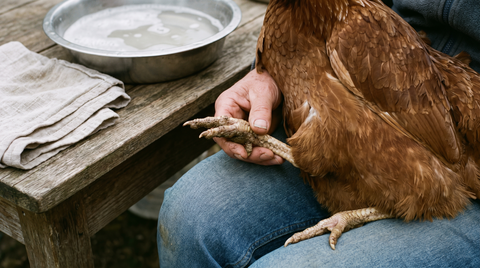
- Restrain the bird calmly and part or trim feathers away from the wound so you can see it.
- Control bleeding first - apply gentle, steady pressure with clean gauze or cloth.
- Once bleeding is controlled, flush dirt and debris away with sterile saline or diluted chlorhexidine (a squirt bottle or syringe helps reach into deeper wounds).
- Pat the area dry, then apply your wound spray and let it work - HOCl sprays usually need no rinsing.
- If the wound is red and the bird is going back to the flock, finish with a blue antiseptic dye to disguise the color.
- Re-clean and re-spray daily, and keep the wound moist for faster healing.
In a pinch, a simple homemade saline works as a non-sterile field flush: roughly two teaspoons of non-iodized salt dissolved in four cups of cooled, boiled water (store-bought sterile saline is better when you have it). For pecking-specific damage, I go deeper into cleaning and isolation in how to treat pecking wounds on chickens.
What should I never put on a chicken wound?
Never use any product containing a '-caine' pain reliever - lidocaine, benzocaine, or similar - because these can be toxic to chickens. This is the single most common dangerous mistake I see.
That rules out the "pain relief" or "max strength" versions of human first-aid sprays and ointments, plus dental numbing products. The same caution applies to any spray you are unsure about: if you cannot read the ingredients, do not use it. Other things to skip or use sparingly:
- Pain-relieving antibiotic ointments - plain triple-antibiotic with no added '-caine' can work on tiny wounds, but anything labeled for pain relief is off-limits.
- Undiluted iodine or full-strength antiseptics - repeated harsh application can irritate tissue and slow healing.
- Hydrogen peroxide on healing wounds - fine for an initial clean-out of a dirty wound, but it also damages new tissue, so do not keep dousing a wound that is closing.
- Random home remedies on deep wounds - a deep or gaping wound is a vet visit, not a kitchen-cabinet experiment.
Which spray for bumblefoot, pecking, and vent issues?
Match the product to the wound: HOCl spray for general cuts and post-cleaning care, blue dye for red pecking sores, and a gentle non-stinging spray for sensitive areas like the vent - but the harder cases need more than spray.
Pecking wounds
Blood triggers more pecking, and the Merck Veterinary Manual notes that the appearance of blood on exposed skin can induce further pecking and even lead to death. So the priorities are isolation and hiding the red - clean the wound, treat with HOCl, then mask the color with antiseptic dye before the bird rejoins the flock. If pecking is a recurring problem, it is usually a management issue; see chicken pecking order and bullying for the root causes.
Bumblefoot
Spray helps keep the foot wound clean, but mild bumblefoot is managed with Epsom-salt soaks (10-15 minutes, once or twice daily), cleaning, and keeping the area dressed. Advanced cases with a deep core that will not resolve in a few days need a vet. My full walkthrough is in how to treat bumblefoot in chickens.
Vent and delicate areas
For sensitive skin, the no-sting nature of HOCl is a real advantage. But a true vent prolapse is an emergency that needs hands-on care and often a vet - spray alone will not fix it.
When should I call a vet instead of reaching for the spray?
Call a vet for deep, gaping, or non-stop-bleeding wounds, anything exposing muscle or bone, signs of infection, a bird that is dull or off its feed, or any wound that is not clearly improving within a few days. Wound spray is for minor, manageable injuries - it is not a fix for serious trauma.
The Merck Veterinary Manual advises that a severely pecked bird should be examined by a veterinarian to ensure its wounds are not infected, and it notes that if an injured bird shows no improvement after a few days the outlook for full recovery is generally poor. In other words, spray buys you time on minor injuries, but it is no substitute for hands-on veterinary care once a wound turns serious. Watch for these red flags:
| Situation | What to do |
|---|---|
| Small, clean, shallow scrape or peck | Clean, spray, isolate if red; monitor daily |
| Bleeding you cannot stop with pressure | Urgent vet care |
| Deep or gaping wound, exposed muscle/bone | Vet - may need stitches or surgery |
| Swelling, heat, pus, or bad smell | Vet - signs of infection |
| Bird is dull, hunched, or not eating | Vet - whole-bird illness, not just a wound |
| No improvement in 3-5 days | Vet - reassess the plan |
If your bird seems "off" beyond the wound itself, run through my sick chicken symptoms checklist before you decide it is nothing.
How do I choose one spray for my first-aid kit?
If you buy just one, choose a no-sting, antibiotic-free hypochlorous acid poultry spray with no egg-withdrawal period; add an antiseptic dye when budget allows. Use this quick checklist when you compare bottles.
- Antibiotic-free and steroid-free (so no egg-withdrawal worry on laying hens).
- No-sting / pH-balanced formula the bird will tolerate.
- No '-caine' pain relievers anywhere in the ingredients.
- Labeled for poultry or safe-for-all-animals topical use.
- A spray nozzle that flushes well, not just a fine mist.
- A clear expiration / shelf-life date - HOCl solutions do not last forever once opened.
Buy it before you need it, keep it where you can grab it in the dark, and check the date each season. A calm keeper with a clean wound, the right spray, and a plan handles ninety percent of flock injuries without drama - and knows exactly when the other ten percent belongs to the vet.
Frequently asked questions
What is the best wound spray for chickens?
For most backyard keepers, a no-sting, antibiotic-free hypochlorous acid poultry spray is the best all-around pick because it flushes and moistens wounds without harming healthy tissue and has no egg-withdrawal period. Pair it with saline for cleaning and a blue antiseptic dye when you need to hide red wounds from flockmates.
Can I use human wound spray or Neosporin on a chicken?
Plain triple-antibiotic ointment (no pain reliever) can be used on small wounds in a pinch, but never use any product containing a '-caine' pain reliever such as lidocaine or benzocaine - these can be toxic to chickens. A dedicated poultry wound spray is safer and simpler.
Does chicken wound spray have an egg-withdrawal period?
Reputable hypochlorous acid poultry sprays contain no antibiotics or steroids and carry no egg-withdrawal period, so eggs stay edible during use. Topical antibiotic ointments have not been formally tested for egg withdrawal, so when in doubt, ask your vet.
How do I clean a chicken wound before spraying?
Stop any bleeding with gentle pressure on clean gauze, then flush dirt and debris away with sterile saline or diluted chlorhexidine using a squirt bottle or syringe. Only spray a wound product after the area is clean and bleeding is controlled.
Why do people use blue spray on chickens?
Blue antiseptic dyes like gentian-violet sprays stain the wound and surrounding skin blue, which hides the red color that triggers other hens to peck. The dye has mild antiseptic action but does not treat infection, so use it alongside proper cleaning.
How often should I spray a chicken's wound?
Follow the frequency printed on your product's label, as it varies by formula; many hypochlorous acid sprays are applied several times a day until the wound heals, with no rinsing needed. Re-clean the area daily and watch for swelling, heat, pus, or odor that signal infection.
Can wound spray treat bumblefoot?
Spray helps keep a bumblefoot wound clean but is only part of the picture. Mild cases are managed with Epsom-salt soaks, cleaning, and keeping the area dressed; deeper or advanced cases that do not improve in a few days need a vet.
Should I separate an injured chicken from the flock?
Usually yes. Visible blood and open wounds invite pecking that can quickly turn deadly, so isolate the injured bird in a clean, quiet space until the wound has closed and the red color is gone or covered with antiseptic dye.
When should a chicken wound be seen by a vet?
See a vet for deep or gaping wounds, anything exposing muscle or bone, wounds that will not stop bleeding, signs of infection (swelling, heat, pus, bad smell), a bird that is dull or off its feed, or any wound that is not clearly improving within a few days.
Products mentioned in this guide

Sources & further reading
A note from Sarah: I'm a lifelong keeper, not a veterinarian. This guide shares what's worked for my own flock and is meant for general education - if a bird is seriously ill or injured, please call your vet. These statements have not been evaluated by the FDA.