Key takeaways
- Separate the bleeding bird first - chickens are drawn to red and will peck a wound open.
- Stop bleeding with firm pressure, then clean with saline or dilute chlorhexidine before applying any spray.
- A dark-tinted wound spray hides the red and helps stop flockmates from re-pecking the spot.
- Call a vet for deep, gaping, vent, or pulsing wounds, or any wound that looks infected.
Quick answer: Separate the bleeding bird right away, because chickens are drawn to red and will peck a wound open. Stop the bleeding with firm pressure, clean the wound with saline or dilute chlorhexidine, then apply a poultry wound spray - ideally a dark-tinted one that hides the red and discourages re-pecking. Keep the bird isolated until the wound is dry and call a vet for deep, gaping, or vent wounds.
If you have ever walked into the run and found a hen with a raw, bleeding patch and two or three flockmates taking turns at it, you know that sick, sinking feeling. I have been there more times than I can count. I grew up on my family's organic farm, and pecking injuries are one of the oldest, most common chicken emergencies there is - and one of the most fixable, if you act fast and stay calm.
The reason a small peck turns into a disaster is simple: chickens are hardwired to peck at the color red. A drop of blood or a patch of raw skin is like a flashing target. So the whole game is to stop the bleeding, hide the red, and remove whatever stress started the pecking in the first place. Here is exactly how I handle it.
What is the very first thing I should do?
Get the injured bird away from the flock immediately, before you do anything else. A bleeding wound in a group of chickens will be pecked relentlessly, and what started as a nick can become a life-threatening hole in minutes.
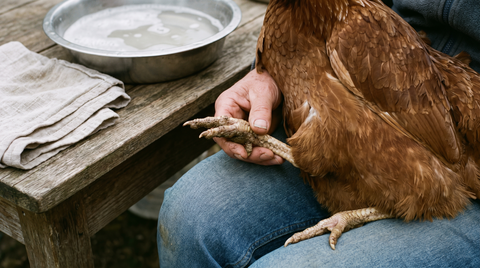
Scoop her up gently and move her somewhere quiet - a dog crate, a cardboard box, a spare pen, anywhere away from the others. This does two things at once: it stops the active damage, and it gives you a still, calm bird to work on. A towel wrapped loosely around her body to keep the wings tucked makes the whole job far easier and less frightening for her.
If you are dealing with ongoing bullying rather than a one-off accident, the underlying social problem matters too. My guide to the chicken pecking order and how to stop bullying walks through why this happens and how to break the cycle for good.
How do I stop the bleeding?
Apply gentle but firm pressure with clean gauze or a paper towel for several minutes until the flow slows or stops. Most pecking wounds bleed more dramatically than they are serious, so do not panic at the sight of red.
Once pressure has slowed the bleeding on a small wound, you can press a little cornstarch or styptic (blood-stop) powder directly onto the spot to help it clot. Cornstarch from your kitchen works fine in a pinch.
There is one bleed you should not try to manage at home: a wound that is pulsing or spurting, or one that will not stop after about five minutes of steady pressure. That can mean a damaged blood vessel, and it needs a vet.
How do I clean a pecking wound?
Once bleeding is controlled, rinse the wound with saline or lukewarm water, then flush it with a weak antiseptic like dilute chlorhexidine before applying anything else. A clean wound heals far faster and is much less likely to get infected.
The Penn State Extension notes that you may need to trim a few body feathers around the wound so you can actually see it and keep it clean - just use scissors, and avoid cutting the large wing feathers, which have a blood supply of their own. Flush dirt and debris out with saline (one teaspoon of non-iodized salt in two cups of cooled boiled water), then clean the area with a weak chlorhexidine solution. Pat it dry with clean gauze.
What about tweezers and trimming?
If there is grit, bedding, or loose tissue in the wound, gently remove it with clean tweezers. Take your time and stop if she is in obvious distress. The goal is a wound that is clean, visible, and dry before you protect it.
What do I put on the wound to protect it and stop re-pecking?
Apply a poultry wound spray - ideally one with a dark tint that masks the red - to protect the wound and remove the visual trigger that makes flockmates peck. This step does double duty, and it is the one most new keepers underestimate.
A wound spray that goes on without you having to rub greasy ointment into feathers is genuinely easier on a stressed bird, and the right product cleans the area while it covers it. Our poultry wound and skin spray is the topical I keep in my own kit for exactly this - quick to apply, no egg withdrawal, and it tints the spot so the other hens stop seeing red. If you want to weigh your options before you buy, I put together an honest comparison of the best wound sprays for chickens.
Plain triple-antibiotic ointment is also an acceptable choice for a clean wound - just be sure it is the version WITHOUT a painkiller. Anything ending in -caine (like the "pain relief" formulas) can be toxic to birds, so check the label every time.
How do I keep the rest of the flock from pecking it open again?
Keep the bird separated until the wound is dry and scabbed, hide the red with a dark-tinted spray, and fix the crowding or stress that started the pecking. Treating the wound without addressing the cause just means you will be doing this again next week.
The Merck Veterinary Manual is blunt about this: once pecking and cannibalism become a habit in a flock, "it is difficult to eliminate." The most common triggers it lists are crowding, excessive light intensity, and nutritional imbalances. So while your patient recovers, do a quick honest audit of the coop.
- Space: Are the birds crammed in? More room in the coop and run lowers tension fast.
- Light: Is the coop very bright? Dimming harsh light reduces pecking - some keepers even add a red-tinted bulb.
- Protein and feed: Are they on a complete ration? Protein deficiency drives feather and skin pecking.
- Boredom: Add enrichment - a hanging cabbage, a dust bath, perches to escape to.
- New birds: Recent additions stir up the order; see how to introduce new chickens to your flock the right way.
If the target bird is going bald in patches rather than truly wounded, that may be feather pecking or molt instead - my piece on why your chicken is losing feathers helps you tell the difference.
How serious is the wound? A quick triage guide
Use the severity of the wound to decide whether you can treat at home or need a vet now. When in doubt, lean toward calling - birds hide pain well, and a wound that looks minor on the surface can run deep.
| Wound type | What it looks like | What to do |
|---|---|---|
| Minor surface peck | Small scratch or scab, little or no bleeding | Clean, apply tinted spray, separate until dry. Home care. |
| Open skin wound | Bleeding, raw flesh, but skin edges close | Stop bleeding, clean, spray, isolate. Monitor twice daily. |
| Deep or gaping wound | Wide-open, skin edges far apart, muscle visible | May need stitches - call a vet. |
| Vent / cloacal peck | Wound near the vent, possible prolapse | Emergency. Separate, clean gently, call a vet now. |
| Pulsing or non-stop bleed | Spurting blood or won't stop with pressure | Emergency. Apply pressure en route to a vet. |
| Infected wound | Swelling, heat, smell, discharge, bird off feed | Needs a vet and likely antibiotics. |
For a broader look at handling the most common backyard injuries, my chicken first-aid guide for wounds, pecking, and bumblefoot is a good companion to this one.
How do I care for the wound while it heals?
Keep the bird in a clean, dry, calm space and check the wound at least twice a day for signs of infection. Most uncomplicated pecking wounds scab within a few days and heal in one to two weeks.
Re-clean and re-spray the wound once or twice daily, depending on how messy it gets. Make sure her recovery pen has clean bedding, fresh water, and good food - healing takes energy, and a little extra protein does not hurt. Keep her where she can still see and hear the flock through a barrier, so reintroduction later is smoother.
Do not rush her back. Return her only once the wound is dry, scabbed, and no longer red or raw, and even then, a coat of dark-tinted spray over the spot plus close supervision for the first hour is wise. The Penn State Extension specifically recommends disguising the blood from the wound zone before putting a bird back with its flockmates.
When should I call a vet?
Call a vet for deep or gaping wounds, vent or cloacal pecking, bleeding that will not stop, or any wound showing signs of infection. I am a lifelong keeper, not a veterinarian, and there are wounds that genuinely need professional hands.
Get veterinary help if:
- The wound is deep, wide, or gaping and may need stitches.
- It is near or on the vent - perforating cloacal wounds can cause fatal peritonitis.
- Bleeding is pulsing, heavy, or does not stop after several minutes of pressure.
- You see swelling, heat, foul smell, yellow or green discharge, or spreading redness.
- The bird becomes lethargic, stops eating, or seems to be in a lot of pain.
None of the home steps here replace a vet's judgment for a serious injury. When you are unsure, a quick call to a poultry-savvy vet is always worth it.
Frequently asked questions
How do I stop a chicken's pecking wound from bleeding?
Apply gentle, firm pressure with clean gauze or a paper towel for several minutes. For small wounds, you can press cornstarch or styptic powder onto the spot once pressure has slowed the flow. If blood is pulsing or will not stop after about five minutes of steady pressure, call a vet.
Why do chickens peck at a wound until it bleeds?
Chickens are strongly attracted to the color red and to movement. A spot of blood, raw skin, or a protruding vent triggers more pecking, which is how a small injury can turn into serious cannibalism. That is why you separate the bird and hide the red as fast as you can.
Can I put Neosporin on a chicken wound?
Plain triple-antibiotic ointment without painkillers (nothing ending in -caine) is generally considered safe for a clean chicken wound. Avoid the pain-relief versions, since the -caine ingredients can be toxic to birds. Many keepers prefer a poultry wound spray because it is easier to apply and does not leave a greasy film that mats feathers.
Should I put a wounded chicken back with the flock?
Not until the wound is dry, scabbed, and no longer red or raw. If you must return the bird sooner, cover the area with a dark-tinted antiseptic spray and watch the flock closely. The Penn State Extension specifically advises disguising the blood before reintroduction.
What can I use if I do not have a wound spray on hand?
Clean the wound with saline or a weak chlorhexidine solution and apply a plain antibiotic ointment, then keep the bird separated. Saline is just one teaspoon of non-iodized salt per two cups of cooled boiled water. Get a proper poultry wound product as soon as you can, especially a dark-tinted one to deter re-pecking.
How long does it take a pecking wound to heal?
Minor surface wounds often scab in a few days and heal within one to two weeks with clean, dry conditions. Larger wounds take longer and need daily checks. If a wound is not improving after a few days, or looks worse, have it examined.
How do I know if a chicken wound is infected?
Watch for swelling, heat, a bad smell, yellow or green discharge, spreading redness, or the bird going quiet and off her feed. The Penn State Extension lists wet-looking skin with severe inflammation and cheesy discharge as signs of infection. Any of these means it is time to call a vet.
How do I stop my chickens from pecking each other in the first place?
Most pecking traces back to crowding, too-bright light, boredom, or not enough protein. Give more space, dim harsh lighting, add enrichment, and feed a complete ration. Persistent bullying usually needs a management fix, not just wound care.
Is vent pecking an emergency?
It can be. The vent is delicate and a perforating wound there can lead to peritonitis, which is often fatal. Separate the bird immediately, clean gently, and call a vet if there is significant damage, prolapse, or ongoing bleeding.
Does a dark-colored wound spray really stop re-pecking?
It helps a lot. Chickens target red, so a blue or purple tinted spray that masks the raw color removes the main visual trigger. It is not a guarantee, so you still separate the bird and fix the underlying cause, but hiding the red is one of the single most effective steps.
Products mentioned in this guide

Sources & further reading
A note from Sarah: I'm a lifelong keeper, not a veterinarian. This guide shares what's worked for my own flock and is meant for general education - if a bird is seriously ill or injured, please call your vet. These statements have not been evaluated by the FDA.