Key takeaways
- The pecking order is normal social ranking; mild pecking while it sorts out is not bullying.
- Real bullying shows up as relentless chasing, blood-drawing pecks, feather loss, or a bird kept from food and water.
- Overcrowding, too few feeders, low-protein feed, boredom, and bright light are the most common triggers you can fix.
- Any bird that is bleeding should be separated immediately, because the color red triggers more pecking.
Quick answer: The pecking order is the natural social ranking every flock forms, and mild pecking while it sorts out is normal. It becomes bullying when one bird is relentlessly chased, kept from food and water, or pecked until feathers or blood appear. Fix the cause — usually crowding, too few feeders, low protein, boredom, or bright light — and separate any bleeding bird at once.
I have kept backyard chickens my whole life, going back to the flock I grew up with on my family's organic farm, and I can tell you that almost every new keeper panics the first time they see one hen pecking another. Most of the time it is completely normal. But there is a real line between healthy ranking and genuine bullying, and knowing where that line sits is one of the most useful things you can learn as a chicken keeper.
Below I will walk you through what the pecking order actually is, how to spot when it has gone wrong, and the practical fixes I reach for — most of which cost nothing but a little time and attention.
What is the chicken pecking order?
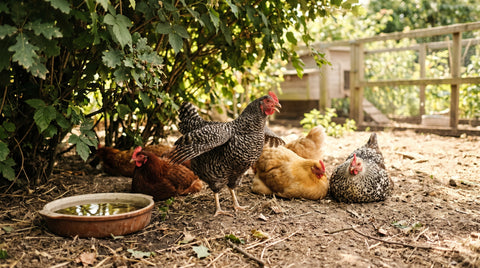
The pecking order is the social hierarchy a flock forms to decide who eats, drinks, roosts, and dust-bathes first. It is normal, healthy, and you should not try to eliminate it.
Chickens are deeply social birds, and within any flock they sort themselves into a ranking from the top hen down to the most submissive bird. According to poultry specialists at the Cooperative Extension system, this hierarchy is built from one-on-one pairings: in each pair, one bird is dominant and one is subordinate, and the subordinate gets reminded of its place with a peck — which is exactly where the term "pecking order" comes from.
Once the order is settled, it is actually very stable and peaceful. A higher-ranked hen usually only has to give a look or a small gesture, and the lower-ranked bird steps aside. The constant fighting people worry about is almost always the temporary sorting-out phase, not the settled order itself.
How long does it take for the pecking order to form?
In a flock raised together, chicks begin establishing rank within a few weeks and the order is usually set by around 8 to 10 weeks of age. When you add new adult birds, expect several days to a couple of weeks of squabbling.
Chicks start testing each other surprisingly young — you will see little chest bumps and pecks in the brooder. By the time pullets approach maturity, the hierarchy is generally well established. Among all-hen groups it settles faster than groups with multiple cockerels, which can keep jostling for weeks.
The flashpoint for most keepers is not the original flock but the moment they bring home new birds. Any time the membership changes, the whole order has to be renegotiated. That is why I treat integration as its own careful project — I walk through the full method in my guide to introducing new chickens to your flock, including the "look but don't touch" step that prevents most fights.
How do I tell normal pecking from real bullying?
Normal ranking is brief, scattered, and stops once the subordinate bird backs off. Bullying is relentless, one-sided, and aimed at the same victim — and it draws blood, pulls feathers, or blocks a bird from food and water.
This is the distinction that matters most, so here is a simple comparison you can keep in mind.
| Behavior | Normal pecking order | Harmful bullying |
|---|---|---|
| Frequency | Occasional, brief squabbles | Constant, relentless chasing |
| Target | Spread across the flock | Fixated on one or two birds |
| Resolution | Stops when subordinate yields | Continues after bird submits or flees |
| Physical signs | No injuries, maybe a ruffled feather | Bare patches, wounds, bleeding, scabs |
| Access to resources | All birds eat and drink | Victim kept from food, water, or roost |
| Body condition | Healthy, active | Hiding, thin, weak, withdrawn |
If you are seeing the right-hand column, that is your signal to step in. A bird that hides in a corner all day, stays thin, or has raw skin is being genuinely bullied, and the longer it continues the harder it is to reverse. Feather loss has several causes, though, so before you assume bullying it is worth ruling out molt and parasites — my guide on why your chicken is losing feathers walks through how to tell them apart.
Why are my chickens suddenly bullying each other?
Bullying and feather pecking rarely have a single cause, but the most common triggers are overcrowding, too few feeders and waterers, low-protein feed, boredom, bright light, heat stress, and the sight of blood or a wound.
Poultry extension specialists are clear that feather pecking and cannibalism are usually a stress response, not a personality flaw. When you find the stressor and remove it, the behavior often fades on its own. Here are the big ones I check first.
Overcrowding and not enough space
This is the number one cause I see in backyard flocks. When birds are packed too tightly, competition for food, water, perches, and nest boxes turns into aggression, and crowded birds are in constant contact so pecking spreads fast. A rough rule of thumb: at least 3 to 4 square feet of coop floor per standard hen and about 8 to 10 square feet of run space per bird.
Not enough feeder and water stations
Even with enough total space, a single feeder lets a top hen guard it and keep others away. I always run at least two feed and two water stations on opposite sides of the run so a bully cannot control them all.
Diet and protein
Diets low in protein or short on amino acids like methionine — or low in salt — can push birds to peck feathers in search of those nutrients. Feeding a complete, age-appropriate ration and going easy on low-protein treats makes a real difference; I cover balanced rations in what to feed backyard chickens.
Boredom, light, and heat
Bored, confined birds redirect their natural foraging into pecking each other. Excessively bright or long lighting and heat stress also crank up aggression. Enrichment — a hanging cabbage, a scratch pile, a dust bath — gives that energy somewhere harmless to go.
A new bird, a sick bird, or blood
Adding birds restarts the whole hierarchy. A sick or injured hen often gets targeted because she behaves abnormally, and any spot of red is a powerful trigger, since chickens are strongly drawn to the color red.
How do I stop chickens from bullying each other?
Work through the triggers in order: protect any injured bird first, then fix space, feeders, diet, and boredom. For a persistent bully with no victim wound, a short time-out in a visible pen can reset her rank.
Here is the practical checklist I run through whenever a flock turns nasty.
- Separate any bleeding or injured bird immediately — blood draws relentless pecking and can lead to cannibalism.
- Give more space — reduce flock size, expand the run, or let birds free-range supervised to cut competition.
- Add feed and water stations — at least two of each, spread out, so a bully cannot guard them.
- Check the diet — feed a complete ration with adequate protein and limit low-protein scratch and treats.
- Add enrichment — hang greens, add a dust bath, scatter scratch, give perches at different heights so timid birds can escape upward.
- Dial down the light — avoid overly bright or long artificial lighting in the coop.
- Time-out a persistent bully — house her separately but within sight for several days; she usually returns lower in rank.
- Reintroduce the recovered victim carefully — bring her back once healed and feather-grown, ideally alongside another bird so she is not alone.
One thing I want to be honest about: there is no magic switch. Bullying is a behavior problem with environmental roots, so it takes a little detective work and patience. But in most backyard flocks, fixing space and feeder access alone solves it.
How do I treat a pecking wound?
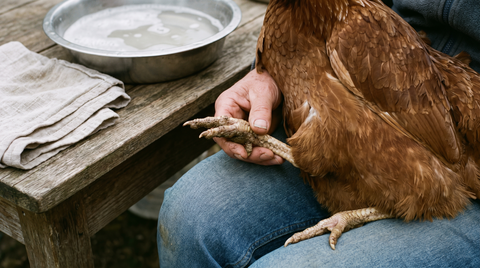
Move the injured bird out of the flock at once, gently clean the wound, and cover the red with a poultry-safe wound product so it stops attracting pecks. Keep her separated until the skin has healed and feathers have started to regrow.
The reason separation comes first is simple: a visible wound is irresistible to the rest of the flock, and they will keep pecking it open. Once she is safe, clean the area gently with warm water or a poultry-appropriate antiseptic, and avoid greasy ointments that attract dirt and more pecking.
For minor pecking wounds and bare, irritated skin, I reach for our poultry wound & skin spray — it is made for cleaning and protecting small pecking injuries, and disguising the red that keeps the flock targeting the spot. It is a topical for surface wounds, not a fix for deep punctures or serious trauma, which need a vet. For the full step-by-step on cleaning and dressing flock injuries, see my guide to chicken first aid for wounds, pecking, and bumblefoot.
What about broody hens and roosters in the pecking order?
A broody hen can turn aggressive and disrupt flock harmony, and roosters influence order too — a calm rooster keeps peace, while too many or an aggressive one fuels conflict.
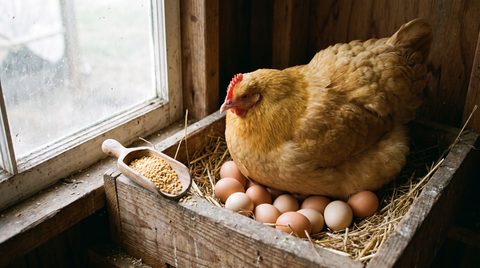
A hen sitting tight on a nest will puff up, growl, and peck flockmates who come near, which can look like bullying but usually resolves once she is broken from the broody cycle. If a determined broody is throwing your flock out of balance, here is how I handle it: how to break a broody hen.
Roosters are a mixed bag. A good rooster breaks up squabbles and watches over the flock, but keeping too many roosters for the number of hens, or one with a mean streak, creates more aggression than it prevents. He is never a substitute for fixing space, feed, and stress.
When should I call a vet?
Call a veterinarian when a bird has a deep or large wound, heavy or won't-stop bleeding, signs of infection, or is weak, not eating, and declining despite being separated and cared for.
I am a lifelong keeper, not a vet, so I want to be clear about the limits of home care. Surface pecking wounds usually heal well with cleaning, protection, and separation. But some situations genuinely need professional help:
- A wound that is deep, gaping, or larger than a fingertip, or any puncture into muscle.
- Bleeding you cannot stop with gentle pressure.
- Signs of infection: swelling, heat, foul smell, pus, or spreading redness.
- A bird that becomes weak, stops eating or drinking, or keeps declining even after you separate and treat her.
- Cannibalism breaking out across the flock despite your fixes — an experienced poultry vet can help find the underlying cause.
When in doubt, a quick call to a poultry-savvy vet is always cheaper than losing a bird. Health and injury care is a YMYL area where it is better to ask than to guess.
Frequently asked questions
Is the pecking order cruel or should I stop it?
The pecking order itself is normal and healthy social ranking, and you should not try to stop it. Mild pecking and a few squabbles as birds sort out their place are expected. You only intervene when it escalates into relentless chasing, blood, or a bird being kept from food and water.
How long does it take for chickens to establish a pecking order?
In a settled flock, chicks begin sorting rank within a few weeks, and the order is usually well established by around 8 to 10 weeks of age. When you add new adult birds, expect a few days to a couple of weeks of squabbling before things calm down.
Why is one of my hens suddenly being bullied?
Sudden bullying usually points to a change or stressor: a new bird, a sick or injured hen, overcrowding, too few feeders, boredom, molting, or a bird that has dropped in rank. A spot of blood or a wound is a powerful trigger because chickens are strongly drawn to the color red.
How do I stop chickens from pecking each other bloody?
Remove the injured bird first, since blood draws more pecking. Clean and cover the wound, address the root cause (space, feeders, protein, light, boredom), and add separate feed and water stations so a bully cannot guard them all. Reintroduce the recovered bird carefully.
Will chickens kill a bird they are bullying?
Yes. Unchecked feather pecking can progress to cannibalism, and a cornered or injured bird can be killed. This is why a bleeding or badly pecked bird must be separated right away and the underlying cause corrected.
Does more space really stop bullying?
Often, yes. Overcrowding is one of the most common triggers. As a general guide, aim for at least 3 to 4 square feet of coop space and about 8 to 10 square feet of run space per standard hen, plus enough feeder and roost space so lower-ranked birds are not trapped near a bully.
Should I separate a bully chicken or the victim?
Always remove a bleeding or injured victim first to protect her. For a persistent bully with no injured bird, a short time-out of a few days in a separate but visible pen can lower her rank when she returns. Removing the victim long-term often just makes her a target again on return.
Can low-protein feed cause feather pecking?
It can contribute. Diets low in protein or short on amino acids like methionine, or low in salt, can drive birds to peck feathers in search of nutrients. Feeding a complete, age-appropriate ration and avoiding too many low-protein treats helps reduce this risk.
Do roosters fix or cause pecking-order problems?
A good rooster can help keep order and break up minor squabbles, but he is not a cure for bullying. Too many roosters for the number of hens, or an aggressive rooster, can make things worse. Fix space, feed, and stress factors regardless of whether you keep a rooster.
Products mentioned in this guide

Sources & further reading
A note from Sarah: I'm a lifelong keeper, not a veterinarian. This guide shares what's worked for my own flock and is meant for general education - if a bird is seriously ill or injured, please call your vet. These statements have not been evaluated by the FDA.