Key takeaways
- Build your chicken first aid kit before you need it - the night a hen is injured is the worst time to be searching for supplies.
- The five non-negotiables are a no-sting wound spray, saline or chlorhexidine for cleaning, styptic powder, electrolytes, and vet wrap.
- Stock a clean isolation crate too - separating an injured or sick bird is often the single most important first step.
- A first aid kit stabilizes a bird and buys time, but it is not a substitute for a poultry-savvy vet when symptoms are serious.
Quick answer: A solid chicken first aid kit holds about a dozen essentials: a no-sting wound spray, saline or diluted chlorhexidine for cleaning, styptic powder, gauze and vet wrap, small scissors and tweezers, a vitamin-and-electrolyte powder, a dosing syringe, a clean towel, Epsom salt, a dewormer for when a fecal test calls for it, basic supplements, and your vet's number - plus a clean isolation crate.
I grew up on my family's organic farm, and the lesson that stuck hardest was this: the night a hen comes off the roost with a torn wattle or a limp is the worst possible time to go hunting for supplies. By then you are tearing through the bathroom cabinet at 9pm while a frightened bird bleeds on the kitchen towel. A first aid kit you built calmly, in advance, turns that panic into a plan.
So this is the kit I actually keep - twelve essentials, why each one earns its spot, and the honest limits of what home care can do. None of this replaces a poultry-savvy vet, but it will let you stabilize a bird and buy the time that often makes the difference.
What should be in a chicken first aid kit?
Stock the twelve essentials below: wound spray, a cleaning solution, styptic powder, gauze and vet wrap, scissors and tweezers, electrolytes, a syringe, a towel, Epsom salt, a dewormer, basic supplements, and vet contact info - kept together in one labeled, grab-and-go box.
The point of a kit is speed. Everything lives in one waterproof tote or tackle box near the coop, not scattered across three rooms. Here is the full list at a glance, then I will walk through how to actually use the ones that matter most.
| Essential | What it is for | Quick note |
|---|---|---|
| 1. Wound spray | Treating cuts, scrapes, pecking wounds | No-sting hypochlorous type is gentlest |
| 2. Saline / chlorhexidine | Flushing and cleaning wounds before spray | Clean first, treat second |
| 3. Styptic powder | Stopping bleeding (nails, blood feathers) | Cornstarch works in a pinch |
| 4. Gauze + vet wrap | Padding and securing dressings | Self-adhering wrap that sticks to itself |
| 5. Small scissors + tweezers | Trimming feathers, removing debris/splinters | Blunt-tip scissors are safest |
| 6. Electrolyte + vitamin powder | Dehydration, heat, stress, recovery | Add to clean water short-term |
| 7. Dosing syringe (no needle) | Giving fluids or meds by mouth | 1 mL and 10 mL sizes |
| 8. Clean towel | Restraining a bird safely | The 'chicken burrito' calms them |
| 9. Epsom salt | Warm soaks for swollen feet, early bumblefoot | Supportive care, not a cure |
| 10. Dewormer | Treating a confirmed worm load | Use after a fecal test, not on a guess |
| 11. Basic supplements | Probiotics, vitamins, calcium | Support during illness and stress |
| 12. Vet contact + isolation crate | Escalation and separation | Find a poultry vet before you need one |
What wound-care supplies do I really need?
You need three things to handle most wounds: a way to clean (saline or diluted chlorhexidine), a way to treat (a no-sting wound spray), and a way to dress (gauze and self-adhering vet wrap). Clean first, treat second, cover only if needed.
Pecking injuries, scrapes from a clumsy landing, predator near-misses, and broken blood feathers are the everyday emergencies. Hypochlorous acid (HOCl) sprays are popular because, by the manufacturer's own description, the molecule is pH-neutral, free of alcohol, steroids, and antibiotics, and will not harm healthy tissue or fibroblast cells while it flushes a wound clean - so you can use them a few times a day to keep a wound clean and moist. The key habit: flush dirt and debris away with saline before you spray, because spray is a follow-up step, not a substitute for cleaning.
The wound spray I keep
For my own flock I reach for our no-sting Happy Cluck poultry wound and skin spray because it is gentle enough to use daily on pecking wounds and scrapes and carries no egg-withdrawal period. It is honest first-aid support, not a miracle - a deep or infected wound still needs a vet. If you want to weigh the options yourself, I broke down the categories in my comparison of the best wound sprays for chickens, and there is a full step-by-step in my guide to treating wounds, pecking injuries, and bumblefoot.
One safety rule I will repeat forever: skip any human product with a '-caine' pain reliever (lidocaine, benzocaine) on a chicken. Birds are small, the safe margin for these anesthetics is narrow, and it is very easy to overdose them, so they are simply not worth the risk for a backyard keeper. Plain triple-antibiotic ointment with no added pain reliever is the safer human-aisle option in a pinch.
How do I stop a chicken from bleeding?
Apply firm, gentle pressure with clean gauze, then pack styptic powder (or plain cornstarch) onto the bleeding point. Styptic powder stops bleeding fastest and is essential for broken toenails and snapped blood feathers.
Blood feathers - new feathers still fed by a blood supply - bleed dramatically if they snap, and an overgrown nail clipped too short does the same. Pressure plus styptic powder usually handles both. Cornstarch or flour is the backup if your powder runs out. Because visible blood also triggers other hens to peck, getting the bleeding stopped fast protects the bird from a much bigger problem.
- Apply steady pressure to the bleeding spot with clean gauze for a full minute before checking.
- Pack styptic powder (or cornstarch) directly onto a bleeding nail or feather shaft.
- For a snapped blood feather that keeps bleeding, the shaft sometimes must be pulled - a job worth a vet call if you are unsure.
- Move a bleeding bird out of sight of the flock so the red color does not invite pecking.
- If bleeding will not stop after several minutes of pressure, treat it as an emergency.
Do I need electrolytes and supplements on hand?
Yes - a vitamin-and-electrolyte powder is one of the most-used items in any kit. It helps a stressed, overheated, dehydrated, or recovering bird hold fluids and keep its appetite, which often matters more than any single treatment.
Sick or dehydrated birds usually go to their water before their feed, so water-soluble electrolytes are a smart way to deliver support when a bird is off its game. Commercial mixes usually pair the salts with added vitamins to help nudge energy and appetite during heat waves, transport, new-flock stress, or illness. In a true pinch you can dissolve a pinch of salt and a pinch of baking soda in clean, lukewarm water - but a balanced commercial powder is more reliable and worth keeping.
Round it out with a few targeted supplements: a poultry probiotic for gut and immune support during illness, and a calcium source for laying hens. I go deeper on what is genuinely worth buying (and what is hype) in my rundown of the best supplements for chicken health. One caution: do not run electrolytes around the clock in healthy birds - they are for stress and recovery windows, not everyday water.
What tools and equipment make treatment easier?
The unsung heroes are a clean towel for restraint, blunt-tip scissors and tweezers, a needle-free dosing syringe, Epsom salt for soaks, and a separate isolation crate. These turn an awkward, two-person job into something you can manage calmly.
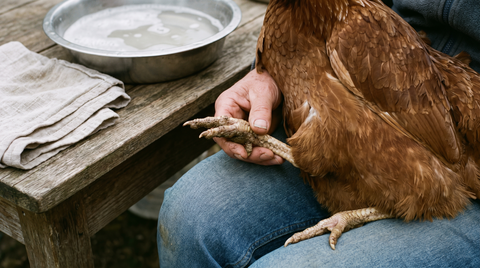
A frightened chicken is strong and squirmy. Wrapping it snugly in a towel - the classic 'chicken burrito' - leaves just the area you need exposed and keeps everyone calmer; net and towel restraint are standard handling methods for backyard poultry. A no-needle syringe lets you give fluids or oral meds in measured amounts. Warm Epsom salt soaks help swollen feet and early bumblefoot, which I cover in detail in my walkthrough on treating bumblefoot in chickens.
The isolation crate is not optional
A clean dog crate or large tote, kept in a warm, quiet, predator-safe spot, is one of the most important things you can prepare. It gives an injured bird protection from pecking and a sick bird the warmth, quiet, and easy food and water it needs to recover - and it doubles as your quarantine space for new or returning birds, which cooperative-extension guidance recommends isolating for at least two weeks before they join the flock.
Should a dewormer be in the kit?
Keep a dewormer on hand, but treat based on evidence, not a calendar. The accurate way to know your flock needs deworming is a fecal egg count from your vet - then you can act fast with a product you already have.
Internal parasites are common in backyard flocks, but blanket-deworming every bird on a schedule encourages drug resistance and is often unnecessary. Stocking a dewormer simply means you are ready once a fecal test or clear symptoms (weight loss, pale comb, worms in droppings) confirm the problem. If you want to understand your options before you buy, I compared the approaches honestly in natural vs chemical dewormers. And because the line between 'worms' and 'something else' can be blurry, keep my sick chicken symptoms checklist close - matching symptoms to causes is half the battle.
When should I call a vet instead of treating at home?
Call a poultry-savvy vet for bleeding you cannot stop, deep or gaping wounds, suspected fractures, labored breathing, a collapsed bird, a bird not eating or drinking for more than a day, neurological signs, or anything not clearly improving within a day or two.
I am a lifelong keeper, not a veterinarian, and a first aid kit has limits. In my experience more general-practice vets are willing to see backyard birds than keepers expect, so it is worth calling around and finding one before an emergency rather than during one. Tape that phone number inside the lid of your kit. This matters because the priority in a crisis is stabilization first: the Merck Veterinary Manual advises that immediate emergency care be provided to a bird before examining it when signs like acute hemorrhage, open fractures, or extreme respiratory difficulty are present. The kit's real job is exactly that - stop bleeding, clean a wound, prevent dehydration, separate the bird from harm - so it can hold on until professional help is reached.
- Bleeding that will not stop after firm, sustained pressure.
- Deep, gaping, or clearly infected wounds (swelling, heat, pus, bad smell).
- A limp, dangling, or clearly broken limb.
- Open-mouth or labored breathing, gasping, or persistent sneezing.
- A bird that is collapsed, cannot stand, or shows head-twisting or other neurological signs.
- No eating or drinking for more than 24 hours.
- Anything that is not clearly improving within a day or two of home care.
Frequently asked questions
What should be in a chicken first aid kit?
At minimum: a no-sting wound spray, saline or diluted chlorhexidine for cleaning, styptic powder or cornstarch to stop bleeding, gauze and vet wrap, small scissors and tweezers, electrolyte and vitamin powder, a dosing syringe, a clean towel for restraint, Epsom salt, a dewormer for when a fecal test calls for it, basic supplements, and your vet's phone number. A separate isolation crate rounds it out.
What can I use to stop a chicken's bleeding fast?
Styptic powder is fastest, and plain cornstarch or flour works in a pinch. Apply firm, gentle pressure with clean gauze first, then pack the powder onto a broken nail or blood feather. If bleeding does not stop after several minutes of pressure, treat it as an emergency.
Can I put human wound products on a chicken?
Plain triple-antibiotic ointment with no pain reliever can be used on small wounds in a pinch, and saline is fine for flushing. Skip any product containing a '-caine' pain reliever such as lidocaine or benzocaine, because the safe margin in birds is narrow and they are easy to overdose. A dedicated poultry wound spray is the safer, simpler choice.
Do I need electrolytes for chickens, and when?
Yes. A vitamin-and-electrolyte powder you add to water helps a stressed, overheated, dehydrated, or recovering bird hold fluids and keep eating. You can make a short-term version with a pinch of salt and baking soda in clean water, but a balanced commercial mix is more reliable. Do not run electrolytes 24/7 long term in healthy birds.
What is the best wound spray for chickens?
For most backyard flocks, a no-sting, antibiotic-free hypochlorous acid spray is the best all-around pick because it flushes and moistens wounds without harming healthy tissue and has no egg-withdrawal period. Clean the wound first with saline, then spray.
Should I keep a dewormer in my first aid kit?
Keep one on hand, but deworm based on evidence rather than a calendar. The accurate way to know if your flock needs treatment is a fecal egg count from your vet. Stocking a dewormer means you can act quickly once a test or clear symptoms confirm worms.
How do I safely hold a chicken to treat it?
Wrapping a bird snugly in a towel - a 'chicken burrito' - calms it and protects you, leaving only the area you need to treat exposed. Work in a quiet space, support the body, and keep the bird upright. Towel restraint is a standard handling method for backyard poultry.
Why should an injured chicken be isolated?
Visible blood and open wounds trigger pecking from flockmates that can quickly turn deadly, and a sick bird may need quiet, warmth, and easy access to food and water. A clean isolation crate in a warm, predator-safe spot lets you monitor the bird closely while it recovers.
Is Epsom salt useful in a chicken first aid kit?
Yes. Warm Epsom salt soaks help with swollen feet and early bumblefoot, and a soak can ease a vent or leg that needs cleaning. Use it as supportive care, not a cure - deep bumblefoot and serious swelling still need a proper plan and often a vet.
When should I call a vet instead of treating at home?
Call a vet for bleeding you cannot stop, deep or gaping wounds, suspected broken bones, labored breathing, a bird that is collapsed or not eating or drinking, neurological signs, or anything that is not clearly improving within a day or two. A first aid kit buys time; it does not replace professional care.
Products mentioned in this guide

Sources & further reading
A note from Sarah: I'm a lifelong keeper, not a veterinarian. This guide shares what's worked for my own flock and is meant for general education - if a bird is seriously ill or injured, please call your vet. These statements have not been evaluated by the FDA.