Key takeaways
- Scaly leg mites (Knemidocoptes mutans) burrow under the leg scales, making them raised, crusty, and white or gray; lice and the common red mite, by contrast, live in feathers and bedding, not under the leg scales.
- The home routine is to soften the legs in warm soapy water, gently loosen loose crust without forcing it, then coat the legs thoroughly in plain oil or petroleum jelly to smother the mites, repeating every few days for several weeks.
- Treat every bird in the flock at once, even ones that look clean, and clean and treat roosts, because the mite spreads bird to bird and the new scales take time to grow back.
- For severe, crippling, or whole-flock cases, a vet can prescribe ivermectin or moxidectin, which is off-label in food-producing poultry and carries egg-withdrawal considerations, so it belongs in a vet's hands.
Quick answer: To treat scaly leg mites in chickens, soak the legs in warm soapy water to soften the crust, gently wipe away only the debris that lifts easily, then coat the legs thoroughly in plain oil or petroleum jelly to smother the mites under the scales. Repeat every few days for several weeks, treat every bird in the flock, and clean the roosts. Severe or crippling cases need a vet.
The first time I noticed scaly leg mites, it was on an old buff hen named Clementine. Her legs had gone from smooth and waxy to rough, lumpy, and crusted, with the scales lifting up at the edges like roof shingles after a storm. I grew up on my family's organic farm checking birds head to toe, but scaly leg mites are sneaky, because the change creeps in slowly and the mites themselves are far too small to ever see.
The good news is that this is one of the more satisfying flock problems to fix at home. Once you understand that the whole game is smothering a burrowing mite, the treatment is simple, gentle, and cheap. In this guide I will walk you through exactly how I clear it up, how to be sure it is mites and not lice, and the honest line where a backyard keeper should hand the bird to a vet.
What are scaly leg mites and what causes them?
Scaly leg mites are a microscopic burrowing mite, Knemidocoptes mutans, that tunnels under the scales on a chicken's lower legs and feet, irritating the skin so the scales thicken, lift, and crust over.
According to the Merck Veterinary Manual, this mite usually burrows into the tissue under the leg scales, and it can also affect the comb and wattles. The University of Guelph's Animal Health Laboratory notes that the mite spends its whole life cycle on the bird and spreads by direct contact, which is why it travels through a flock rather than appearing in just one isolated bird.
The crusty look is the bird's reaction to the burrowing. As the mites tunnel and feed, the skin underneath the scales inflames and overproduces keratin, which is what pushes the scales up and packs that white or honey-colored debris underneath. Left alone, it slowly gets worse, and in bad cases it can deform the toes and cause lameness.
It tends to show up in:
- Older birds and birds already run down by other health issues.
- Flocks with a newly added bird that brought the mites in.
- Coops with old, cracked, porous wooden roosts where mites linger between birds.
How do I know if my chicken has scaly leg mites?
Look at the lower legs and feet: scaly leg mites make the scales raised, thickened, and lifted at the edges, crusted with white, gray, or honey-colored debris, so the leg looks rough and lumpy instead of smooth and flat. You will not see the mites themselves.
A healthy chicken leg is smooth, with scales that lie flat and tight like neat tile. With scaly leg mites, run a finger down the shank and it feels bumpy and crusty, and the scales stand proud of the leg. Severe cases get thick, deformed, and sometimes the bird limps or is reluctant to perch. Some birds scratch at their legs or seem restless at night.
Because legs and feet trouble can overlap, it is worth ruling out look-alikes. If your bird is limping with a swollen footpad and a dark scab rather than crusty scales, you may be dealing with a foot infection instead; my guide to treating bumblefoot in chickens covers that. And if something feels off beyond the legs, run a quick whole-bird scan with my sick chicken symptoms checklist.
Scaly leg mites vs lice and other mites: what is the difference?
The difference is location. Scaly leg mites live under the leg scales and only affect the legs, feet, and sometimes the comb. Lice, northern fowl mites, and red mites live in the feathers, around the vent, and in coop cracks, and you can usually see them moving.
This matters because the treatments are different. Smothering legs in oil clears scaly leg mites, but it does nothing for a feather-and-bedding infestation, and dusting the whole bird does little for mites burrowed under leg scales. Sorting out which one you have saves you weeks of treating the wrong thing.
| Sign | Scaly leg mites | Lice / northern fowl mites / red mites |
|---|---|---|
| Where it lives | Under the scales of the legs and feet; sometimes comb | In feathers, around the vent, and in coop cracks and roosts |
| Can you see the bug? | No, microscopic and under the skin | Often yes; specks moving on skin, feather bases, or eggs (nits) |
| What you notice | Raised, crusty, lumpy leg scales lifting at the edges | Itchy birds, feather loss, scabs near the vent, pale comb, mites on your hands after handling at night |
| Main fix | Soak and coat the legs in oil to smother | Poultry-safe body dust or spray on the bird and a deep coop clean |
If the problem turns out to be the feather-and-bedding kind, I have a full walkthrough in how to get rid of chicken mites and lice. And while it is a popular home remedy for that, it is worth knowing the real limits of dust before you rely on it, which I dig into in does diatomaceous earth deworm chickens.
How do I treat scaly leg mites at home, step by step?
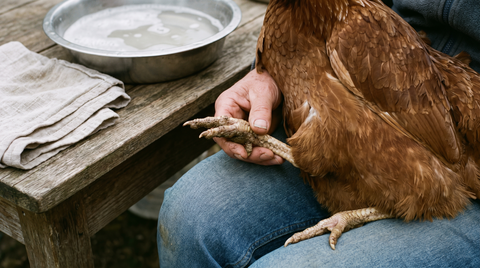
The home method is soak, gently clean, then coat. Soften the legs in warm soapy water, wipe away only the crust that lifts easily, then coat the legs completely in plain oil or petroleum jelly to smother the mites. Repeat every few days for several weeks.
This is the exact routine I used on Clementine, and it is gentle enough that the birds tolerate it well. Work calmly in the evening when birds are sleepy, wrap the body in a towel to keep them still, and have everything laid out first.
What you will need
- A basin of warm water with a little mild dish soap.
- A soft old toothbrush or cloth for gentle cleaning.
- Plain oil (vegetable, mineral, or coconut) or petroleum jelly.
- A towel, disposable gloves, and paper towels.
The routine
- Soak the legs in warm soapy water for 5 to 10 minutes to soften the crust and debris. Hold the bird in a towel so only the legs are in the water.
- Gently clean with a soft toothbrush or cloth, wiping away only the debris that lifts away on its own. Do not force or pick off attached scales; that tears skin and hurts.
- Pat the legs dry with a paper towel.
- Coat thoroughly in oil or petroleum jelly, working it over every scale and into the cracks. Full coverage is what smothers the mites by sealing off their air.
- Repeat every 2 to 3 days for at least a couple of weeks, and keep going until smooth new scales grow in, which can take a few months.
- Treat the whole flock at the same time and clean the roosts, since the mite spreads bird to bird.
If, while cleaning, you find a cracked or raw spot where the crust came away and the skin is broken, dab it with a gentle topical so it does not get infected. I keep our poultry wound & skin spray in my kit for exactly these small leg and skin nicks; it is made for chicken skin and helps clean and protect a raw spot without harsh stinging. To be clear, it does not kill the mites, the oil-smothering does that, but it is a sensible companion if the skin gets broken. For broader scrapes and pecking damage, I cover the same gentle approach in my guide to chicken first aid for wounds, pecking, and bumblefoot.
What should I avoid when treating scaly leg mites?
Do not pick or peel off attached scales, do not use harsh chemicals like kerosene or strong pesticides on the legs, do not treat only one bird, and do not stop too early. Each of these either hurts the bird or lets the infestation rebuild.
Most of the trouble I see with scaly leg mites comes from good intentions applied too aggressively. A few things to steer clear of:
- Forcing the crust off. It is tempting to scrub the legs clean, but pulling attached scales tears the skin underneath and causes bleeding and pain. The oil method clears mites without that.
- Harsh chemicals. Old-timer remedies like kerosene or gasoline are genuinely harmful, can be absorbed through the skin, and have no place on a living bird. Plain oil works.
- Treating one bird only. The mite spreads by contact, so the flock has been exposed. Treat everyone and the roosts at once.
- Quitting at the first improvement. The legs look bad for months after the mites are dead because new scales take time. Keep coating until smooth scales return.
When should I call a vet for scaly leg mites?
Call a veterinarian when legs are severely crusted or deformed, the bird is lame or cannot perch, the skin is broken and infected, or a large part of the flock is affected. A vet can prescribe ivermectin or moxidectin, which is off-label in poultry and has egg-withdrawal considerations.
I am a lifelong keeper, not a veterinarian, and I want to be honest about the limits of home care. PoultryDVM notes that in moderate to severe cases, ivermectin or moxidectin may be needed, applied topically or given orally. But these drugs are not approved for use in poultry in the United States. A peer-reviewed residue study in Frontiers in Veterinary Science states plainly that ivermectin is not approved for use by any route in any poultry species in the US, which means any use is extra-label and a veterinarian must set an extended egg-withdrawal period. That same study found egg-withdrawal estimates after topical ivermectin running into months, which is why this belongs in a vet's hands rather than guesswork from a bottle bought for cattle. If you want to understand how egg-withdrawal works in general, I walk through it in my guide on whether eggs are safe while deworming and egg withdrawal. For context, the Merck Veterinary Manual takes an even more conservative line on scaly leg mite, recommending that affected birds be culled or isolated and houses cleaned and sprayed.
Get professional help if you see any of these:
- Legs that are severely thickened, deformed, or the toes are curling or crippling.
- A bird that is lame, will not perch, or struggles to walk.
- Skin that has cracked open and looks infected, with swelling, heat, or a bad smell.
- A whole-flock infestation where coating each bird by hand is not keeping up.
- An older or already-sick bird where you are unsure how much stress treatment will add.
Leg and foot health is a YMYL area where it is better to ask than to gamble. A short call to a poultry-savvy vet is cheap insurance against a crippled bird.
How do I prevent scaly leg mites from coming back?
Prevention comes down to clean dry housing, smooth non-porous roosts, quarantining new birds, and regular leg checks so you catch raised scales early. Catching it early makes treatment far quicker than fighting a thick, crusted case.
Because the mite lives on the bird and lingers in roost cracks, prevention targets both. Here is where I focus.
Quarantine and inspect new birds
The most common way scaly leg mites arrive is on a new bird. Keep newcomers separate for a few weeks and look closely at their legs before they ever touch your flock. The same quarantine habit protects against plenty of other problems too.
Keep roosts clean and smooth
Old, cracked, porous wooden roosts give mites somewhere to wait. Use smooth roosts you can wipe down, scrub them when you do a coop clean, and a light coat of oil on the roost bars during treatment helps too. A well-set-up coop makes all of this easier, which is why I put weight on the basics in my guide to chicken coop setup and space requirements.
Make leg checks routine
When you handle birds for any reason, glance at the legs. Smooth, flat scales are healthy; raised or rough scales caught early are a quick fix. A bird in good overall condition also shrugs off parasites better, so steady management beats any one treatment.
Frequently asked questions
How do you get rid of scaly leg mites on chickens?
Soften the legs in warm soapy water, gently remove only the crust that lifts easily, then coat the legs completely in plain oil or petroleum jelly to smother the mites. Repeat every few days for several weeks until smooth new scales grow in. Treat every bird in the flock, not just the obvious one, and clean the roosts.
What do scaly leg mites look like on chickens?
You will not see the mites themselves; they are microscopic and live under the skin. What you see is the damage: leg scales that are raised, thickened, lifted up at the edges, and crusted with white, gray, or honey-colored debris. The leg looks rough and lumpy instead of smooth and flat.
Can scaly leg mites kill a chicken?
A mild case will not, but a severe, untreated infestation can. Over time the crusting and irritation can deform the toes and legs, cause lameness, and let secondary bacterial infection set in. Birds that cannot walk or perch well decline in condition. That is why severe or crippling cases need a vet.
How do I tell scaly leg mites apart from regular mites or lice?
Location is the giveaway. Scaly leg mites live under the leg scales and only affect the legs, feet, and sometimes the comb. Northern fowl mites, red mites, and lice live in the feathers, around the vent, and in coop cracks, and you can often see them moving. If the problem is crusty raised leg scales, it is scaly leg mites.
Is petroleum jelly or oil better for scaly leg mites?
Both work because both smother the mites by sealing off air. Petroleum jelly is thick and stays put longer between applications, which many keepers prefer. Plain vegetable, mineral, or coconut oil is easier to massage in and reach into the cracks. The key is full, repeated coverage, not which one you pick.
How long does it take to treat scaly leg mites?
Smothering the live mites takes a couple of weeks of repeated coating, but the legs do not look normal until the damaged scales are shed and new ones grow in, which can take a few months. Keep treating until you see smooth new scales. Stopping too early lets survivors rebuild the infestation.
Should I pick the crust off my chicken's legs?
No, do not force it. Pulling off attached crust can tear the skin underneath, cause bleeding, and open the door to infection, which is painful for the bird. Only wipe away crust that lifts away easily after soaking. The oil-coating method works without removing the scales by hand.
Do I need to treat my whole flock for scaly leg mites?
Yes. Scaly leg mites spread by direct contact between birds, especially on the roost at night, so if one bird has them the others have likely been exposed. Treat every bird at the same time and clean and treat the roost bars, or the mites will simply move back and forth.
Can I use ivermectin for scaly leg mites in chickens?
Ivermectin and moxidectin are highly effective against scaly leg mites, but they are not FDA-approved for food-producing poultry, so using them is off-label and may require discarding eggs for a period. For that reason this should be done under a veterinarian's direction, especially for severe or whole-flock cases.
How do I stop scaly leg mites from coming back?
Keep the coop clean and dry, replace or scrub rough porous roosts where mites hide, quarantine and inspect new birds before adding them, and check legs during routine health checks. Catching raised scales early, before crusting gets severe, makes treatment far quicker.
Products mentioned in this guide

Sources & further reading
- Mites of Poultry - Merck Veterinary Manual
- Knemidocoptes mutans (scaly leg mite) in backyard flocks - University of Guelph Animal Health Laboratory
- Scaly leg mite infestation in chickens: signs, treatment and prevention - PoultryDVM
- Residue depletion profile and withdrawal interval estimation of ivermectin in eggs following topical administration in domestic chickens - Frontiers in Veterinary Science (PMC)
A note from Sarah: I'm a lifelong keeper, not a veterinarian. This guide shares what's worked for my own flock and is meant for general education - if a bird is seriously ill or injured, please call your vet. These statements have not been evaluated by the FDA.